
Head Mics for Singing article
The Complete Guide to Head Mics For Singing
Head mics for singing capture vocal performance hands-free, enabling complete freedom of movement on stage or during events. Discover microphone types, wireless systems, and how to choose and position a professional head mic.
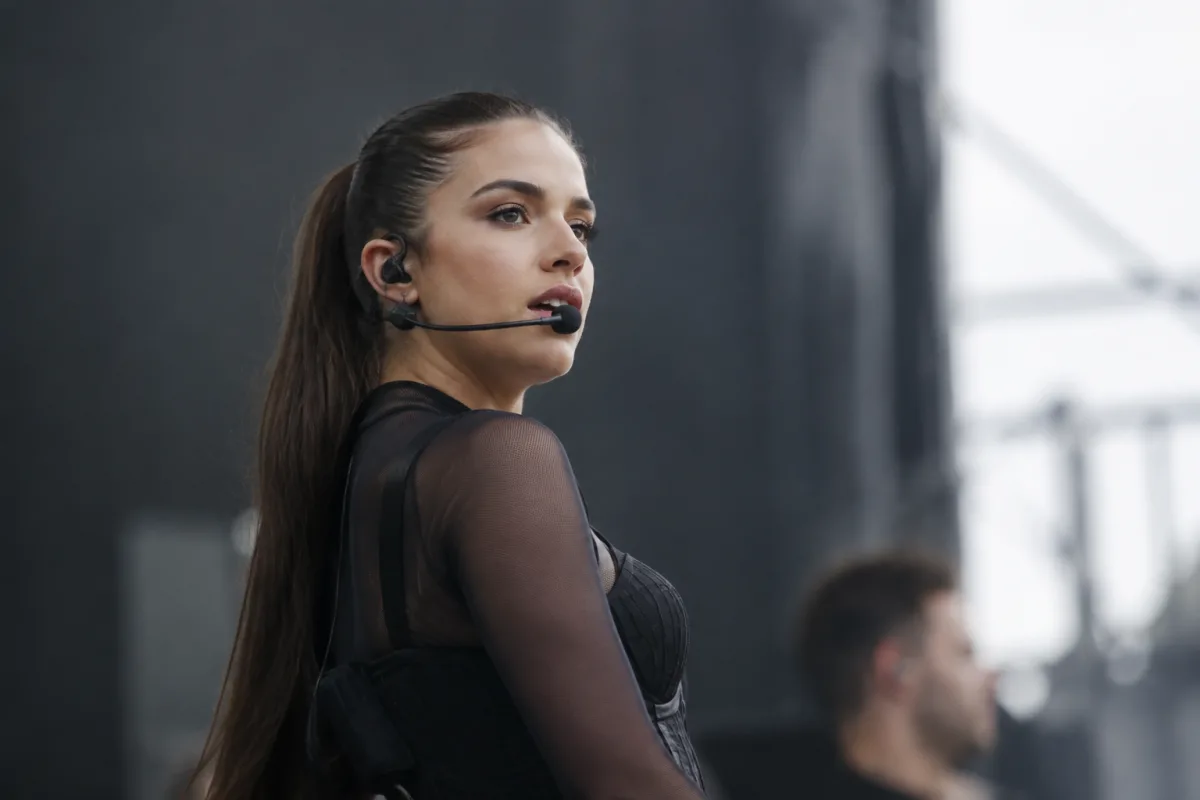
Head mics for singing represent the performance standard in theatre, live events, and broadcast, capturing vocal performance with the intimacy of studio recording whilst freeing performers to move across a stage. From musicals to conferences, from fitness classes to professional speaking engagements, a quality head mic enables hands-free vocal capture that sounds natural, projects clearly, and allows performers the physical freedom their performance demands. Understanding head mic types, positioning, and practical considerations empowers performers to choose microphones that disappear into the performance rather than distract from it.
What Are Head Mics for Singing?
A head mic (or headset microphone) is a small directional microphone positioned near the performer's mouth, attached to a head-worn boom arm or band. Unlike handheld microphones, which require one hand and restrict movement, head mics stay perfectly positioned regardless of head movement, capturing vocals with consistent proximity and off-axis rejection of background sound.
The core advantage of head mics is freedom. Singers, actors, and speakers can gesture, dance, and move without worrying about microphone technique or dropping the vocal level. This liberated performance is why head mics are universal in contemporary theatre and live performance.
Types of Head Mics for Singing
Head mics come in several designs, each with different characteristics:
| Type | Design | Pros | Cons | Best For |
|---|---|---|---|---|
| Over-ear boom | Boom arm over one ear, capsule at mouth | Secure, invisible, excellent rejection | Can look inelegant, may slip with sweat | Theatre, events, vigorous movement |
| Dual-ear headband | Band across head, capsule at mouth side | Secure, balanced weight, professional | Visible, requires size adjustment | Broadcasting, sports, fitness classes |
| Miniature lavalier variant | Tiny capsule clipped to ear or lapel | Compact, less visible, comfortable | Weaker sound, poorer rejection | Conferences, close-proximity speaking |
| Temple-mounted | Capsule mounted on temple area | Low visibility, comfortable, secure | Shorter pickup distance, sensitivity to head movement | High-energy performance, fitness, dance |
Capsule Types and Polar Patterns
The microphone capsule determines sonic character and directional sensitivity. Most performance head mics use condenser capsules, which are more sensitive and capture vocal nuance better than dynamic capsules. Some use supercardioid or hypercardioid polar patterns, rejecting background sound exceptionally well.
Condenser head mics require a power source (usually a wireless transmitter pack) and are more sensitive to wind noise and handling vibration, but they sound more natural and detailed. Dynamic head mics are more rugged and don't require batteries, but sound slightly duller and pick up more background noise.
Wireless Systems for Head Mics
Professional head mics almost always connect to wireless transmitter packs clipped to the performer's waistband or harness. The transmitter sends audio to a receiver connected to the mixing console, allowing complete freedom of movement across stage.
Wireless systems range from budget (£200–£400) to professional touring-grade (£1000–£3000+). Key specifications include frequency range (professional systems use narrow-band UHF to avoid interference), battery life (minimum 8 hours for performance), and RF stability (how reliably the system maintains connection).
Positioning and Mic Technique
Proper head mic positioning is critical for natural sound and minimal plosive noise. The capsule should be positioned 2–3 cm from the corner of the mouth, at a 45-degree angle below the lips. This position captures clear vocals whilst staying just outside the direct blast zone of plosive consonants (P, B, T, K sounds).
The boom arm should be adjusted so the microphone feels secure and stable during vigorous movement. Too loose results in movement noise and level inconsistency; too tight can cause discomfort or skin irritation during extended wear.
Feedback Prevention and Sound Quality
Head mics positioned near the performer's mouth have significant potential for feedback when amplified through stage monitors or main speakers. Modern head mic systems address this through:
- Supercardioid or hypercardioid polar patterns — reject sound coming from the sides and rear, reducing feedback potential.
- Proximity effect — the bass boost that occurs when singing very close to a directional mic, which adds presence to vocals.
- Wireless system frequency planning — carefully chosen frequencies to avoid interference with other wireless systems and RF noise.
- Proper gain structure — keeping input gain just above noise floor so the signal has headroom before amplification.
Maintenance and Care
Head mics endure significant wear from sweat, makeup, and constant handling. Quality microphones are built to tolerate this, but care extends lifespan and maintains sound:
- Clean after use — gently wipe sweat and makeup from the capsule and boom arm.
- Store properly — hang the mic to air-dry; avoid crushed coils that can cause sound degradation.
- Replace grille foam — foam grilles deteriorate with age and exposure. Replacement restores rejection and extends microphone life.
- Check connection points — ensure XLR connectors and wireless connections stay clean and seated properly.
Professional Head Mics for Singing
The Shure WL183 omnidirectional lavalier and WL184 cardioid are trusted broadcast standards. The Shure WBH series offers professional head-worn designs specifically for performance. The DPA 4060 is a premium choice beloved by theatre professionals. Audio-Technica's ProPoint AT831 offers competitive performance at lower cost. Higher-end systems (Sennheiser EW series, Shure ULX-D) provide tour-grade reliability and transmission quality.
The Bottom Line
A quality head mic for singing transforms performance freedom, letting vocalists and actors focus entirely on artistic expression rather than microphone technique. Choosing a microphone suited to your performance environment, sound style, and movement demands ensures your voice sounds its best whilst you move and perform with total confidence and freedom.


Comments