
Microphones for Singing Recording article
The Complete Guide to Microphones For Singing Recording
The right microphone for singing recording captures your voice with clarity and character. Understand microphone types, frequency response, and polar patterns to find the perfect fit for your home studio.
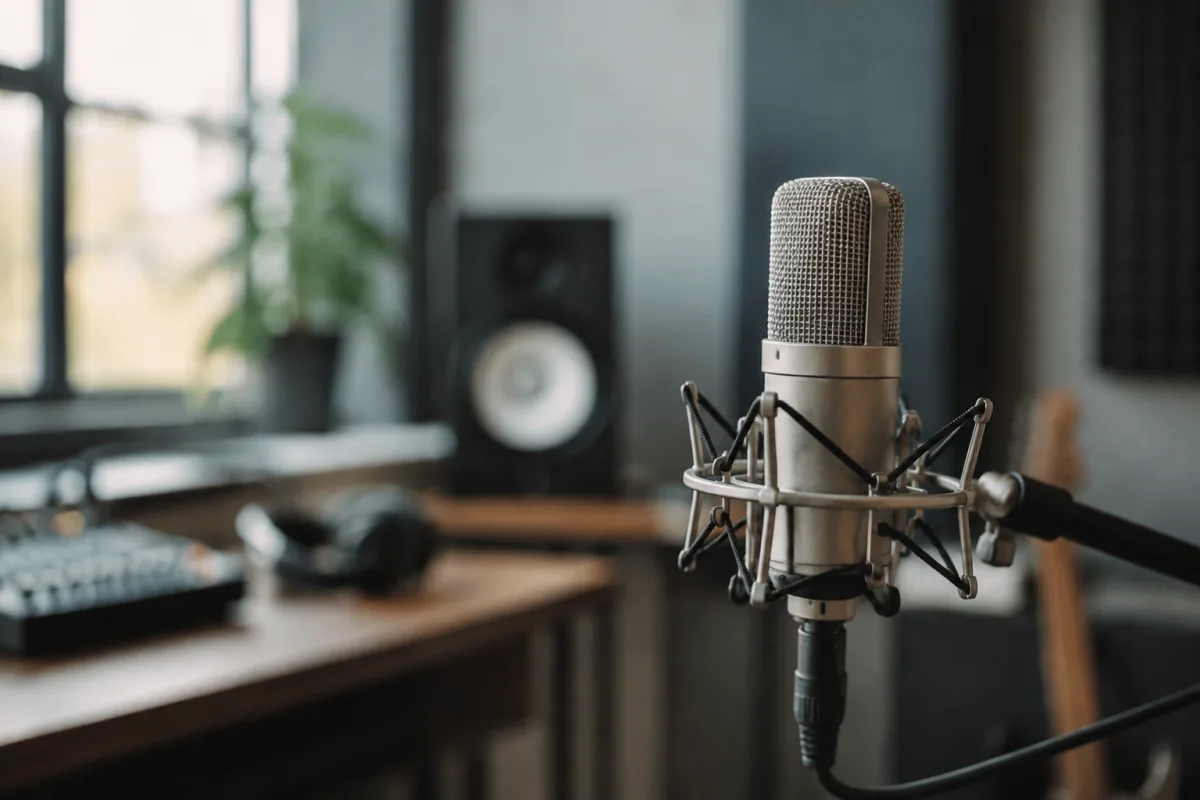
Choosing the right microphone for singing recording is crucial to capturing clear, professional vocal tones. The microphone you select fundamentally shapes how your voice sounds on the recording—beyond what any EQ or compression can fix later. Whether you're recording podcasts, home demos, or professional vocal tracks, understanding microphone types, polar patterns, and frequency response helps you make an informed choice.
How Microphones Affect Vocal Tone
Different microphones colour your voice in distinct ways. Some accentuate presence peaks that make vocals cut through a mix; others smooth harsh frequencies for a silky tone. A warm microphone suits bright, aggressive singers; a colourful microphone adds character to an otherwise thin voice. Studio professionals choose microphones for specific singers based on voice type and song style. For home recording, understanding these differences helps you pick a microphone that flatters your voice rather than fighting against it.
A microphone for singing recording must handle both quiet passages and loud, aggressive belting without distorting. The proximity effect—bass boost at close distances—is a feature, not a flaw, when used intentionally to add warmth to vocals. Proximity effect is why close miking is standard for singing: you capture intimacy and control how much bass your proximity adds.
Microphone Types for Vocal Recording
Three microphone types dominate vocal recording:
Condenser microphones are the standard choice for singing recording. They're sensitive, detailed, and capture the full character of your voice. Condensers require phantom power (supplied by an audio interface), making them slightly less portable than dynamics. For home studio and professional recording, condensers are almost always the answer. Popular options span affordable £150 home studio models to £3,000+ studio legends.
Dynamic microphones are robust and forgiving, requiring no phantom power. They handle high volume levels well and sound warm and thick. Dynamics are less detailed than condensers and work best on shouty, aggressive vocals or in loud live settings. For spoken word and aggressive rock vocals, a dynamic microphone is an excellent choice.
Ribbon microphones are delicate, smooth, and warm, with a vintage character beloved by professionals. They're expensive (£500–£5,000+), require careful handling, and are rarely recommended for beginners. If you're starting your first home studio, skip ribbon mics for now.
Polar Patterns and Microphone Isolation
Microphones respond differently to sound from various directions. The polar pattern defines this behaviour:
- Cardioid — Most sensitive to the front, rejects sound from the back. The standard pattern for singing recording, offering isolation from room reflections and background noise.
- Omnidirectional — Equally sensitive from all directions. Captures room ambience and is rarely ideal for close vocal recording in untreated spaces.
- Figure-eight (bidirectional) — Sensitive to front and back, rejects the sides. Useful in some studio setups but less common for singing recording.
Cardioid microphones for singing recording offer the best isolation, letting you focus on your voice without capturing excessive room reflections. The rejection tightens at higher frequencies, so high ambient noise is less of a problem than you'd expect.
Microphones for Singing Recording: Frequency Response Profiles
Microphone frequency response is visualised on a graph, showing which frequencies the mic emphasises or de-emphasises:
Flat response — No significant boosts or cuts, capturing your voice neutrally. Ideal for studio accuracy and professional vocals.
Presence peak (2–5 kHz) — Boosts midrange and presence, making vocals cut through mixes and sound more aggressive. Great for thin voices; potentially harsh on bright singers.
Bass rolloff — Reduced bass response, minimising proximity effect and rumble. Essential in treated studios with poor bass response; less necessary in other contexts.
Proximity-friendly — Smooth overall response designed to work well when close-miked, accounting for the bass boost proximity effect adds naturally.
For home singing recording, a microphone with a subtle presence peak (without being aggressive) and controlled bass response suits most singers and room sizes.
Top Microphones for Singing Recording
| Microphone | Type | Character | Best For | Price |
|---|---|---|---|---|
| Neumann U87Ai | Condenser | Smooth, detailed, presence peak, studio standard | Professional vocals, all genres | £3,000–£3,500 |
| Audio-Technica AT4040 | Condenser | Neutral, detailed, bright presence | Studio recording, affordability | £450–£550 |
| Shure SM7B | Dynamic | Warm, thick, natural presence | Spoken word, aggressive rock vocals | £350–£450 |
| Rode NT1 | Condenser | Very low noise, flat, affordable | Home studio on a budget | £180–£250 |
| Electro-Voice RE20 | Dynamic | Proximity-friendly, warm, presence | Podcasting, spoken word, rock | £300–£400 |
| AKG C414 XLII | Condenser | Versatile, switchable patterns, transparent | Multi-use studio, vocals and instruments | £700–£900 |
Budget constraints? A Rode NT1 or Audio-Technica AT2020 (£100–£250) is an excellent entry point, delivering professional vocal clarity at a price that won't break your home studio investment.
Setting Up for Clean Vocal Recordings
A quality microphone alone isn't enough. Proper technique and setup matter hugely:
- Use a pop filter — Reduces plosives (p, b, t sounds) that can ruin vocal takes. Place it 6–12 inches in front of the microphone.
- Position the microphone at mouth level — Aligned to your mouth, not above or below your chin.
- Maintain consistent distance — Typically 6–12 inches for singing recording, close enough to control proximity effect and room noise, far enough to avoid plosives.
- Keep your microphone in good company — Use a shock mount to isolate vibration from the stand or mounting hardware.
- Treat your recording space minimally — Even untreated rooms sound acceptable if your microphone is positioned correctly and the mic itself rejects room reflections well (cardioid pattern).
Testing Before You Buy
Borrow a microphone or rent one for a few days before committing. Many rental shops and studios offer this service. Record your voice through the microphone for singing recording, and listen back critically. Does it flatter your voice or fight against it? Does it handle your dynamic range comfortably? Does it have character you love or harshness you'll spend mixing to fix? These answers guide your purchase better than any specification sheet.
Conclusion
The right microphone for singing recording transforms your home studio from amateur to professional. Whether you prioritise budget, versatility, or sound character, a quality condenser microphone suited to your voice and room will deliver clarity, warmth and presence that complements your singing. Start with a solid £150–£300 option, learn proper miking technique, and upgrade later once you understand what your voice and style truly need.



Comments