


Rode Radio Microphone article
Everything You Need to Know About Rode Radio Microphone
A RØDE radio microphone could mean a wireless system or a broadcast microphone — here's how the range breaks down, what each system does and how to choose the right one for your application.

When someone talks about a RØDE radio microphone, they could mean one of two fairly different things. RØDE makes compact wireless systems — the Wireless GO II, Wireless ME, Wireless Micro and the newer Wireless GO third generation — and the company also makes dedicated broadcast microphones for radio studios and podcasting. Understanding which category you’re in shapes every other decision.
What “Radio Microphone” Means in RØDE’s Range
In British audio usage, a radio microphone typically means a wireless microphone — one that transmits its signal by radio frequency rather than down a cable. RØDE’s compact wireless systems fit that description. In broadcast usage, a radio microphone can also mean a microphone specifically for radio — a studio desk mic, which is a different animal entirely.
For most people searching for a Rode radio microphone, the wireless systems are the relevant products: designed for video, interviews, content creation and field recording.
The Wireless GO Family
The Rode radio microphone range is anchored by the Wireless GO series. The Wireless GO II is the established dual-channel system: it accepts two transmitters simultaneously, supports separate or blended channel recording, and includes onboard recording as a backup for when the RF connection or camera cable fails. RØDE quotes a range of 200 metres line-of-sight, though real-world performance in rooms, corridors and busy venues will vary considerably from that figure.
The third-generation Wireless GO adds 32-bit float internal recording, which provides significant protection against clipping during unpredictable interviews and field situations. Checking RØDE’s current product page for the most up-to-date specifications is advisable, as this is a recently released product.
The Wireless ME is the simpler compact option: a single-channel system with a 100-metre transmission range, built-in omnidirectional microphone, 24-bit/48 kHz audio and straightforward compatibility with cameras and phones. It suits creators who want the core wireless functionality without the dual-channel complexity of the Wireless GO II.
The Wireless Micro
The Wireless Micro is RØDE’s most portable system. Designed primarily for phone and mobile production, it comes with a charging case and has been independently reviewed with strong results for sound quality. It’s aimed at creators who need professional wireless audio without any additional hardware chain between mic and phone. Its compact form makes it particularly useful for self-shooting journalists and social-content creators.
What These Systems Use for Transmission
All RØDE’s compact wireless systems transmit on the 2.4 GHz band using digital encoding. The practical advantages are global legality — no country-specific frequency concerns — and consistent digital quality. The trade-off is that 2.4 GHz is a shared band: Wi-Fi, Bluetooth and other wireless devices operate in the same space. In a densely populated RF environment, the usable range is shorter than the manufacturer’s line-of-sight figure, and reliability can be affected by obstructions and interference.
The safety channel and onboard recording features are there for exactly this reason. When RF reliability matters, record internally to the transmitter as well as to the camera.
The Broadcast Side: Broadcaster and PodMic
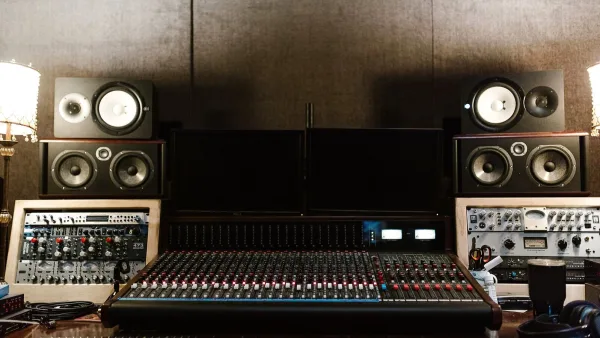
If radio broadcasting rather than wireless operation is the goal, RØDE’s dedicated studio microphones are the relevant products. The Broadcaster is a large-diaphragm condenser designed for the desk-mounted radio-studio setup, recognised by Radio World and the NAB in 1998. The PodMic is a dynamic broadcast microphone optimised for podcasting and spoken-word recording, with a tighter polar pattern that helps reject room noise.
Neither is a wireless system — both connect to a mixing console or interface by cable — but they represent the “radio microphone” interpretation in the broadcasting sense of the phrase.
Which One Do You Need?
If you’re recording interviews, documentary footage or content where the subject needs to move freely, the Wireless GO II or Wireless ME is the answer. If you’re building a podcast studio or radio-style recording setup at a desk, the PodMic or Broadcaster is more relevant. And if you need a minimal phone-based wireless solution, the Wireless Micro covers that application cleanly.
For help choosing between models, see our Rode radio microphone buyer’s guide. New to wireless audio? The beginner’s guide covers setup from scratch.





Comments