
Microphone Boom Mic article
The Complete Guide to Microphone Boom Mic
Boom microphones offer positioning flexibility essential for professional audio recording. Discover different boom types, understand key features, learn positioning techniques, and invest in the right equipment for superior recording quality.
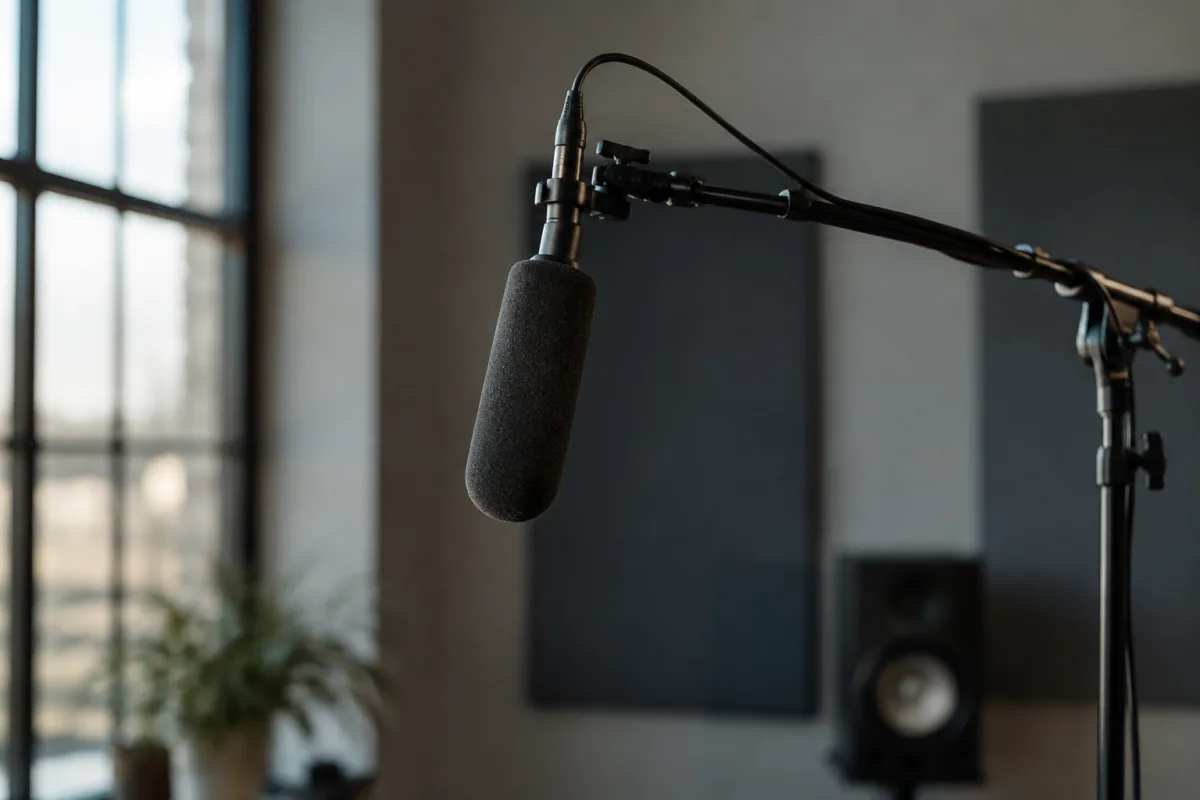
Understanding Boom Microphones
A boom microphone extends your audio reach dramatically. Whether recording dialogue for film, capturing acoustic instruments, conducting interviews, or amplifying vocals on stage, a boom mic pivots the microphone where you need it without awkward stands or handheld positioning. The extended reach and flexible positioning make boom mics essential in professional audio production.
Boom microphones use a counterweighted arm supporting the microphone at its end. This design lets you position the mic perfectly relative to your source—above an actor's head, angled above a drum kit, or just outside a camera's frame capturing pristine dialogue. The flexibility is transformative for recording quality.
Boom Microphone Types
Studio boom stands anchor to floor or desk, providing stable positioning for recording sessions. The counterweight system balances even heavy condenser microphones. Once positioned, the mic stays perfectly placed throughout your recording. Studio booms suit controlled recording environments where you're not repositioning constantly.
Handheld boom poles connect to standard microphone stands via quick-release mounts. A single operator holds and manoeuvres the boom, positioning the microphone fluidly as action progresses. Handheld booms suit film, television, and live event recording where flexibility and mobility matter.
Overhead boom rigs mount to ceilings or overhead bars, suspending the microphone invisibly above performers. This approach suits live theatre, orchestral recording, and applications where visible equipment mustn't appear on camera or in the performance space.
Boom Arm Design and Construction
Quality boom arms balance weight evenly using precision counterweights. A properly balanced boom requires minimal operator effort—you can hold it steadily for hours without fatigue. Cheap booms either require constant effort or drift slowly down despite effort.
Arm length varies typically from 0.5 metres to 1.5 metres. Longer booms offer extended reach but become harder to stabilise. Standard 1-metre booms balance reach and manoeuvrability for most applications. Know your typical working distances before choosing.
Rotation joints must operate smoothly without binding or sudden drops. Quality mechanisms stay consistent through thousands of cycles. Budget mechanisms gradually loosen or develop stiff spots requiring replacement.
Microphone Mounting Systems
Standard shock mounts isolate the microphone from handling noise. Without isolation, arm movement and operator vibration transmit through the microphone, contaminating audio. Quality shock mounts decouple the microphone completely from the boom structure.
Cable management systems keep the audio cable clear of the microphone. A cable tangled around the microphone introduces handling noise during repositioning. Professional booms route cables along the arm structure, keeping them organised and noise-free.
Quick-release mounts enable fast microphone changes. Broadcast and production work often switches mics rapidly—a good mount saves time and reduces the chance of dropping equipment during changeovers.
Material and Weight Considerations
Aluminium boom arms are lightweight—crucial for handheld work where operator fatigue matters. A 200-gram boom that you hold for eight hours becomes exhausting. Carbon fibre offers even lighter weight at higher cost. For studio booms, weight is less critical; strength matters more.
Microphone weight affects boom selection. Heavy condenser microphones—500+ grams—need robust, well-balanced booms. Light lavalier mics work with minimal boom support. Know your microphone weight before purchasing.
Professional Boom Microphone Technique
Positioning is an art developed through practice. Generally, position the microphone just outside the camera frame, angled downward toward the speaker's mouth. This placement captures clean dialogue whilst remaining invisible. Too far away and you get room noise and distance colouration; too close and you might catch plosives.
Boom operators develop muscle memory for consistent positioning. A well-trained operator follows action fluidly, maintaining perfect microphone placement throughout takes. This consistency is impossible to achieve with stationary stands.
Cable management during operation prevents noise. A boom operator develops technique moving the boom and cable together, never dragging the cable. This coordination prevents scratching and movement noise contaminating otherwise perfect recordings.
Applications Beyond Film
Live sound engineers use boom poles to position microphones above drum kits and orchestras. The extended reach lets you get optimal positioning without visible stands obstructing the performance space.
Podcast studios sometimes use boom arms for hands-free microphone positioning. This freedom lets presenters gesture expressively during recording without microphone proximity fluctuations.
Acoustic instrument recording benefits from boom positioning—microphones can float above guitars, mandolins, and other instruments without stands cluttering the session space.
Choosing Your Boom Microphone Setup
For handheld applications, prioritise balance and smooth operation. Test the boom with your actual microphone before purchasing. A boom perfectly balanced for one microphone might struggle with another weight. Budget £150–400 for professional-quality handheld booms.
For studio work, a robust desk-mounted boom offers stability and precision. Spending £200–500 ensures smooth operation and years of reliable service. The investment pays dividends in consistency and recording quality.
Cable quality matters—use microphone-grade XLR cables with proper shielding. Cheap cables introduce hum and noise making expensive microphones sound mediocre. Quality cable cost is negligible compared to overall investment.
Maintenance and Care
Boom arms rarely fail if treated respectfully. Avoid dropping or forcing joints beyond their range. Check rotation joints periodically—if they develop resistance or binding, professional service can usually restore smooth operation.
Keep cable connections secure and clean. Corrosion on connectors introduces noise. Occasionally disconnect and reconnect cables, cleaning contacts with contact cleaner spray. This simple maintenance prevents intermittent audio problems.
Store booms in dedicated cases protecting against damage and weather. A boom pole left exposed gradually corrodes. Proper storage extends equipment life significantly.
Conclusion
A quality boom microphone is transformative for audio professionals and serious home recordists. The positioning flexibility and consistent microphone placement improve recording quality dramatically. Invest in a well-balanced, smoothly operating boom matched to your microphone weight and working style. Whether handheld for film work, mounted on studio stands, or positioned overhead for orchestral recording, the right boom gives you control shaping professional audio capture. Treat your boom respectfully and it will serve reliably for years of excellent recordings.



Comments