


Mic Stereo Buying guide
Mic Stereo: A Complete Buyer's Guide
Stereo microphones capture spatial dimension and width. Discover stereo techniques, microphone configurations, price guidance, and how to select mics for your application.
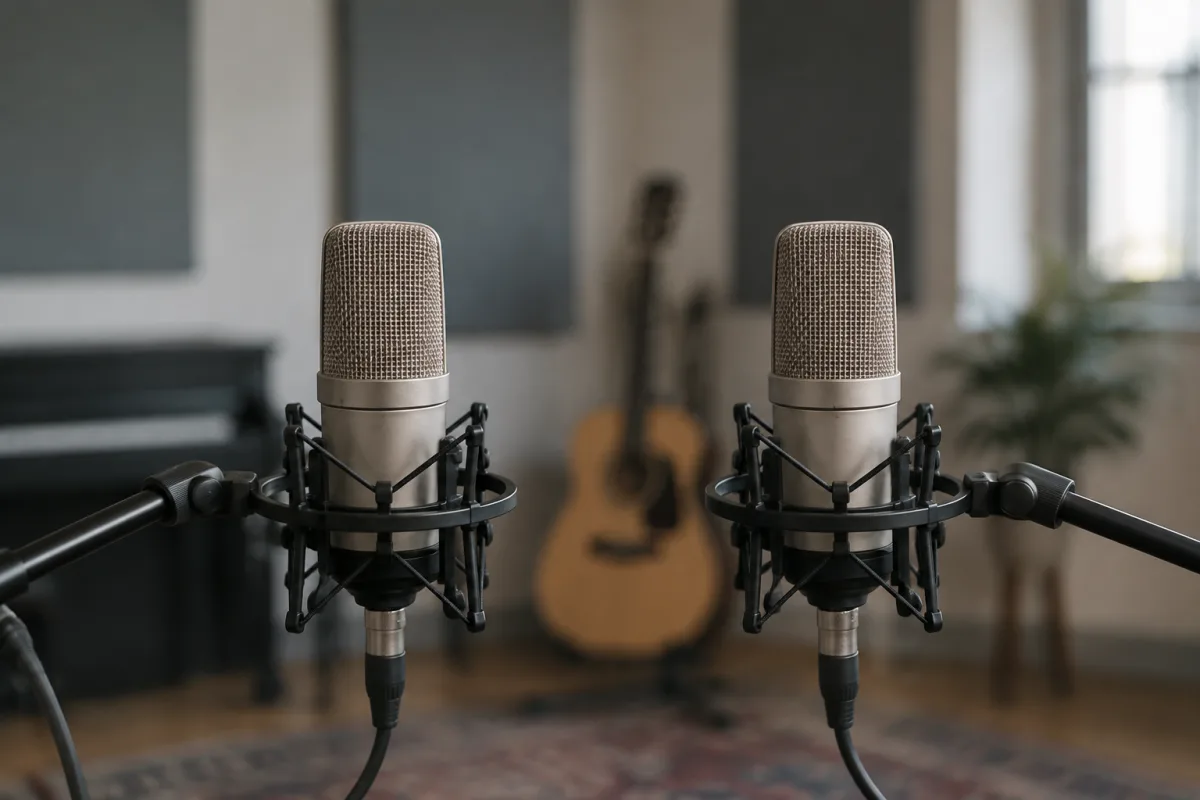
Stereo microphones capture spatial dimension—the sense of width and depth that transforms recordings from flat mono capture to immersive soundscapes. If you're recording drums, acoustic instruments, ensembles, or any source benefiting from dimensional capture, understanding stereo microphone options helps you select tools that deliver genuine stereo character without overpaying for unnecessary features. This guide covers what stereo microphones actually do, which configurations work, price considerations, and how to choose models suited to your specific recording needs.
Understanding Stereo Microphone Fundamentals
Stereo microphone recording involves two microphones capturing the same source from different positions or perspectives, then recording to two separate channels. This creates a stereo image—a sense of width and dimension impossible with single mono microphones.
The critical distinction from simple dual-microphone recording is intentional stereo technique. You're not just placing two mics randomly; you're positioning them specifically to create stereo perspective. This requires understanding spacing, angling, and microphone characteristics that combine predictably.
Common stereo techniques include:
- Coincident pairs: Two mics at nearly identical positions, pointed in different directions (typically 90–120 degrees apart). Creates stereo image without time delays.
- Spaced pairs: Two mics separated by distance (typically 3 feet or more), pointed in similar directions. Creates stereo image through time/phase differences.
- Mid-side (M/S): One cardioid mic capturing front-to-back (mid), one bidirectional mic capturing sides (side). Provides controllable stereo width through mixing.
- Decca tree: Three mics (centre, left, right) used primarily for orchestral and ensemble recording. Professional standard for complex sources.
Which technique suits your needs depends on your source, space, and desired stereo character. Understanding the method matters more than buying specific "stereo microphone" models—most stereo recording uses standard microphones in intentional configurations.
Microphone Specifications for Stereo Work
Several microphone specs directly affect stereo recording quality:
| Specification | Why It Matters for Stereo | Buying Guidance |
|---|---|---|
| Pickup Pattern | Determines how the mic responds to off-axis sources, affecting stereo image width and clarity | Cardioid most common for spaced pairs. Omnidirectional useful for ambient stereo. Bidirectional essential for mid-side technique |
| Frequency Response | Must be consistent between matched pairs—tonal mismatch undermines stereo image coherence | Matched pairs explicitly sold as stereo sets have guaranteed consistency. Avoid mismatching different models |
| Sensitivity (dB SPL) | Stereo sources benefit from consistent sensitivity across pair for balanced image | Matched pairs ensure identical sensitivity. If buying separately, verify matching specifications |
| Transient Response | Affects how precisely stereo detail is captured; faster response captures subtle spatial nuances | Condenser mics generally superior to dynamic mics for detail capture in stereo configurations |
Stereo Microphone Configuration Options
Matched Pairs of Identical Microphones: The most straightforward approach. You purchase two identical mics (typically condensers), position them according to your chosen stereo technique, and record simultaneously. Benefits include consistency and simplicity. Costs range from £150–800+ depending on microphone quality. This approach works for most recording situations.
Dedicated Stereo Microphone Pairs: Some manufacturers sell matched pairs specifically formatted for stereo work—sometimes with coordinated mounting hardware. Convenience is high; consistency guaranteed. Price typically 10–20% higher than buying separate identical mics but justified if specialized mounting is valuable.
Mid-Side Stereo Kits: Specific combinations sold explicitly for M/S technique, typically one cardioid and one bidirectional. These provide the equipment for professional M/S recording but require additional mixing knowledge (you decode M/S during mix-down to recover stereo image). Higher technical bar but offers unique advantages for controllable stereo width.
Condensers for Spaced Pairs: Most practical for serious stereo work. Condensers' superior transient response and off-axis characteristics work excellently in spaced-pair configurations capturing acoustic instruments, drums, or ensembles. Premium investment but results justify cost for serious recording.
Price Tiers and Value Proposition
Budget Tier (£60–150 per mic): Entry-level condensers for stereo work. Function acceptably for learning stereo techniques and casual recording. Tonal character is functional but sometimes thin. Matched pairs in this range exist but consistency varies. Good for experimentation before investing heavily.
Mid-Range (£150–400 per mic): Sweet spot for serious recording. Matched pairs offer genuine tonal coherence and professional usability. Enough investment to take stereo seriously without premium pricing. Most professional independent studios use mics in this range for stereo work. Excellent value here.
Premium (£400–1000+ per mic): Professional-grade condensers with exceptional frequency response consistency and transient detail. Marginal improvements over mid-range for many applications, but worthwhile for critical stereo recording where tonal perfection matters. Broadcasting, orchestral recording, and high-end commercial work justify this tier.
Most recording situations are served adequately by mid-range matched pairs. Premium investment is justified only when recording quality is commercially critical or you're capturing extraordinarily demanding sources.
Stereo Technique Considerations When Buying
Before purchasing, determine your primary stereo application. Different techniques benefit from different microphone characteristics:
For Spaced Pair Stereo: Cardioid large-diaphragm condensers work excellently. Separation between mics (3–6 feet typically) creates stereo image. This technique suits drums, acoustic instruments, and full-band sources. Matched cardioid pairs are versatile purchases suitable for this.
For Coincident Pair Stereo: Cardioid or omnidirectional mics in 90–120 degree configurations. Tighter physical arrangement than spaced pairs, useful when mic placement is space-constrained. Omnidirectional mics particularly excellent for this technique because their polar patterns combine predictably at angles.
For Mid-Side Recording: One cardioid (mid channel) capturing front-to-back, one bidirectional (side channel) capturing left-right. Requires specific M/S decoding during mix-down. More technical but offers controllable stereo width unavailable with other techniques. Dedicated M/S kits eliminate guesswork about which mics combine appropriately.
Common Pitfalls When Buying for Stereo
Mismatching microphone models: Using two different microphone models for stereo produces frequency response and sensitivity mismatches that undermine stereo image. Always buy matched pairs explicitly or two identical mics.
Assuming higher price guarantees stereo suitability: Expensive mics excel at their designed purpose—often close-mic'd solo capture. For stereo ambient recording, mid-range matched condensers often outperform premium mics designed for different applications. Match specifications to your need rather than chasing price.
Neglecting monitoring requirements: Stereo recording requires stereo monitoring to assess your result accurately. Checking stereo takes on mono speakers defeats the purpose—you can't hear the stereo image accurately. Budget for stereo monitors or headphones if purchasing recording setup.
Overlooking polar pattern interaction: In coincident configurations, microphone polar patterns combine. Two cardioids at 90 degrees don't simply make stereo—they create specific polar combinations affecting how you capture space. Understanding this prevents disappointment with results.
Buying stereo mics without application clarity: "I need stereo microphones" alone doesn't guide purchase. Knowing your source (drums, orchestra, ambient recording) and technique (spaced pair, mid-side) narrows options dramatically and prevents wasted investment on unsuitable tools.
Integration with Your Recording Setup
Stereo microphone recording requires dual microphone inputs, properly calibrated audio levels on both channels, and consistent cable quality (mismatched cables can affect stereo timing). Verify your recording interface supports simultaneous stereo input before purchasing mics. Budget accordingly—decent interface costs potentially match microphone investment for serious stereo work.
Mounting hardware matters more for stereo than mono. You need precise positioning control to achieve consistent stereo image. Invest in quality mic stands and stereo-bar hardware that lets you position microphones exactly. Cheap stands defeat precision stereo technique.
Complete Technical Information and Advanced Techniques
For comprehensive technical specifications, detailed comparison of stereo techniques, polar pattern analysis, and advanced stereo recording methodology including mid-side theory and Decca tree positioning, visit our complete guide to stereo microphones. That resource covers the full technical spectrum and how various stereo configurations suit specific professional applications.
Selecting Your Stereo Microphone Solution
Buying for stereo recording requires clarity about your application and technique first, then matching microphone specs to that need. Start with matched pairs of mid-range condensers if you're serious about stereo recording—they offer genuine versatility and professional results without premium pricing. Ensure your recording interface supports stereo input, invest in quality mounting hardware for precise positioning, and learn your chosen stereo technique thoroughly. When these fundamentals align, stereo microphone recording transforms your capture from flat mono to dimensional, immersive soundscapes that reveal sources with spatial richness.



Comments