
USB Condenser Microphone article
The Complete Guide to Usb Condenser Microphone
USB condenser microphones provide professional-quality audio capture without complex equipment, making quality recording accessible to anyone with a computer.
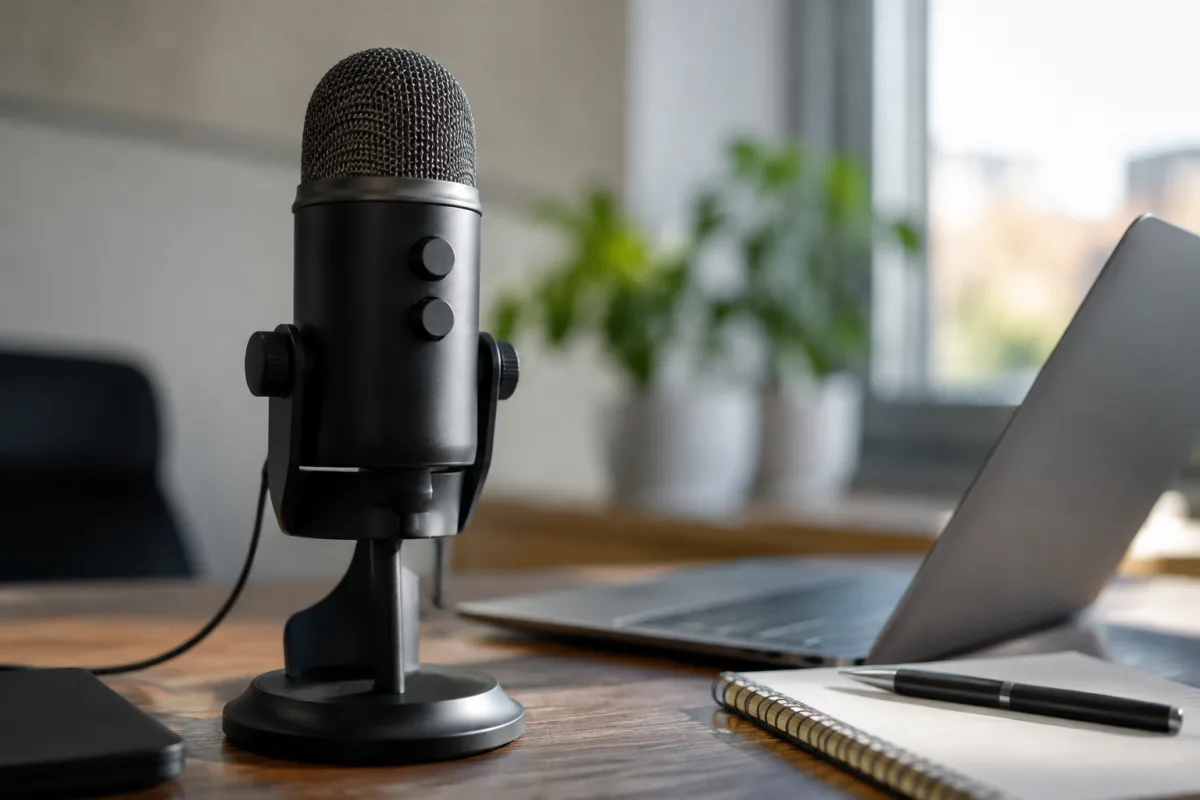
USB condenser microphones revolutionised home recording by eliminating the need for expensive audio interfaces, providing professional-quality sound capture directly to computers without additional equipment. These versatile instruments serve podcasters, voice actors, content creators, and musicians, offering exceptional value and simplicity that encourages anyone to pursue quality audio recording. Whether you're beginning your recording journey or seeking a reliable backup microphone, USB condenser options deliver compelling advantages and remarkable audio quality at accessible price points.
How USB Condenser Microphones Work
USB condenser microphones integrate complete recording systems within single units, combining sensitive condenser capsules with preamplifiers, analog-to-digital converters, and USB interface electronics. This integration eliminates the need for separate audio interfaces, external preamps, and complex cable arrangements. The microphone connects directly to computers via standard USB connections, providing power and audio simultaneously through a single cable.
The condenser design employs a charged capacitor diaphragm that vibrates in response to sound waves, generating electrical signals converted to digital audio by onboard electronics. This design provides superior sensitivity and detail compared to dynamic microphones, making USB condensers particularly valuable for capturing nuanced performances and detailed instrument sounds.
Advantages Over Traditional Recording Chains
The primary advantage of USB condenser microphones lies in simplicity. Traditional recording setups require separate microphones, audio interfaces, cables, microphone stands, and pop filters coordinated into cohesive systems. USB condensers integrate these elements, reducing cost, complexity, and setup time. This accessibility democratises professional-quality recording, enabling anyone with a computer to capture quality audio.
The elimination of external interfaces reduces ground loop hum and noise issues that plague some traditional setups. Direct USB connection bypasses additional electronics that can introduce artifacts and interference. For many recording scenarios, USB condensers produce cleaner, quieter recordings than complex traditional chains costing significantly more.
Audio Quality and Specifications
Quality USB condenser microphones capture audio at 16-bit, 44.1kHz resolution suitable for professional podcasting, voice acting, and music recording. Higher-end models support 24-bit, 96kHz resolution for demanding applications requiring maximum detail and dynamic range. The frequency response typically spans 50Hz to 20kHz, covering the full human hearing range and most musical instruments.
Sensitivity and dynamic range determine how effectively microphones capture quiet sounds and withstand loud sources. Quality models provide excellent sensitivity capturing subtle vocal nuances and acoustic detail, whilst maintaining sufficient dynamic range for loud sources without distortion. These specifications directly influence audio quality and recorded results.
Suitable Applications
USB condenser microphones excel for podcasting, capturing clean, detailed spoken word with minimal post-processing. Voice actors employ them for character work, dialogue recording, and professional voiceover production. Content creators utilise them for screencasts, tutorials, and online courses. Musicians use them for vocal recording, acoustic instruments, and drum overheads.
The versatility extends beyond individual use. Many professionals maintain USB condenser microphones as backup recording devices or for specific applications where their characteristics prove beneficial. The combination of quality, simplicity, and affordable pricing makes them valuable tools in any recording environment.
Polar Patterns and Directionality
Most USB condenser microphones employ cardioid polar patterns, capturing sound primarily from the front whilst rejecting side and rear sources. This directional characteristic isolates desired sounds and minimises background noise, proving valuable in untreated recording environments. Some models offer selectable patterns including omnidirectional and figure-eight options, providing flexibility for different recording scenarios.
The quality of polar pattern implementation influences how effectively microphones isolate desired sources from ambient noise. Tighter patterns better reject off-axis sources, whilst wider patterns capture more environmental ambience. Understanding these characteristics helps position microphones effectively for desired results.
Recording Environment and Setup
USB condenser microphones benefit from thoughtful acoustic treatment, though they perform acceptably in untreated rooms. Soft furnishings, absorptive materials, and strategic placement minimise reflections and room noise. A quality microphone stand, pop filter, and shock mount isolate the microphone from vibrations and plosive sounds, improving recorded quality substantially.
Positioning matters significantly for capturing desired sound and minimising unwanted noise. Microphone distance influences tone and presence, with closer placement emphasising low frequencies and presence peaks. Experimentation with positioning helps discover optimal setup for specific recording scenarios.
Headphone Monitoring and Latency
Many USB condenser microphones feature onboard headphone monitoring allowing real-time monitoring of recorded audio during capture. Direct monitoring through the microphone itself eliminates latency issues common with computer-based monitoring. This real-time feedback enables confident recording without monitoring delays that frustrate performers.
Price Range and Value Considerations
Quality USB condenser microphones range from £100 to £500, depending on specifications, build quality, and intended application. Budget models beginning around £100 deliver surprising quality for home recording and podcasting. Professional models exceeding £400 provide studio-grade components and specifications suitable for demanding recording applications. The value proposition favours USB condensers when compared to traditional recording chains requiring separate components costing similar or greater amounts.
Conclusion
USB condenser microphones democratise professional-quality audio recording, providing exceptional value and remarkable simplicity that encourages anyone to pursue quality sound capture. The combination of integrated design, excellent audio quality, and affordable pricing makes them indispensable tools for content creators, musicians, podcasters, and voice professionals worldwide. Whether you're beginning your recording journey or seeking reliable backup equipment, USB condenser microphones deliver professional results without the complexity and cost of traditional recording setups.



Comments