
Amps for Stereo article
The Complete Guide to Amps For Stereo
Professional stereo amplification enables accurate studio mixing by delivering transparent, low-distortion signal reproduction essential for reliable monitoring decisions.
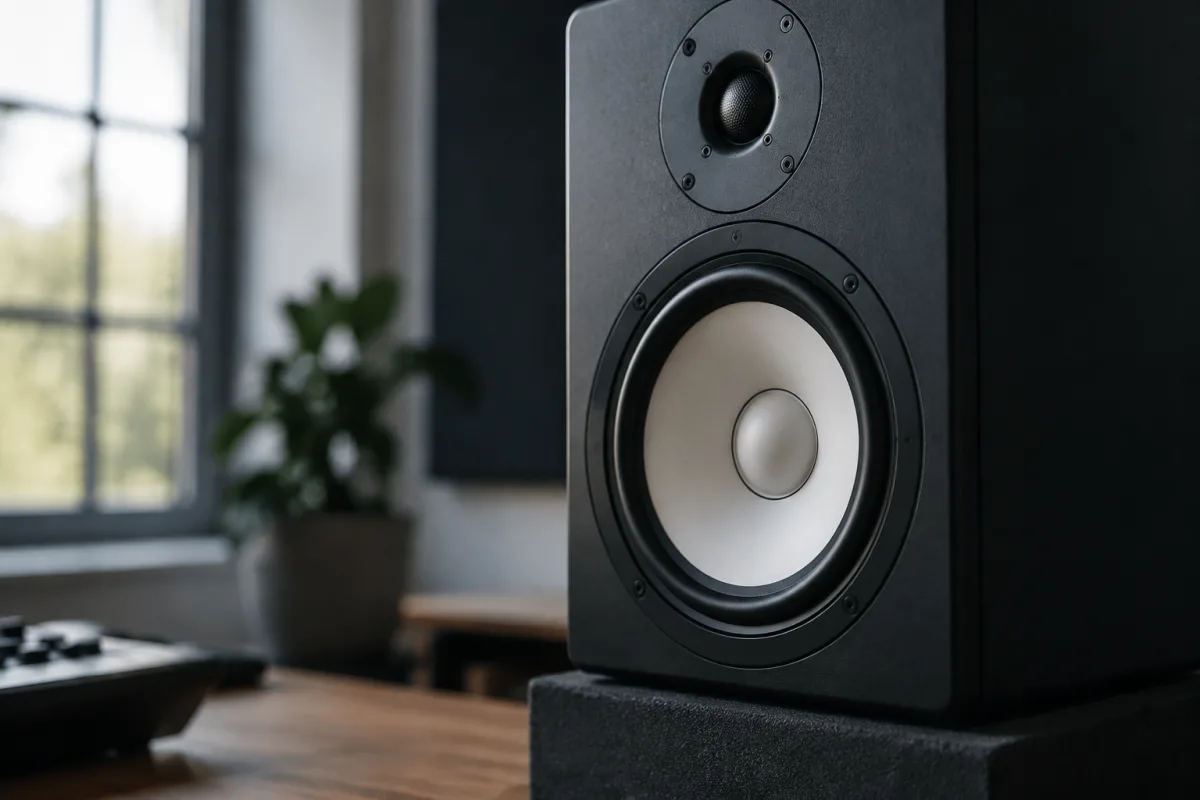
Stereo amplification in recording and mixing represents a critical component of professional studio design. Whether amplifying monitoring speakers, processing incoming microphone signals or creating immersive surround mixing environments, stereo amplification systems must balance power output, low-distortion characteristics and tonal neutrality. Understanding stereo amplifier specifications and applications helps recording professionals construct monitoring systems that enable accurate mixing decisions.
The Role of Stereo Amplification in Recording Studios
Studio monitor amplification serves a fundamentally different purpose than live reinforcement or hi-fi listening systems. Recording engineers require transparent, accurate amplification that reveals mixing errors rather than flattering the mix. This demands low distortion, flat frequency response and consistent performance across the monitoring environment's acoustic conditions.
Active studio monitors—speakers with built-in amplification—have largely displaced passive speaker designs in modern studios, as integrated amplification allows tailored tone-shaping specific to each speaker model. However, many professional studios maintain discrete amplification for multi-channel monitoring, surround mixing and specialist acoustic applications requiring separate amplifier units.
Amplifier Specifications and Performance Characteristics
When evaluating stereo amplifiers for studio use, several technical parameters determine suitability for recording and mixing applications. Output power should match speaker impedance and desired listening levels; most professional studios employ 50–200 watt amplifiers sufficient for accurate monitoring in medium to large control rooms. Total harmonic distortion (THD) should remain below 0.1%, ensuring clean signal reproduction without colouration.
Frequency response should extend from 20Hz to 20kHz with minimal deviation, allowing engineers to hear the full spectral content of their mixes. Input impedance must remain high (typically 10kΩ or greater) to avoid loading microphone preamp outputs. A balanced XLR or RCA input connectivity proves essential for integrating amplifiers into professional audio chains with minimal noise introduction.
Active vs. Passive Amplification Systems
- Active speakers: Integrated amplification tailored to each speaker's driver characteristics, automatic protection circuits, built-in EQ adjustment, compact footprint. Dominant in contemporary studios.
- Passive speakers with external amps: Separate power amplifier driving one or more speaker units, flexible configuration options, easier equipment replacement. Common in large facilities and multi-speaker setups.
- Powered subwoofers: Dedicated bass amplification for extended low-frequency monitoring, integral to accurate mixing of contemporary music requiring precise bass definition.
Tonal Characteristics and Studio Applications
Studio amplification must remain tonally neutral, avoiding the warmth, presence peaks or bass emphasis common in consumer hi-fi or live sound amplifiers. However, some professional engineers deliberately employ coloured amplification—vintage tube amplifiers or transformer-balanced designs—to impart subtle harmonic character that enhances mix aesthetics. This approach demands experience; incorrect colouration leads to mixes that translate poorly to consumer playback systems.
| Application | Amplifier Type | Key Characteristics |
|---|---|---|
| Stereo mix monitoring | Neutral solid-state or active monitors | Transparent, low distortion, frequency-flat response |
| Surround mixing | Multiple matched channels | Consistent response across all channels, separate level control |
| Bass monitoring | Powered subwoofer amplification | High power handling, robust bass extension, crossover capabilities |
| Specialty monitoring (vintage) | Tube or transformer-balanced | Harmonic enhancement, colouration for aesthetic character |
Power Considerations and Speaker Matching
Amplifier power output must match speaker specifications to avoid both underpowering and excessive heat generation. Underpowered amplifiers produce distortion under high-level material, creating mixing errors. Overpowered amplifiers unnecessarily increase heat output and waste energy. Most professional studios employ 50–150 watt amplifiers driving 87–95dB sensitivity speakers, producing comfortable 85–95dB monitoring levels without distortion risk.
Speaker impedance matching proves critical; a 4-ohm speaker connected to an amplifier rated for 8-ohm loads results in excessive current draw and potential amplifier damage. Professional amplifiers typically specify output power at both 4-ohm and 8-ohm impedances, enabling flexible configuration whilst maintaining safe operating parameters.
Acoustic Treatment and Amplification Interaction
Amplifier characteristics interact significantly with studio acoustics. A flat-response amplifier in an acoustically untreated room produces misleading low-end emphasis (due to corner bass buildup) and presence peaks (from reflective surfaces), creating mixes that translate poorly elsewhere. Conversely, proper acoustic treatment combined with accurate amplification enables mixing decisions that translate reliably to consumer playback systems and competing productions.
Conclusion
Stereo amplification in recording studios demands careful equipment selection prioritising transparency, low distortion and accurate frequency response. Whether selecting active studio monitors or discrete amplifiers for multi-channel configurations, matching amplifier specifications to room acoustics and speaker characteristics ensures monitoring systems that enable professional mixing decisions. By understanding amplifier performance parameters and their interaction with speaker and room acoustics, recording professionals can construct monitoring environments supporting accurate, translatable mixes.



Comments