


Focusrite Interfaces article
Focusrite Interface 2i2: A Complete Guide
Focusrite audio interfaces deliver professional-quality preamps and reliable performance at accessible prices, from entry-level Scarlett models perfect for beginners to professional RedNet systems for complex studios.
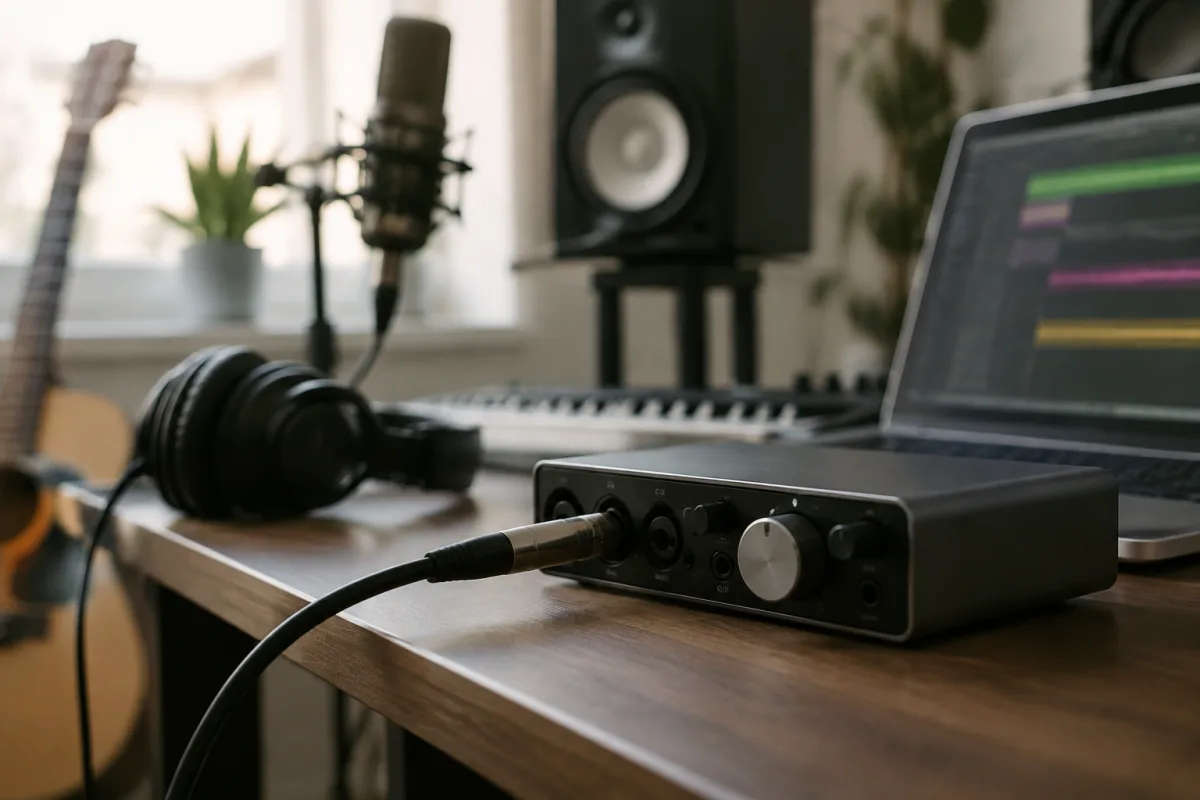
Focusrite audio interfaces have become synonymous with accessible, professional-quality recording, earning trust from beginners learning their first DAW and professionals running complex studio sessions alike. Understanding Focusrite's product range, their engineering approach, and what makes their interfaces popular choices will help you select equipment delivering excellent value and genuine reliability for your recording journey.
The Focusrite Philosophy
Focusrite builds interfaces emphasising sonic quality, intuitive design, and honest value. Rather than chasing feature overload, the company focuses on delivering exceptional preamps, reliable drivers, and user experiences requiring minimal setup. This philosophy means you spend less time wrestling configuration problems and more time actually recording. It's an approach resonating deeply with both hobbyists valuing simplicity and professionals respecting straightforward engineering.
The company's origins trace to professional mixing console design, meaning interface DNA reflects decades of studio expertise rather than computer peripheral thinking. Focusrite engineers understand what recording requires; their interface designs reflect that knowledge.
Focusrite's Product Range
Focusrite offers interfaces across numerous price points. The entry-level Scarlett series (2i2, 4i4, 8i6) combines excellent build quality with accessible pricing, making them ideal first interfaces for students and emerging artists. The Pro series (RedNet, RedNet-X) serves professional studios and touring musicians demanding premium preamps and advanced connectivity. The Forte series bridges accessibility and professionalism, targeting semi-pro studios and serious hobbyists.
Each series maintains Focusrite's core philosophy: clean sound, reliable operation, and intuitive control. Choosing the right model depends on your specific needs—bedroom recording, band tracking, mixing, touring—rather than simply buying the most expensive option available.
Key Specifications: What Matters
Preamp quality defines a Focusrite interface's sonic character. The company's in-house-designed preamps deliver clean, transparent amplification with low noise floors and sufficient headroom for professional microphones. This transparency allows microphone character to shine through uncoloured by amplifier characteristics.
Connectivity options vary across Focusrite's range. USB 2.0 suits most recording scenarios with sufficient bandwidth for multiple channels at standard sample rates (44.1kHz-48kHz). Thunderbolt options provide greater bandwidth for higher sample rates and more simultaneous channels. Choosing connectivity depends on your computer's ports and anticipated track count.
Sample rate support extends to 192kHz on most Focusrite models, providing professional-grade specification even on entry-level interfaces. Whilst most recordings ultimately reach 44.1kHz or 48kHz, recording at higher sample rates provides greater headroom and fidelity during initial capture and mixing.
Latency performance remains excellent across Focusrite's range, with most models achieving sub-5ms latency at standard buffer sizes. This responsiveness proves crucial for recording acoustic instruments and drums with real-time monitoring.
Popular Focusrite Interface Models
| Model | Input Count | Preamps | Best For | Price Range |
|---|---|---|---|---|
| Scarlett 2i2 | 2 inputs, 2 outputs | 2 microphone preamps | Bedroom recording, singer-songwriters | £ 150–£250 |
| Scarlett 4i4 | 4 inputs, 4 outputs | 2 microphone preamps | Home studios, small bands | £ 250–£350 |
| Scarlett 8i6 | 8 inputs, 6 outputs | 2 microphone preamps | Band tracking, complex sessions | £ 350–£450 |
| Forte | 10 inputs, 6 outputs | 4 microphone preamps | Semi-pro studios, mixing | £ 800–£1,200 |
| Pro RedNet | 8–16 inputs, 8–16 outputs | 8–16 preamps | Professional studios, touring | £ 2,500+ |
Focusrite Preamps: Why They Sound Good
Focusrite's reputation rests significantly on preamp quality. Their designs prioritise clean amplification capturing microphone character without imparting obvious sonic signature. This transparency allows every microphone's authentic personality to emerge—a vintage ribbon's warmth, a condenser's clarity, a dynamic's punch all come through uncoloured by amplifier colouration.
The company's professional heritage shows in preamp specifications: adequate gain range for sensitive condensers and distant microphones, low enough noise floors for professional applications, sufficient headroom handling loud sources. These aren't marketing exaggerations but genuine engineering priorities reflected in real-world recording quality.
Focusrite's Software and Driver Support
Focusrite provides excellent driver support and control software. Installation is straightforward; drivers update regularly. The company maintains compatibility with Windows and macOS across extended product lifecycles, meaning older Focusrite interfaces remain functional years after purchase. This support commitment distinguishes Focusrite from manufacturers abandoning older models.
Control software offers straightforward mixing, gain adjustment, and monitoring routing without overwhelming complexity. The interface remains accessible to beginners whilst providing controls experienced engineers require.
The Scarlett 2i2: Entry Point Success
The Scarlett 2i2 exemplifies Focusrite's philosophy. At accessible pricing, it delivers excellent preamp quality, reliable connectivity, and genuine sonic performance rivalling interfaces costing 2-3 times more. Countless recording professionals built early careers using Scarlett 2i2 interfaces; its humble appearance belies sophisticated engineering underneath.
For bedroom recording, singer-songwriters, and anyone beginning their recording journey, the 2i2 provides everything necessary: two quality preamps, headphone monitoring, USB connectivity, and drivers that simply work. No compromises on sound quality, no bloat of unnecessary features.
Expandability and Growing Beyond Your Interface
Focusrite interfaces design for growth. Starting with a 2i2 and later upgrading to a 4i4 or 8i6 remains practical—you already understand Focusrite's workflow, software is compatible. The company's ADAT connectivity on many models enables expanding microphone preamp count by adding external devices without replacing your interface.
This growth path benefits musicians whose recording ambitions expand beyond initial plans. You're not locked into a single configuration; instead, you can evolve your setup incrementally as your budget and needs increase.
Focusrite's Professional Reputation
Beyond entry-level markets, Focusrite maintains strong reputation in professional studios. Pro RedNet interfaces handle complex tracking, mixing, and mastering applications. Their preamps compare favourably with dedicated professional preamp units costing significantly more. This professional acceptance validates the engineering excellence permeating Focusrite's entire product range.
Conclusion
Focusrite audio interfaces represent intelligent investment combining proven engineering, genuine sonic quality, and accessible pricing. Whether you're recording your first songs on a Scarlett 2i2 or running complex professional sessions through a RedNet interface, Focusrite delivers reliability, functionality, and sound quality that simply work. The company's decades-long reputation in professional audio, commitment to driver support, and straightforward design philosophy make Focusrite interfaces trusted tools for musicians, producers, and engineers worldwide—equipment you'll use confidently for years to come.






Comments