


Focusrite Controller Buying guide
Focusrite Controller: A Complete Buyer's Guide
Choosing the right Focusrite controller means understanding specs that actually matter, identifying your true I/O needs, and matching price to performance. This buying guide cuts through the noise.
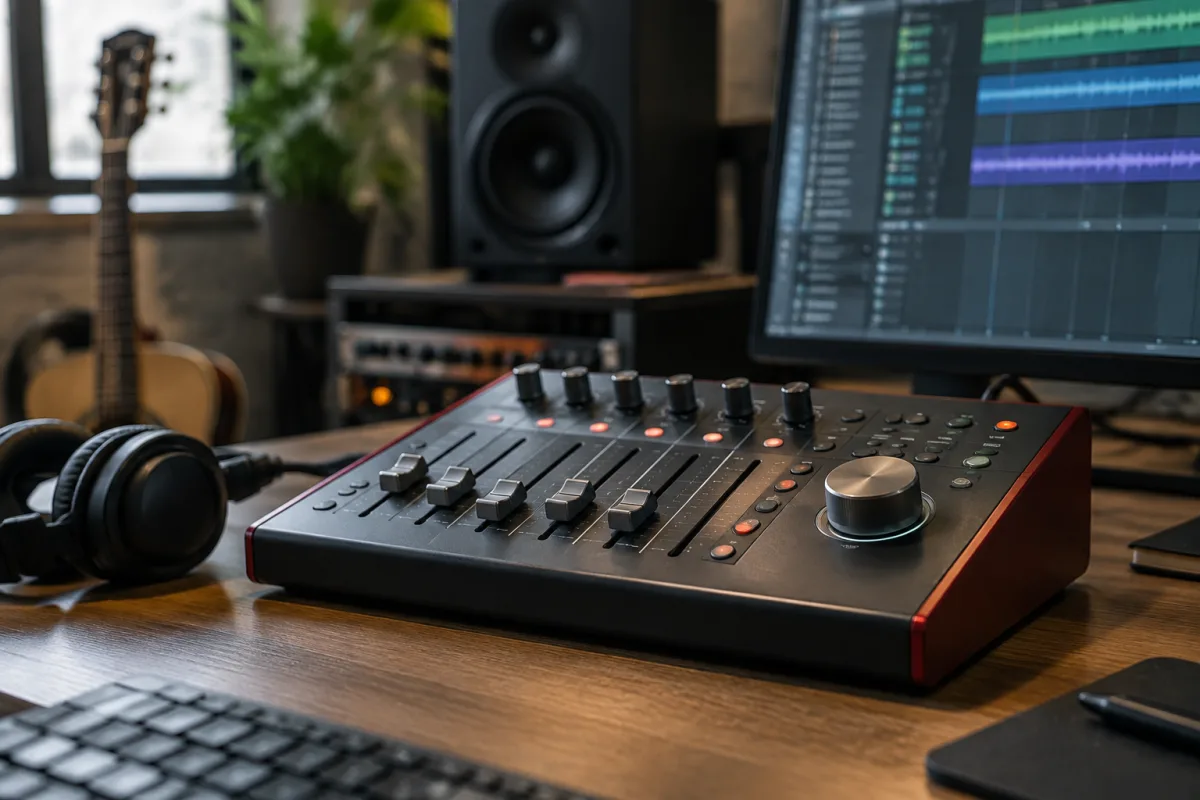
If you're setting up a home or professional studio, selecting the right Focusrite controller makes a genuine difference to your workflow and creative process. With several models available at different price points and feature sets, the decision isn't always straightforward. This guide cuts through the marketing speak and focuses on what actually matters when you're choosing a Focusrite controller: which specs drive real value, what hidden costs you should anticipate, and how to match a model to your actual needs rather than buying on hype or brand loyalty alone. By the end, you'll know exactly which tier suits your budget and how to spot compromises that might frustrate you later.
Controller vs. Interface: Understanding What You're Buying
Before comparing Focusrite controllers specifically, let's clarify what a Focusrite controller actually is. A controller is primarily for managing your DAW (Digital Audio Workstation)—think of it as a physical interface to your recording software. Most Focusrite controllers include audio I/O as well, handling microphone preamps and audio routing. This hybrid role matters because it shapes what you should prioritise when choosing. You're not just buying control surface hardware; you're buying an audio interface that lets you control your software hands-on rather than mousing around endlessly. Understanding this distinction helps you evaluate whether a Focusrite controller is the right purchase for your setup.
Key Specs That Actually Matter
When comparing Focusrite controller models, certain specifications genuinely impact your daily experience. Others are marketing padding. Let's separate them:
Channel count (input and output) is your first decision point. Entry-level Focusrite controllers offer 2 input/2 output (stereo pairs). Mid-range models step up to 4-in/4-out or 4-in/8-out. Professional models go further. The critical question: how many sources are you recording simultaneously, and how many outputs does your monitoring chain require? If you're recording vocals with a guide track, 2-in is sufficient. If you're tracking a full band or running parallel processing chains, you need more I/O. Be honest about this; buying too little means frustration, buying excess means unnecessary cost.
Preamp quality is where Focusrite's reputation lives. Their Scarlett and Clarett preamps are genuinely transparent and quiet—meaning they add minimal colouration and noise. Lower-end Focusrite controllers use simpler preamp stages but still maintain respectable quality. Mid-range and professional models use superior electronics. This matters if you're tracking professional vocals or quiet acoustic instruments. If you're recording drums or guitar amps, preamp differences are less audible. Check the noise floor and frequency response specs; lower noise figures mean cleaner recordings.
Sample rate and bit depth are modern non-issues for most home studios. Nearly all Focusrite controllers handle 24-bit/192kHz or better. This is overkill for most work—you won't hear the difference—but it doesn't hurt. Focus on this only if you're mastering or delivering to high-specification clients.
Transport controls and faders affect your hands-on control. Entry-level models might have basic buttons; mid-range ones include motorised faders; professional models offer sophisticated control layouts. If you're mixing in your DAW, tactile faders save you from endless mouse work. Motorised faders are a genuine ergonomic win but add cost. Evaluate how much hands-on control you actually do; if you're primarily recording, simple controls suffice.
Software integration matters more than many people realise. Better Focusrite controllers come with comprehensive DAW integration—meaning buttons and faders map cleanly to your software without manual setup. Entry-level models sometimes require configuration. Some models bundle plugins or software; others don't. Check what you're actually getting in the box.
The Focusrite Controller Tiers Explained
Focusrite structures its controller line in clear tiers. Understanding where each sits helps you match your needs to your budget:
Budget tier (£150–£350): Smaller controllers with 2-in/2-out I/O, basic faders or buttons, and simpler preamps. Good for home recordists, podcasters, or bedroom producers learning the ropes. Downsides: limited simultaneous recording, basic control layout, sometimes finicky software integration. Upsides: affordability and space efficiency. If this is your first controller or you're testing the waters, start here.
Mid-range tier (£350–£750): Larger control surfaces with 4-in/4-out or better, motorised faders, better preamps, and more sophisticated DAW integration. This tier is where most working producers live. You get genuine ergonomic benefits and audio quality that scales with professional work. Downsides: higher cost, more desk space required. Upsides: flexibility and real-world usability.
Professional tier (£750+): Full-featured control surfaces with extensive I/O, premium preamps, advanced monitoring options, and sophisticated mixing control. Aimed at mastering engineers and high-volume studios. Downsides: significant cost and space demands. Upsides: tangible quality increases and workflow acceleration for serious professionals. Only justify this tier if you're earning revenue from your recordings.
Pitfalls to Avoid When Buying
These mistakes appear regularly among Focusrite controller buyers:
- Undershooting I/O for future-proofing: You think you need 2-in, but six months later you're tracking a three-piece band and wish you'd bought 4-in. Focusrite controllers aren't cheap enough to buy twice. Estimate generously; extra I/O costs less than upgrading.
- Ignoring driver stability: Focusrite's drivers are generally solid, but compatibility varies across OS versions and DAWs. Check forum posts for your specific setup before buying. A controller that works beautifully in Logic might have glitches in Ableton depending on driver versions.
- Forgetting about desk space: A full-featured Focusrite controller can consume serious desk real estate. Measure your workspace before ordering. Compact models exist if space is tight, but they sacrifice some hands-on control.
- Buying for specs you'll never use: You don't need 8-in/8-out if you're recording one vocal at a time. Professional specs inflate the price. Resist feature creep; buy what you actually need.
- Neglecting monitoring setup: A Focusrite controller needs speakers and headphones. If you're spending £500 on the controller, invest £200+ in proper nearfield monitors. A mediocre monitoring chain undermines the entire investment.
- Overlooking resale value: Focusrite controllers hold value reasonably well in the used market. If you buy wisely in the mid-range, you can resell later without catastrophic loss.
Compatibility Questions to Answer Before Buying
Your Focusrite controller must integrate smoothly with your existing setup:
- What's your primary DAW? (Check that Focusrite supports it officially.)
- Are you on Mac, Windows, or both? (Driver support varies.)
- How many USB ports does your computer have? (Controllers consume bandwidth; you might need a hub.)
- Do you already own audio interfaces? (Some workflows combine controllers with existing I/O.)
- What's your monitoring setup? (Speakers, headphones, room acoustics all matter.)
Price vs. Performance: Getting Real Value
The relationship between Focusrite controller price and actual benefit isn't linear. Jumping from £150 to £350 gives tangible improvements: better preamps, motorised faders, smoother integration. Jumping from £350 to £750 gives smaller incremental benefits unless you're doing professional mixing work. Jumping to £1500+ is only justified if you're mixing and mastering full-time. The sweet spot for serious hobbyists and semi-professionals sits around £400–£600. You get professional-grade preamps, genuine ergonomic control, and reliable software integration without premium pricing.
Making Your Final Decision
Start by clarifying these points: How many sources will you record simultaneously? How important is tactile mixing control to you? What's your budget ceiling? Will others use your setup? With answers in hand, consult the Focusrite controller range and match specifications to your needs rather than chasing the newest or most featured model. Read user reviews specifically for your intended DAW and operating system; compatibility issues are real, and fellow users will flag them honestly. Finally, if possible, test a controller at a shop or borrow one from a friend before committing. Ten minutes of hands-on time often reveals whether the layout and workflow feel natural to you.
For a comprehensive comparison of all Focusrite controller models, detailed specifications, and in-depth reviews, our complete guide to Focusrite controllers provides full coverage. But with the decision framework in this guide, you're ready to make a choice aligned with your actual needs.



Comments