


Dante Audio Interface article
The Ultimate Guide to Dante Audio Interface
Dante audio interfaces revolutionise professional audio by transmitting dozens of high-fidelity channels over standard Ethernet networking. Discover how Dante technology simplifies studio and tour infrastructure.
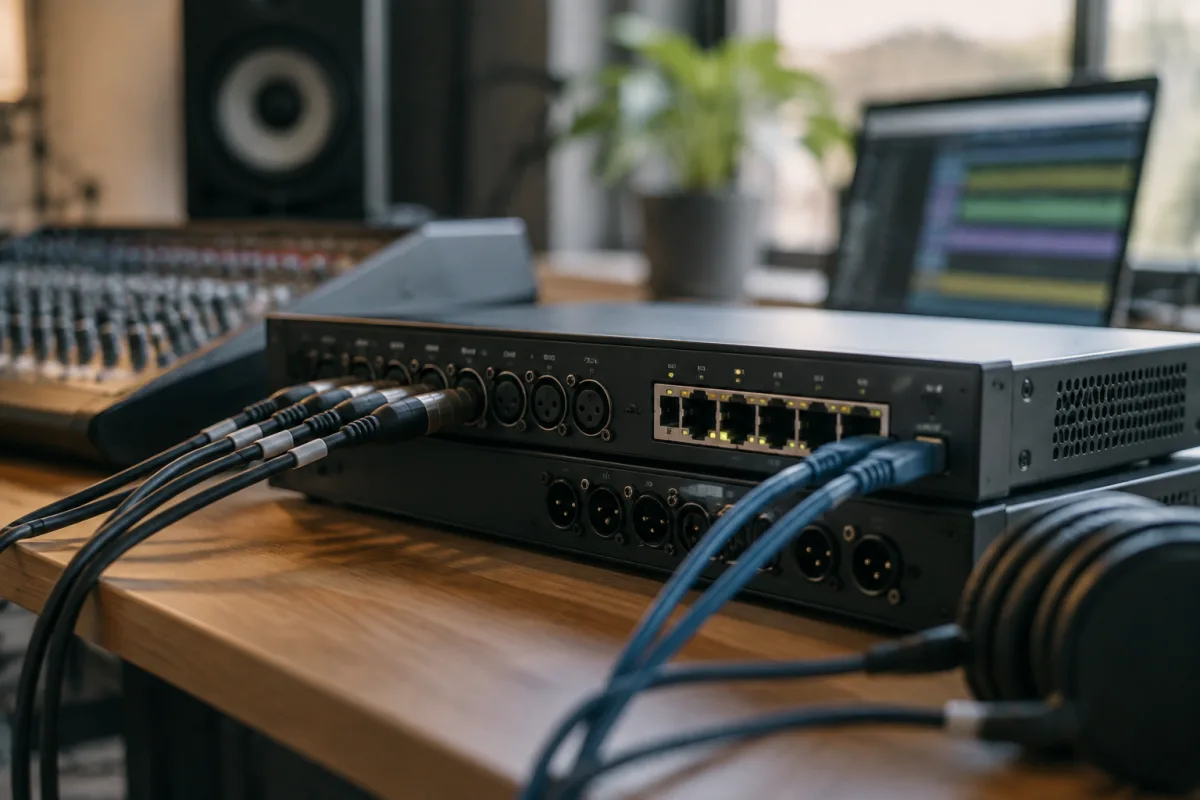
A Dante audio interface represents a fundamental shift in how professional studios and live sound systems handle multi-channel audio. Rather than using traditional analog cables or limited digital connections, a Dante audio interface transmits dozens of high-quality audio channels over standard Ethernet networking. This technology has transformed studio architecture and tour logistics, enabling unprecedented flexibility in recording facilities and live sound reinforcement. This guide explores how Dante audio interfaces work, their advantages over traditional setups, and how to integrate one into your professional audio workflow.
Understanding Dante Audio Technology
Dante is a networking protocol specifically designed for professional audio. Unlike generic Ethernet connections that prioritise data transfer, a Dante audio interface optimises for ultra-low latency and absolute reliability. When you connect a Dante audio interface to your Ethernet network, it seamlessly shares dozens of audio channels with other Dante-compatible devices—mixers, preamps, speakers, interfaces, and recording systems.
The elegance of Dante audio interface technology lies in its simplicity: a single Ethernet cable carries what would traditionally require dozens of analog wires or proprietary digital protocols. A Dante audio interface capable of 512 channels over a single network connection eliminates cable clutter, reduces stage footprint, and streamlines system architecture. This density is particularly valuable in touring situations and rental houses where cable management and portability are critical concerns.
Dante audio interface systems maintain sub-millisecond latency, meaning the time delay between audio input and output is virtually imperceptible to human hearing. This is essential for studio monitoring, live mixing, and real-time collaboration. Traditional multi-channel audio systems cannot compete with Dante audio interface performance in this regard.
How Dante Audio Interface Works in Practice
A Dante audio interface operates as both a connection protocol and a physical interface. Most Dante audio interfaces use standard RJ45 Ethernet connectors, making them compatible with any modern networking infrastructure. Setup involves simply plugging a Dante audio interface into your network, configuring channel routing through management software, and beginning audio transmission.
Dante audio interface devices are not limited to recording interfaces; the protocol works across an entire ecosystem. Your mixing console might be a Dante audio interface-equipped unit; your microphone preamps connect via Dante; your studio monitors are Dante-enabled; and your DAW receives and transmits Dante audio interface streams. This integrated approach simplifies signal flow and eliminates the format conversion that traditional studios require.
Clock synchronisation in a Dante audio interface system is automatic and transparent. The network itself becomes the master clock, eliminating the need for external synchronisation cables or word clock discipline. This plug-and-play approach is one of Dante audio interface technology's greatest advantages over competing networking solutions.
Types of Dante Audio Interfaces Available
Dante audio interface options range from modest studio solutions to enterprise-scale broadcast and touring systems:
| Category | Dante Audio Interface Type | Channel Count | Best For |
|---|---|---|---|
| Compact | Small audio interface with Dante I/O | 2–8 channels | Desktop recording, home studios, simple setups |
| Moderate | Console mixer with Dante connectivity | 16–32 channels | Small recording studios, live venues, local touring |
| Professional | Large-format mixing console with Dante | 64–256+ channels | Major recording facilities, broadcast, large tour productions |
| Network | Dante audio interface expansion nodes | Variable (512+) | Distributed systems, multi-location recording, broadcast chains |
Most modern professional audio equipment includes Dante audio interface connectivity as standard. This widespread adoption means you're not investing in a proprietary ecosystem; you're gaining access to hundreds of compatible products.
Dante Audio Interface Advantages Over Traditional Systems
The shift to Dante audio interface networking offers tangible benefits:
Cable reduction is immediate and dramatic. A traditional 32-channel recording interface might require 32 analog XLR cables plus extensive installation labour. A Dante audio interface delivers the same channels over a single Ethernet cable. For touring productions, this translates to lighter trucks, faster setup/teardown, and fewer failure points in your signal chain.
Flexibility and expandability are built into Dante audio interface architecture. Need more inputs? Add another Dante audio interface device to your network. Move channels between devices? Reconfigure software routing instantly. Traditional systems require physical rewiring; Dante audio interface systems adapt with a few mouse clicks.
Future-proofing is guaranteed with Dante audio interface adoption. Dante networking is open-standard and manufacturer-agnostic. As your needs evolve, you can upgrade individual components whilst keeping your network intact. Legacy analog systems force complete replacement when capabilities need expansion.
Collaboration possibilities multiply with Dante audio interface technology. Studio A and Studio B at different locations can share Dante audio interface streams over the internet (with appropriate network management). Session musicians in multiple cities can contribute to the same recording with sub-millisecond synchronisation. This remote collaboration was impossible with traditional audio routing.
Infrastructure simplification means your Dante audio interface system uses existing IT infrastructure. Standard Ethernet switches, reliable CAT6 cabling, and conventional networking practices all apply. You don't need specialised audio networking knowledge; standard IT support suffices.
Setting Up Your Dante Audio Interface System
Implementing a Dante audio interface system requires careful planning. Start by mapping your audio device ecosystem: which equipment supports Dante connectivity, and what does? Most modern professional gear includes Dante audio interface compatibility, but verify before purchasing.
Network infrastructure matters significantly. Dante audio interface systems benefit from dedicated Ethernet networks separate from data traffic. A gigabit Ethernet switch dedicated to audio keeps Dante audio interface streams isolated from internet traffic and ensures reliable performance. Most professional setups include managed Dante audio interface network switches for optimal performance.
Dante audio interface configuration happens through software controllers. Dante Controller software (available free from Audinate, the protocol owner) lets you configure which devices connect to the network, assign audio channels to specific routes, and monitor system status. Take time learning Dante audio interface software; proper configuration prevents headaches later.
Clock discipline in Dante audio interface networks is automatic, but you should designate a primary clock source. Most systems nominate the mixing console or central interface as the master. Secondary devices automatically sync to this master, creating a coherent audio clock across the entire Dante audio interface network.
Dante Audio Interface in Live Sound and Touring
Live sound professionals embrace Dante audio interface technology for its reliability and flexibility. A touring production using Dante audio interface can set up a complete mixing system with minimal cabling. Multiple stage boxes, in-ear monitor sends, and front-of-house feeds all flow through Dante audio interface streams to the mixing console.
Redundancy is built into Dante audio interface architecture. Primary and secondary network paths can operate simultaneously, with automatic failover if the primary connection fails. For critical touring applications, this reliability is invaluable—your sound system continues operating even if network components fail.
Remote mixing is possible with Dante audio interface systems. A monitor engineer can operate a Dante audio interface-equipped console from anywhere on the network—backstage, in the audience, or even remotely via internet VPN connection. This flexibility transforms tour logistics and enables real-time problem-solving.
Recording Studio Applications of Dante Audio Interface
Recording studios benefit from Dante audio interface systems through topology flexibility. Your microphone preamps, summing amplifiers, mastering-grade converters, and studio monitoring can all connect via a single Dante audio interface network. Track counts and channel capacity become limited only by your network bandwidth and software scalability, not by physical interface limitations.
A hybrid studio setup using Dante audio interface technology can combine vintage analog gear with modern digital recording. Your classic valve preamps connect to Dante audio interface converters; your DAW and digital processing work over standard Dante connections; your studio monitors receive Dante audio interface feeds. This flexibility allows studios to preserve valued analog equipment whilst leveraging modern network advantages.
Dante Audio Interface Reliability and Networking Best Practices
For mission-critical applications, Dante audio interface systems demand professional network management. Redundant network paths, managed switches with quality-of-service prioritisation, and proper cable shielding all contribute to rock-solid performance. Treat your Dante audio interface network like broadcast infrastructure, not a casual computer network.
Monitoring Dante audio interface network health is essential. Use Dante Domain Manager (a professional tool) to track network status, identify latency issues, and diagnose problems before they affect your audio stream. Many professionals subscribe to monitoring systems that alert them to network anomalies immediately.
Backup systems matter with Dante audio interface deployments. Whilst failure is rare, having backup analog connections available ensures your show continues even if primary Dante audio interface links fail. Professional touring productions typically carry analog backup paths alongside their primary Dante audio interface infrastructure.
Cost Considerations
Dante audio interface-equipped devices command premium pricing compared to traditional analog-only alternatives, but the total system cost often favours Dante. You eliminate cable infrastructure, installation labour, and ongoing maintenance associated with hundreds of analog connections. A mid-sized touring rig using Dante audio interface technology costs less to operate than a comparable traditional setup over five years.
Conclusion
Dante audio interface technology represents a fundamental evolution in professional audio infrastructure. Whether you're building a new recording studio, upgrading a touring rig, or implementing live sound systems, Dante audio interface connectivity offers reliability, flexibility, and future-proofing that traditional systems cannot match. The protocol is well-established, manufacturer support is strong, and the ecosystem of compatible devices continues expanding. Investing in Dante audio interface technology is investing in a professional audio foundation that will serve your needs for years to come.



Comments