
Pieces Piano article
The Complete Guide to Pieces Piano
Piano pieces encompass centuries of compositional brilliance—from Bach's intricate fugues to Debussy's impressionistic colour. Whether you're a student or listener, this guide explores the world of solo piano repertoire.
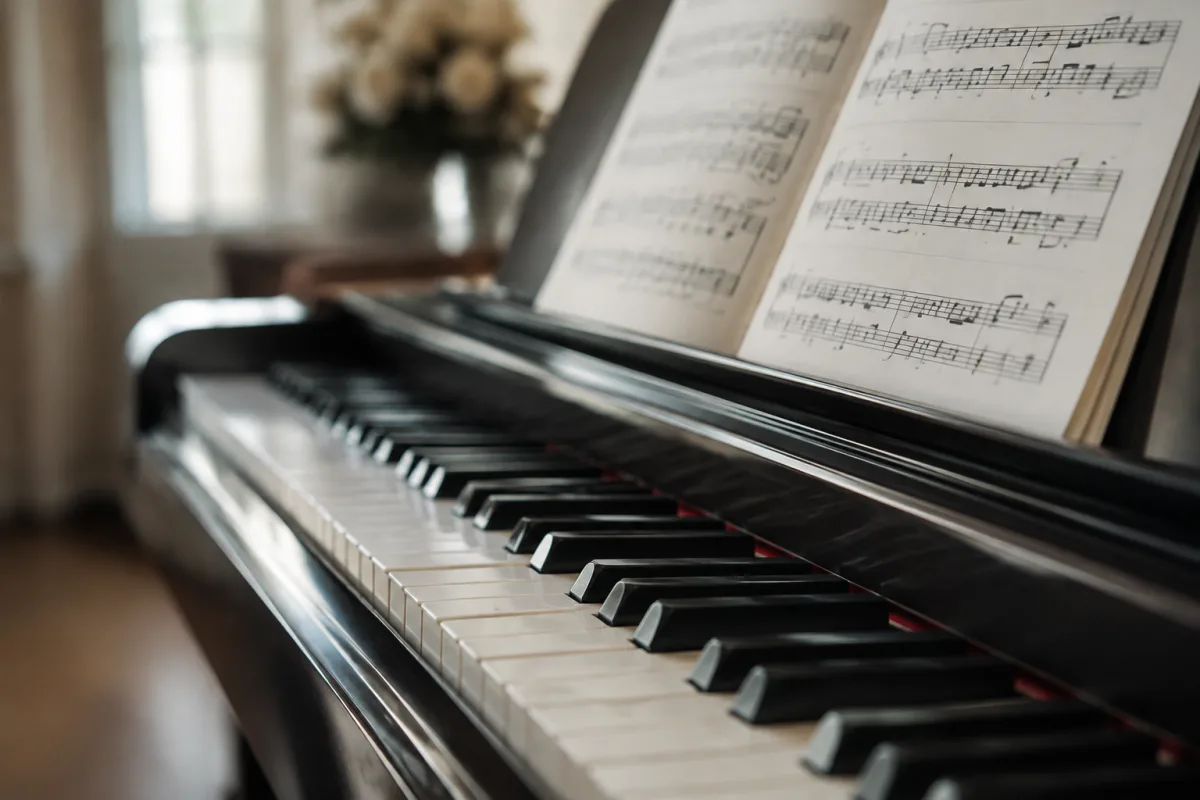
Piano pieces range from delicate miniatures to sprawling concert symphonies, each representing centuries of compositional mastery and artistic expression. Whether you are an aspiring pianist seeking repertoire, a music student building technique, or simply a listener looking to deepen your appreciation of classical music, understanding this vast world offers entry into one of Western music's greatest treasures.
What Are Piano Pieces?
Piano pieces encompass all works written specifically for solo piano performance. They range from short étude exercises designed to build technical skill to substantial sonatas and concert works that showcase virtuosity and emotional depth. A single composition might last anywhere from a few seconds to over an hour, and may be written in any style—from Baroque counterpoint to contemporary minimalism.
The piano's versatility as both a melodic and harmonic instrument makes it ideal for solo composition. Unlike orchestral instruments, which need an ensemble, a single pianist can fully realise a complete musical work without accompaniment. This capacity has attracted composers for nearly three centuries, resulting in an enormous and continuously growing body of repertoire.
The Major Composers of Piano Repertoire
The classical era saw piano composition emerge as a central art form. Composers like Mozart and Beethoven penned elegant sonatas, whilst the Romantic period brought Chopin, Liszt and Schumann, who explored lyrical, virtuosic and experimental possibilities. Each era and composer brought a distinct voice to the instrument.
| Composer | Era | Characteristic Style |
|---|---|---|
| Johann Sebastian Bach | Baroque | Fugues, inventions; complex counterpoint and mathematical precision |
| Wolfgang Amadeus Mozart | Classical | Elegant sonatas; clarity, grace and balanced form |
| Ludwig van Beethoven | Classical/Romantic | Dramatic sonatas; emotional range from intimate to thunderous |
| Frédéric Chopin | Romantic | Lyrical nocturnes, études, and poetic nationalism; intimate scales |
| Franz Liszt | Romantic | Virtuosic concert pieces; technical brilliance and dramatic flair |
| Pyotr Ilyich Tchaikovsky | Late Romantic | Passionate emotion and sweeping melodies; Russian character pieces |
| Johannes Brahms | Late Romantic | Serious chamber-like sensibility; rich harmony and structural depth |
| Claude Debussy | Impressionist | Evocative colour and texture; modal harmony and atmospheric abstraction |
Types of Piano Pieces
Sonatas are large-scale works in multiple movements, typically structured as fast–slow–fast. They form the backbone of piano repertoire and demand considerable technique and interpretive maturity.
Études (studies) are technically demanding exercises designed to build finger strength, agility and facility at the keyboard. Chopin and Liszt raised the étude to an art form—such works are simultaneously pedagogical and concert-worthy.
Nocturnes, popularised by Chopin, are lyrical character pieces, usually in ABA form with a singing right-hand melody and accompaniment texture. They are intimate and deeply expressive.
Preludes and Fugues, exemplified by Bach's *Well-Tempered Clavier*, pair a free-form prelude with a polyphonic fugue. They explore harmonic colour and contrapuntal ingenuity.
Variations take a theme and elaborate it through multiple transformations, testing both composer creativity and performer interpretation. Beethoven and Brahms excelled at this form.
Miniatures and character pieces—dances, marches, lyrical songs without words—are typically brief (2–10 minutes) and offer accessible entry points for listeners and learners alike.
Choosing Repertoire for Your Level
If you are a pianist beginning your repertoire study, start with simpler Baroque dance movements, Mozart's easier sonatas, or character works by Schumann or Kabalevsky. These build confidence without overwhelming technical demands. Intermediate players might explore Chopin's Prélude in E minor or Beethoven's *Moonlight Sonata*. Advanced pianists tackle Liszt's concert etudes, Brahms's Intermezzi or contemporary works by Bartók and Ligeti.
A good teacher will guide selection based on your technical readiness, musical interests and goals. Choosing pieces piano that sit just beyond your current ability fosters growth; skipping levels leads to frustration and sloppy technique.
Finding and Learning Piano Repertoire
Sheet music for piano compositions is widely available through online retailers (IMSLP offers free public-domain scores), music publishers and local music shops. YouTube hosts thousands of reference recordings by professional pianists—use these to hear a work before committing time to learning it.
Learn the piece methodically. Read the score away from the keyboard first, noting any unusual harmonies, fingering recommendations or expressive marks. Break sections into smaller units (often 8 or 16 bars) and practice slowly with correct hand position and touch. Record yourself periodically to hear mistakes your ears might otherwise miss. A piano teacher's guidance accelerates progress and prevents injury-causing tension.
Memorisation and Performance
Many pianists prefer performing from memory, especially in recital. Memorisation is not essential—many professionals perform from score—but it deepens your connection to the work and frees your eyes and hands for interpretive expression. Develop a multi-layered memory: kinetic (muscle memory of the keyboard geography), aural (how the work sounds), harmonic (understanding the underlying chord changes) and visual (the score itself).
Memorised or not, performing pieces piano in front of an audience sharpens awareness of tempo, phrasing and emotional communication. Even informal recitals for friends and family provide valuable feedback and build confidence.
Beyond the Classical Canon
Piano repertoire extends far beyond Bach and Chopin. Jazz pianists improvise and compose their own pieces piano; film composers craft atmospheric scores; and contemporary classical composers continue to write ambitious new works. Exploring pieces piano outside the traditional canon—ragtime, minimalism, contemporary classical, world music arranged for piano—expands your horizons and keeps the instrument fresh and relevant.
Whether you approach pieces piano as a performer, student or devoted listener, the richness of the tradition and the breadth of contemporary creation ensure there is always something new to discover. Each piece is a window into a composer's world and a mirror for your own musical growth.


Comments