
Reading Music Notation article
The Complete Guide to Reading Music Notation
Reading music notation is the fundamental skill that unlocks access to musical repertoire and enables communication between musicians across instruments and languages.
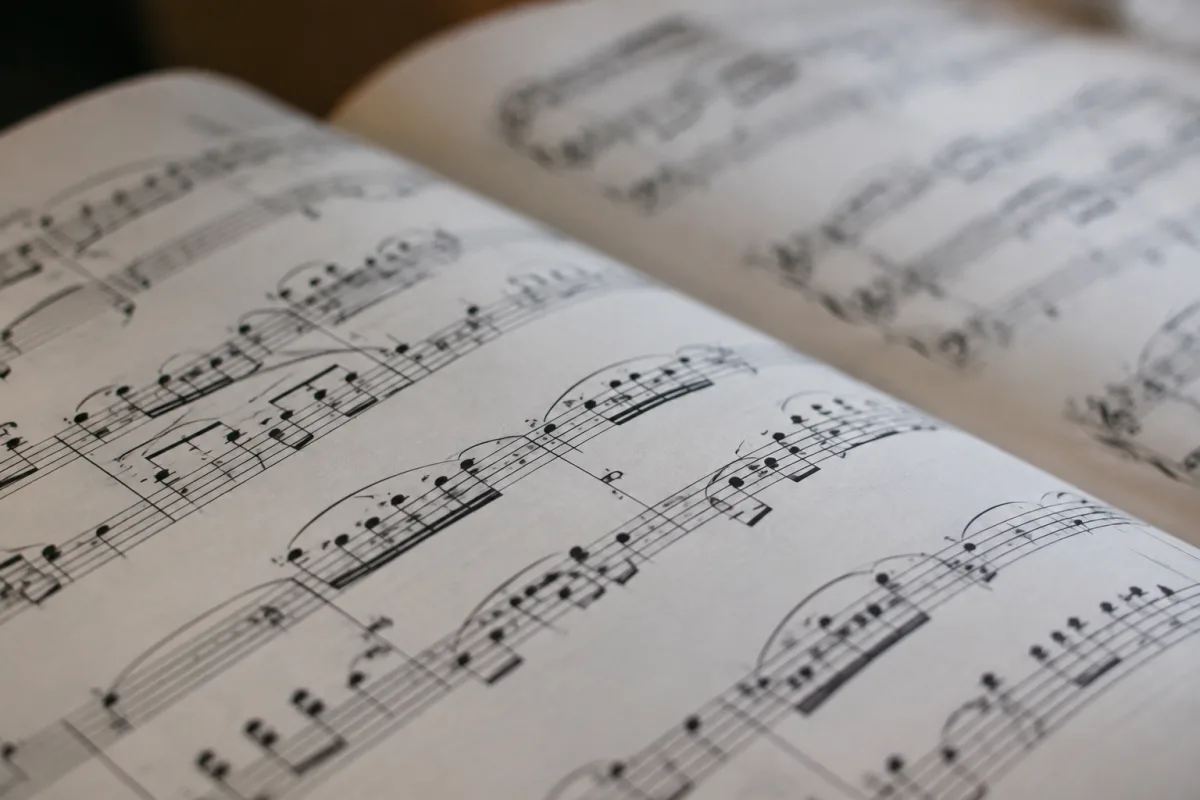
Reading music notation is the fundamental skill that unlocks centuries of musical knowledge and enables communication between musicians across any language or instrument. Whether you're learning classical piano, jazz saxophone, or contemporary composition, the ability to read music notation empowers you to access repertoire instantly and collaborate with other musicians on their terms.
Understanding the Fundamentals of Reading Music Notation
Music notation is a standardised visual language that represents sound through symbols on a staff—five horizontal lines that form the framework of musical writing. The staff allows musicians to specify exactly which note to play, when to play it, how long to hold it, and how dynamically to perform it. Every symbol on a staff represents a musical decision, from the simple placement of a note (which line or space it occupies) to complex instructions about tempo, expression, and technique.
Learning to read music notation resembles learning a new language. Just as written words represent spoken sounds, musical notation represents acoustic sounds—pitch and duration. Fluency develops through consistent practice, starting with the simplest symbols and building toward complex rhythmic and harmonic concepts.
The Staff and Clefs
The musical staff consists of five lines and four spaces between them, numbered from bottom to top. These positions correspond to different pitch heights—higher lines and spaces represent higher notes. The clef symbol at the beginning of each staff defines which notes occupy which positions. Three clefs dominate music notation:
- Treble Clef: Used for higher-pitched instruments like violin, flute, trumpet, and the right hand of piano. The treble clef symbol resembles a stylised G, and the line it wraps around is G.
- Bass Clef: Used for lower-pitched instruments like cello, bass, trombone, and the left hand of piano. The bass clef symbol resembles a backwards C with two dots, and the dots surround the F line.
- Alto Clef: Used primarily for viola and early music, though less common in contemporary music. The alto clef positions middle C (C4) on the centre line.
Each clef simply repositions the same notes across different pitch ranges, allowing any clef to represent any note. Understanding your instrument's primary clef is the foundation of reading music notation fluently.
Notes: Pitch and Duration
Notes on a musical staff indicate two things: which pitch to play (determined by the line or space it occupies) and how long to sustain it (determined by the note's shape and any attached symbols). Note shapes follow a consistent hierarchy:
| Note Type | Appearance | Duration (in 4/4 time) |
|---|---|---|
| Whole Note | Hollow oval with no stem | 4 beats |
| Half Note | Hollow oval with a stem | 2 beats |
| Quarter Note | Filled oval with a stem | 1 beat |
| Eighth Note | Filled oval with a stem and single flag | 1/2 beat |
| Sixteenth Note | Filled oval with a stem and double flag | 1/4 beat |
Rests serve the same function as notes—they represent silence for specific durations. Each note value has a corresponding rest with an identical duration, allowing composers to specify when not to play with the same precision they specify what to play.
Rhythm and Time Signatures
Time signatures appear at the beginning of a piece, indicating how many beats occur in each measure and which note value receives one beat. The most common time signature, 4/4, indicates four quarter-note beats per measure—the standard for much popular and classical music. Other common signatures include 3/4 (waltz time), 6/8 (compound meter), and 2/4 (march time).
Measures—the vertical bar lines dividing the staff—group notes into rhythmic units governed by the time signature. Reading music notation fluently requires understanding both individual note durations and how they combine within measures to create complete rhythmic patterns. Beginners often struggle here; consistent practice with a metronome develops the rhythmic sense that makes complex meters second nature.
Sharps, Flats, and Accidentals
The chromatic scale contains 12 pitches, represented on a keyboard by white and black keys. Music notation uses sharps (#) and flats (b) to represent these intermediate pitches. A sharp raises a note by one semitone; a flat lowers it by one semitone. Naturals (♮) cancel sharps or flats, returning a note to its unaltered pitch.
The key signature—sharps or flats appearing at the beginning of a staff immediately after the clef—indicates which notes are sharped or flatted throughout the piece, reducing clutter compared to marking every occurrence individually. Reading music notation efficiently requires internalising key signatures, so C major (no sharps or flats), G major (one sharp), D major (two sharps), and other common keys become instantly recognisable.
Dynamics and Expression Markings
Musical notation includes standardised symbols for loudness and expression that guide performance beyond pure pitch and rhythm. Dynamic markings (ppp, pp, p, mp, mf, f, ff, fff) indicate volume levels from extremely soft to extremely loud. Expression terms (allegro, andante, con amore, poco a poco) indicate tempo and emotional character.
Technique symbols show how to produce sounds: staccato dots shorten notes into crisp attacks, accents emphasise particular notes, slurs indicate smooth, connected playing, and articulation markings specify how to approach and release each note. Mastering these symbols transforms reading music notation from mechanical note-finding into genuine musical communication.
The Ledger Lines and Extended Range
The five-line staff accommodates a limited pitch range. Notes beyond this range use ledger lines—short lines above or below the staff that extend the notation system to higher and lower pitches. Reading music notation in extended ranges becomes fluid through practice; most musicians find high and low notes within their instrument's range as natural to read as middle-range notes.
Developing Sight-Reading Skills
Sight-reading—the ability to read and perform unfamiliar music on first encounter—develops through consistent, deliberate practice. Begin by practising simple exercises daily, starting with beginner books that emphasise individual elements: first simple melodies in one clef, then rhythmic challenges, then combinations. Progress to genuine musical pieces gradually, allowing your brain to develop automatic recognition of common patterns.
Avoid the temptation to practice only pieces at or below your current sight-reading level. Deliberately challenge yourself with material slightly above your comfort zone, which accelerates skill development. Daily sight-reading practice, even for 15 minutes, develops fluency far faster than sporadic intense sessions.
Common Mistakes When Learning to Read Music Notation
- Relying on finger position instead of note names: Beginning pianists often memorise "third finger plays this note" rather than reading the actual note. Always identify notes by their letter name and position, which transfers to any instrument or keyboard.
- Ignoring time signatures and rhythm: Novices often focus entirely on pitch, treating rhythm as secondary. Rhythm is equally important; practice rhythm patterns with the same dedication as pitch recognition.
- Rushing through complex notation: Complex rhythmic or harmonic passages require slower, deliberate learning. Slowing down initially actually accelerates long-term fluency.
- Neglecting accidentals and key signatures: Missing sharps or flats creates incorrect notes. Train yourself to scan for key signatures and accidentals before playing.
- Inconsistent practice: Daily, modest practice accelerates sight-reading far more than occasional intense sessions. Consistency builds automatic pattern recognition.
From Reading Music Notation to Musical Understanding
Fluent reading of music notation becomes transparent—you read the symbols and hear the music without consciously decoding each element. This fluency unlocks genuine musical communication. You can pick up a score and understand exactly what the composer intended, collaborate seamlessly with ensemble musicians, and access centuries of musical repertoire written in this standardised language.
The initial investment in learning to read music notation opens countless doors. Most accomplished musicians learned this skill early and rarely reflect on how fundamental it is to their musicianship. Beginners who develop strong reading skills progress faster and enjoy far more musical options than those who rely on ear training or memorisation alone.
Conclusion
Reading music notation is one of the most valuable skills any musician can develop. Beginning with fundamentals—the staff, clefs, and simple notes—and progressing through rhythm, dynamics, and expression creates a complete musical language. Daily practice builds fluency; consistent sight-reading challenges accelerate development. Master this skill, and you join a global musical community that communicates through a language transcending words and instruments. The effort you invest in learning to read music notation pays dividends throughout your entire musical life.



Comments