


Choral Sheet Music article
Choral Sheet Music for Beginners: A Complete Guide
Choral sheet music looks complex until you understand the basic structure. This beginner's guide shows you how to find your part, follow the music, and build confidence in your first choir rehearsals.
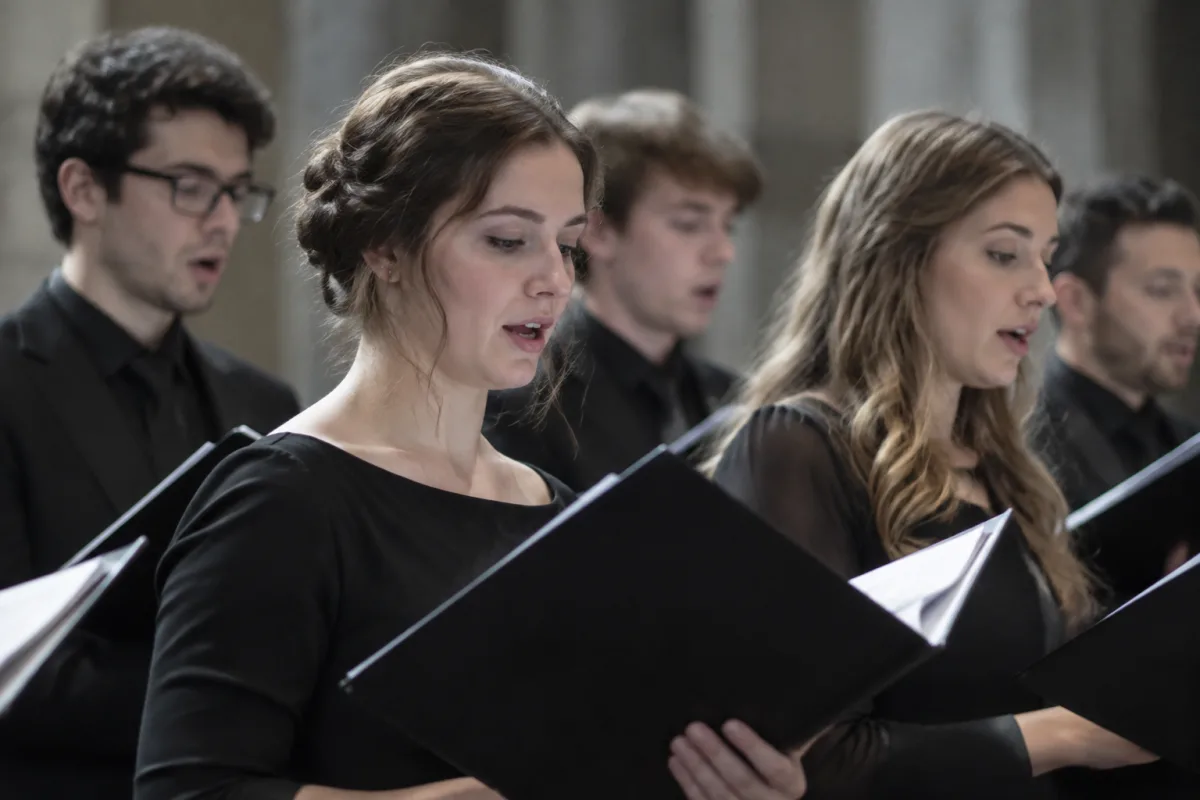
Looking at a page of choral sheet music for the first time can feel genuinely intimidating. There are four or five lines of music running simultaneously, different symbols for different voice parts (soprano, alto, tenor, bass), and somehow everyone else in the room seems to know exactly what's happening. Here's what nobody tells you: choral sheet music isn't complicated once you understand the basic structure. You don't need perfect musical literacy to join a choir—you need to know where to look and how to follow along. This guide walks you through reading and using choral sheet music without overwhelm, building confidence as you go.
Why Choral Sheet Music Looks Different
Standard sheet music shows one instrument or voice on a five-line staff. Choral sheet music stacks multiple staves vertically—typically four for SATB (Soprano, Alto, Tenor, Bass)—so all voice parts fit on one page and you can see how they interact. Your part is the one labelled for your voice type (if you're singing alto, you follow the alto staff). The other three parts are there so you can hear how everything fits together—and to help you stay in time when your part gets quiet.
The layout seems complex, but it's actually logical once you know what you're looking at. Spend fifteen minutes understanding the structure, and the rest becomes readable.
Finding Your Voice Part
Most choral music follows SATB layout, which means four staves stacked top to bottom: Soprano at the top, Alto below that, Tenor below that, and Bass at the bottom. Your first task when you pick up a new piece is to find your voice part and stay there. Here's how:
- Look at the left side of each staff. You'll see a symbol (a treble clef or bass clef) and a letter or word labelling that line—S, A, T, B. Find your voice type.
- When you read the music, you look exclusively at that staff. The other parts are context, not your responsibility.
- If your part gets confusing, glance at the Alto or Tenor staff to remember where you are in the piece. This is actually encouraged—understanding how your part relates to others makes it easier to remember.
In your first rehearsals, the director might ask the soprano section to sing alone, then the altos, etc. When that happens, you're only following your staff—ignore everything else for a moment. It's genuinely that simple.
Reading the Basics: Timing and Rhythm
You don't need to read every note perfectly. Most people learning choral music have already sung a bit; you know what a quarter note looks like and how long it lasts. The key insight is that timing works exactly the same way in choral music as in single-voice music—the note shapes tell you duration, and the beat comes from the director's baton.
Here's what matters: watch the director, not your music, for timing cues. The music is a reference; the director is the truth. If you're unsure of a rhythm, count with the conductor. "1, 2, 3, 4" becomes automatic after a few rehearsals, and suddenly you're singing confidently even if you're unsure of the exact notes.
Navigating from Beginning to End
Choral pieces are often longer than solo vocal music, and sometimes they loop back or jump around (a repeat sign tells you to go back and sing a section again). Here's how not to get lost:
- Mark the repeats. Circle or highlight repeat signs and first/second endings so you know at a glance where to jump. Every singer does this with a pencil before rehearsal.
- Number the measures. Some sheet music has numbered measures already; if not, count yourself. This helps the director say, "From measure 47" and everyone can find it instantly.
- Write notes in pencil. "Jump back here" or "ends after this repeat" are notes choir singers routinely write in the margins. These notes are expected—your music gets used, not preserved.
- Ask the director for guidance on jumps. If a repeat is confusing, ask. "Do we sing section A twice or just once?" Direct clarification saves embarrassment during rehearsal.
Professional choir singers mark their music obsessively. Your first piece will look like a war zone when you're done—highlighted repeats, circled instructions, pencil notes everywhere. That's perfect. It's your personal roadmap through the piece.
Common First-Timer Mistakes to Avoid
Most choir singers have done these at least once:
- Following the wrong staff. You're soprano, but you're instinctively reading the alto line because it's easier. Don't do this. Your brain learns bad habits fast. Discipline yourself to follow your part, even if it feels awkward.
- Trying to read every note perfectly. You don't need photographic memory. Read the general shape and contour, listen to others around you, and you'll find your pitch. "Fake it till you make it" is legitimate choir strategy—just don't zone out completely.
- Not marking repeats. You get to rehearsal, the director says "From bar 48," and you're hunting on the page. Thirty seconds of marking prevents this. Pencil is your friend.
- Ignoring the director. If you're concentrated on reading perfectly, you might miss a tempo change or dynamic shift the director is indicating. Glance up regularly and follow the conductor's beat, not just the notes.
- Singing too loud in the first rehearsals. Listen more than you sing. You'll learn the part faster by hearing it and matching, rather than projecting your uncertain voice. Let the experienced singers carry the section while you learn.
The First Rehearsal Reality
Your first time singing a piece is usually confusing. That's completely normal. You'll probably miss notes, come in late, and feel lost at least once. Every choir singer experiences this. Here's the truth: by rehearsal three or four, most people have the basic shape. By rehearsal six or seven, they're genuinely comfortable. The learning curve is steep at first, then levels out. Push through the first awkward rehearsals and you'll suddenly realise you know this piece.
Building Confidence Through Familiarity
The more you look at choral sheet music, the less intimidating it becomes. Each piece you sing teaches you patterns and conventions you'll recognise in the next piece. Your brain learns what "a big jump up then settling down" looks like in notation. You begin to anticipate repeats and key changes. Confidence builds through repetition.
Choral music is genuinely accessible to anyone willing to try. You don't need perfect sight-reading skills—you need patience, pencil discipline, and the willingness to look confused for a few rehearsals. Every person in your choir was once where you are now, holding sheet music and feeling lost. They survived it. You will too.



Comments