


Bass Lessons article
Bass Lessons for Beginners: A Complete Guide
Starting bass lessons feels intimidating but transforms your progress. Discover lesson formats, how to prepare, what early lessons cover, and tips for overcoming beginner concerns.
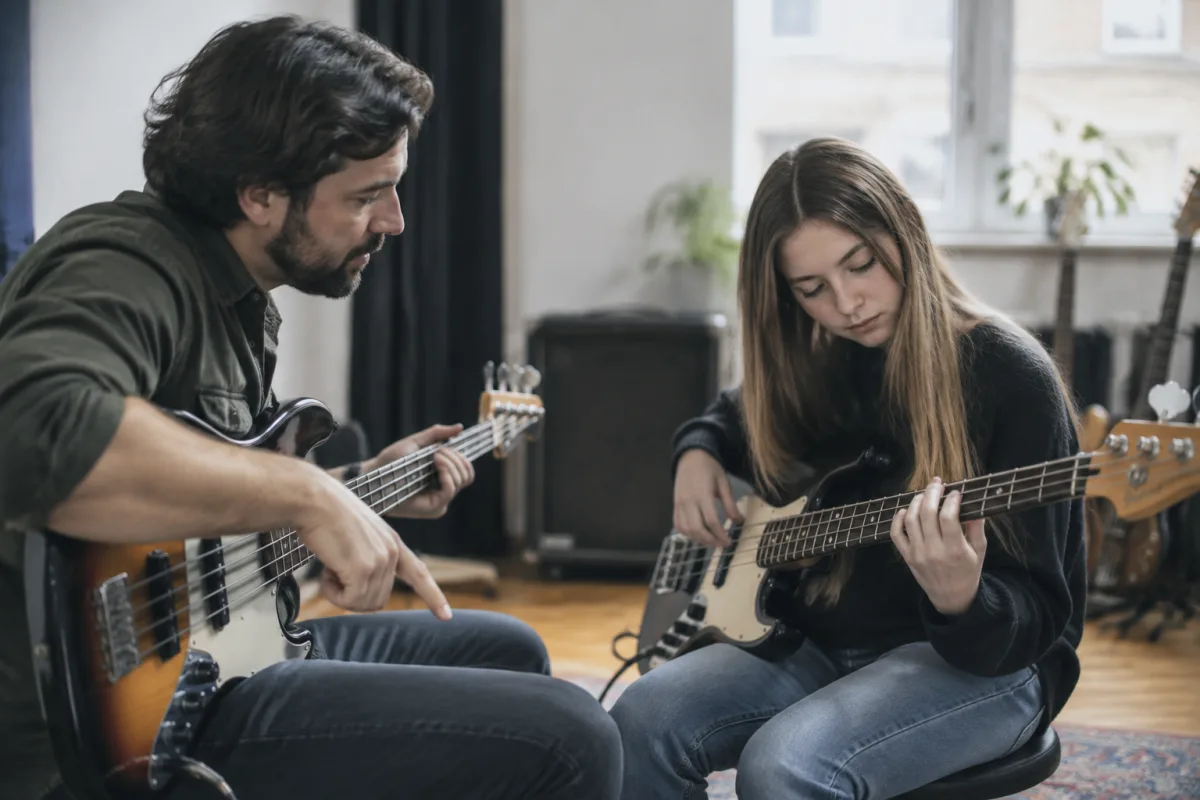
Taking your first bass lessons feels both exciting and intimidating. You might worry you're starting too late, have no talent, or won't understand the technical language instructors use. The truth is simpler: quality bass lessons remove uncertainty and accelerate learning dramatically compared to struggling alone. This guide addresses beginner concerns and helps you approach your first lessons with confidence.
Why Bass Lessons Matter for Beginners
Bass lessons aren't luxury for the gifted—they're a shortcut past frustration. Without guidance, beginners often develop poor technique that limits their abilities later. Bad finger positioning leads to pain and reduced speed; poor posture causes injury; unclear rhythm sense means struggling to keep time with other musicians. A skilled instructor spots these issues immediately and corrects them before they become habits.
Bass lessons also accelerate your learning curve dramatically. What might take months of independent fumbling takes weeks with proper instruction. You'll reach the stage where playing is actually fun much faster, which builds motivation to keep practicing.
Finding the Right Lessons Format
In-person bass lessons remain the gold standard for beginners. A teacher sits beside you, watches your posture, corrects your hand position, and responds to your questions immediately. This direct feedback is invaluable. Most in-person lessons cost £30–£60 per 30–60 minute session. It's an investment, but the accelerated learning justifies the cost.
Online bass lessons work well for motivated self-starters but aren't ideal for complete beginners. You miss the hands-on correction of posture and technique. That said, many beginners combine low-cost online lessons initially with occasional in-person sessions for technique checks. This hybrid approach suits different budgets.
Group bass lessons cost less than one-on-one instruction (£15–£30 per session) but offer less personalised feedback. Groups work well after you've learned basics and want social encouragement. For your first 3–6 months, invest in individual lessons where the teacher focuses entirely on your development.
Preparing for Your First Lesson
Secure a decent instrument before lessons begin. You don't need expensive gear, but a poorly functioning bass—with high action, damaged frets, or dead spots—makes learning frustrating. A £150–£250 student bass plays far better than the £50 cheapest options. Your teacher can recommend specific beginner basses.
Commit to practicing between lessons. Bass lessons provide structure and feedback, but the learning happens through practice. Plan to practice 20–30 minutes daily at minimum. Irregular practice undermines even the best instruction. Before starting lessons, honestly assess whether you can commit to this schedule. If not, delay lessons until you're ready.
Come to your first lesson with open expectations. You'll likely learn fundamental things you didn't anticipate—proper breathing technique, how to hold the instrument, rhythm fundamentals—before touching complex pieces. Trust the process. These fundamentals feel boring but are essential to competent playing later.
What Beginner Bass Lessons Cover
Early lessons focus on technique: how to hold the bass, position your fingers, and move your hands efficiently. This feels pedantic until you realise how dramatically it affects what you can play later. Poor technique creates artificial limitations that training alone can't fix.
Rhythm is the second pillar. Bass players are timekeepers; without rock-solid rhythm, you're a liability to any band. Your lessons will likely include rhythm exercises, metronome work, and listening drills that train your internal sense of time.
Reading music comes third for most lessons. You'll learn note names, how to follow rhythm notation, and how to sight-read basic pieces. Don't panic if music reading feels foreign initially; it's a skill you'll build gradually.
Ear training—learning to identify intervals and melodies by ear—often surprises beginners as a major part of lessons. This seems disconnected from bass playing initially but transforms your ability to learn songs and collaborate with musicians later.
Overcoming Common Beginner Concerns
Many adults worry they're too old to learn bass. This is simply false. Adult learners often bring maturity and discipline that accelerates progress. You might learn slightly slower than a naturally gifted teenager, but you'll likely commit to practice more seriously and reach competence faster than younger, more distracted students.
The fear of "not having talent" is overblown. Most bass playing is learned skill, not innate talent. With consistent practice and good instruction, you'll develop competence over months. Talent matters more in fine-tuning performance at advanced levels; for beginner and intermediate stages, practice and instruction trump talent.
Worrying about sounding terrible is normal but misplaced. Of course you'll sound rough initially—you're learning. Your teacher has worked with countless beginners; your early struggles won't surprise or disappoint them. This is what they're paid to guide you through.
Tracking Your Progress
Set concrete goals with your instructor. Instead of vague "get better," aim for "play a complete song without stopping," "master the major scale," or "keep perfect time with a metronome at 120 BPM." Measurable goals provide motivation and clear markers of improvement.
Record yourself playing weekly. You won't hear improvements day-to-day, but comparing recordings from week 1 and week 8 reveals dramatic progress. This concrete evidence of advancement builds confidence.
Expect progress plateaus. You'll learn quickly for a few weeks, then feel stuck. This is normal. Plateaus represent your brain consolidating new skills. They pass with consistent practice; pushing through them builds the foundation for the next learning sprint.
Making the Most of Your Lessons
Take notes during lessons. Write down specific things to work on: fingering patterns, rhythm challenges, or technique cues. Review notes between sessions to remind yourself of priorities.
Ask questions when confused rather than nodding and hoping it makes sense later. Lessons are your chance to get immediate clarification. A five-second question in the lesson saves hours of frustrated practice.
Practice between lessons, especially the specific exercises and pieces your instructor assigns. Showing up to lessons without practising wastes both your money and your teacher's time.
Your Beginner Journey
Starting bass lessons represents commitment to learning a skill that brings lifelong joy. The first weeks are challenging—your hands will hurt, concepts will feel abstract, and progress might seem imperceptible. Push through this phase. Within two months of consistent practice and lessons, you'll play recognisable pieces and feel genuine progress. Within six months, you'll be surprised at what you've accomplished.
For comprehensive guidance on bass playing styles, advanced techniques, and developing as a musician, explore our complete guide to bass lessons. As your skills develop, you'll return to this resource for deeper understanding.


Comments