


Aural Training Buying guide
Aural Training: A Complete Buyer's Guide
Shopping for aural training methods? This guide compares apps, online courses, private lessons, and traditional methods. Understand what effectively develops ear training and avoid common purchasing mistakes.
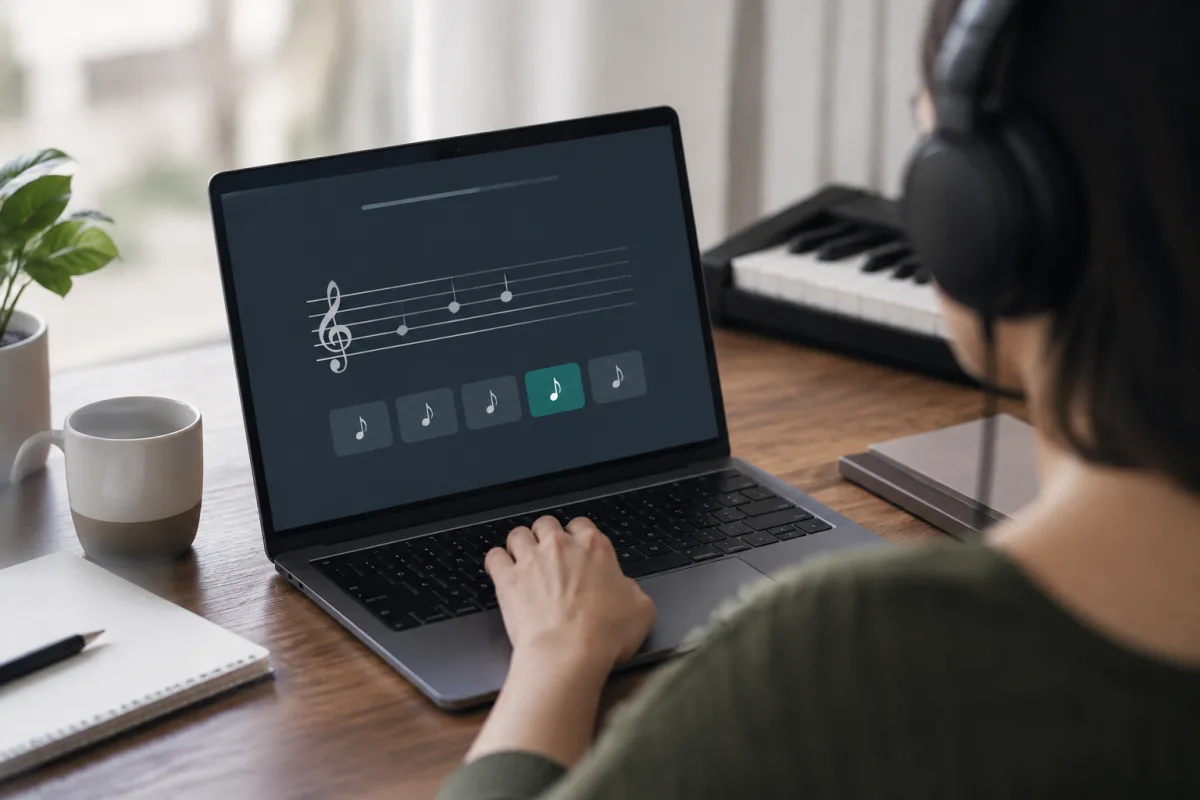
Aural training transforms how you understand music. Musicians who can identify intervals by ear, transcribe melodies, and hear harmonic function become better composers, better improvisers, and better ensemble players. Yet choosing an aural training method overwhelms many musicians—should you use an app? Hire a tutor? Buy a course? Work through a textbook? This buying guide compares your actual options and helps you invest wisely in ear training.
Why Aural Training Matters (And What You're Actually Buying)
Before evaluating methods, understand what aural training actually delivers. It's not magic—it's skill development. You're training your brain to recognise and reproduce musical sounds. This takes weeks or months of consistent practice, not days. You're not buying a product as much as you're buying access to guided practice with feedback.
Good aural training requires three elements: structured lessons or exercises, immediate feedback on correctness, and progressive difficulty. Anything missing one of these three will frustrate you and produce minimal results. Evaluate options by how well they deliver all three.
Aural Training Methods Compared: Format Matters
Different aural training approaches suit different learning styles and budgets. Here's what each format actually delivers:
- Private lessons with a music teacher: A qualified teacher guides you through ear training exercises, provides immediate feedback, and adjusts difficulty based on your progress. Highly personalised but expensive (£30-60 per hour). Best if you're already taking music lessons—ask your teacher to include ear training in sessions.
- Group ear training classes: Usually offered through music schools or universities. Affordable (£5-15 per class) and provide live feedback, but individual attention is limited. Good supplementary option; probably shouldn't be your only approach.
- Dedicated aural training apps: Convenient, interactive, with immediate feedback. You progress at your own pace. Pricing ranges £3-20 monthly for subscriptions or £0-50 for one-time purchases. Quality varies dramatically—some apps are excellent, others are poorly designed. See section below for evaluation.
- Online aural training courses: Structured video lessons with exercises and feedback. Usually £20-100 for lifetime access or monthly subscriptions £5-15. Provide more structure than apps but less interaction than live lessons. Good middle ground for motivated self-learners.
- Traditional textbooks and workbooks: Print-based ear training exercises you work through independently. Costs £15-40 per book. No feedback mechanism built in (you have to check your own answers or rely on a teacher), so effectiveness depends on your self-honesty and discipline. Useful as supplementary reference but shouldn't be your primary tool.
- DIY with a tutor or teacher supervision: Some musicians work through exercises independently and meet with a teacher monthly or quarterly to assess progress. Affordable hybrid approach (£30-50 per hour, less frequently) but requires discipline between sessions.
The App Evaluation Framework: What Actually Works
Aural training apps are popular because they're affordable and convenient. But many are poorly designed. Use these criteria to separate effective apps from frustrating ones:
- Structured progression: Does the app start with easy intervals and progressively increase difficulty? Does it teach intervals first, chords second, then harmonic function? Poor apps throw everything at you randomly. Good apps build systematically from simple to complex.
- Clear immediate feedback: When you answer incorrectly, does the app show you what you got wrong and the correct answer? Does it explain why? Vague feedback ("Wrong—try again") teaches nothing. Clear feedback ("You heard F-G but it was E-F; the first interval was a whole step") teaches effectively.
- Contextualised sound examples: Does the app play sounds in musical context (within a chord progression, within a phrase) or isolated notes? Context-based learning transfers better to real music listening. Isolated note exercises don't transfer as well to recognising intervals in actual songs.
- Multiple exercise types: Do you just identify intervals, or do you also sing, notate, and identify in context? Apps with only one exercise type plateau quickly. Variety maintains engagement and teaches multiple skills.
- User reviews and community reputation: Check app reviews specifically mentioning effectiveness (not just interface design). Do musicians report actually improving? Avoid apps with complaints about poor design or lack of progress.
- Teaching credentials: Was the app developed by musicians or music educators? Apps designed by non-musicians often miss pedagogical best practices. Look for developer background information.
Specific Options: What's Actually Worth Your Money
Rather than review every app (there are hundreds), here's what currently well-regarded options deliver in each category:
| Category | Recommended Options | Cost | Best For |
|---|---|---|---|
| Subscription Apps | EarMaster, Tenuto, Complete Music Reading Trainer | £5-15 monthly | Consistent daily practice with structured progression. Best for committed learners willing to practice regularly. |
| One-Time Purchase Apps | Interval Ear Trainer, Churchill Music, Tone Deaf | £5-30 one-time | Budget-conscious musicians. Limited scope usually; works well for interval training specifically but less comprehensive than subscriptions. |
| Online Courses | Udemy courses (specific teachers), Musicca.com, Khan Academy Music | £10-40 lifetime or £5-15 monthly | Visual learners who want structured video instruction alongside exercises. Good for foundational understanding. |
| Hybrid (App + Lessons) | Working with a music teacher using apps as homework | £30-60 per lesson + app cost | Best for fastest improvement. Teacher provides context and correction; app provides daily practice structure. |
Common Purchasing Mistakes to Avoid
Musicians waste money on aural training tools by making these predictable errors:
- Buying the most expensive option assuming quality: Price doesn't correlate with effectiveness. A £50 course isn't necessarily better than a £10 app. Evaluate based on your learning style, not cost.
- Choosing based on interface design alone: An app with beautiful graphics might teach poorly. A plain-looking app might teach excellently. Judge by pedagogical soundness, not aesthetics.
- Starting at "advanced" level**: Ego prevents some musicians from starting with interval identification. Skipping to harmonic analysis before intervals are solid is like attempting calculus without algebra. Start at your actual level, not your desired level.
- Expecting results without consistent practice: Buying an app and using it twice per week teaches slowly. Daily 15-minute practice transforms ear training in weeks. Expect to commit time, not just money.
- Switching methods constantly**: Changing apps every two weeks prevents skill building. Pick one method and commit to 8-12 weeks minimum before evaluating effectiveness or switching.
- Ignoring free options initially: Before spending money, try free options (YouTube channels, free app trials, websites like musictheory.net). You might find free tools sufficient for your needs. Only upgrade if free options aren't meeting your goals.
Price Tiers: What You're Actually Paying For
Understanding pricing helps you make intentional choices rather than defaulting to expensive options:
| Price Range | What You Get | Best For |
|---|---|---|
| Free (£0) | Free apps with basic features, YouTube channels, websites. Often ad-supported or limited scope. | Testing if aural training interests you, supplementary learning, musicians on minimal budget. |
| Budget (£5-20 one-time) | Single-focus apps (interval training only), limited exercise variety, basic user interface. | Learners with specific goals (intervals only). Limited scope means limited durability—you'll outgrow quickly. |
| Subscription (£5-15 monthly) | Comprehensive apps with progression, multiple exercise types, regular updates, community features. | Serious learners willing to practice regularly. Best value for sustained learning and access to new exercises. |
| Premium (£20-50 monthly or £200+ annual) | Dedicated online courses with video instruction, optional teacher feedback, advanced features, certificates. | Motivated learners wanting structured guidance. Expensive unless the video instruction adds genuine value beyond app exercises. |
| Private Lessons (£30-60 per hour) | Personalised instruction, immediate feedback, customised progression, accountability. | Fastest improvement but most expensive. Best if ear training is part of broader music education with a teacher. |
Matching Your Style to the Right Format
Effectiveness depends on learning style alignment:
- Visual learners: Online courses with video instruction or apps with visual interfaces (showing staff notation alongside sounds) work well.
- Auditory learners: Any quality app works; focus on clear audio examples and immediate audio feedback.
- Kinesthetic learners: Methods where you sing or play the answers (most apps have this; good teachers require it) align better than identification-only exercises.
- Self-directed learners: Apps and online courses work well; minimal external accountability needed.
- Accountability-motivated learners: Private lessons or group classes work better than solo app use; knowing someone will assess progress increases commitment.
The Trial Period: Testing Before Committing
Don't buy annual subscriptions immediately. Test options first:
- Use free trials (most apps offer 7-14 days).
- Start with one-time purchases rather than subscriptions.
- Try free YouTube channels from established music educators.
- If considering private lessons, request a trial lesson.
- Practice for 5-7 days minimum before deciding if a method works for you.
A method that frustrates you on day one won't magically become effective by month three. Trust your instincts about fit and engagement.
Integrating Aural Training Into Broader Learning
Aural training doesn't exist in isolation. It integrates best when:
- Your instrument teacher includes ear training in lessons.
- You're studying music theory (which provides context for what you're hearing).
- You're actively listening to music with intentional focus (not passive background listening).
- You're recording yourself and critically listening to your intonation and tone.
Aural training exercises are the gym; active listening and musical application are the sport. Both matter. For comprehensive understanding of aural training methods and their underlying principles, our ultimate guide to aural training covers foundations and advanced applications.
Making Your Purchase Decision
When you're ready to invest in aural training, follow this process:
- Identify your learning style and commitment level (daily 15 minutes, or weekly?)
- Try 2-3 free options first to establish baseline.
- Pick one option and use it consistently for 7-14 days.
- Evaluate based on pedagogical quality (structured progression, clear feedback), not interface beauty.
- Commit to 8-12 weeks minimum before switching methods.
- Consider hybrid approach (app + occasional teacher feedback) for faster progress if budget allows.
Conclusion: Invest Wisely, Practice Consistently
Aural training is skill development requiring consistent practice, not a magic product purchase. The best aural training tool for you is the one you'll actually use daily—whether that's a free app, an expensive course, or working with a teacher. Prioritise engaging, well-structured methods over flashy interfaces or premium pricing. Commit to a single method for 8-12 weeks, practice daily, and you'll develop ear skills that fundamentally improve your musicianship.



Comments