
Upright Yamaha Piano article
The Complete Guide to Upright Yamaha Piano
An upright Yamaha piano offers professional-grade touch and tone in a compact format. Learn about action mechanisms, sound quality and which models suit different needs.
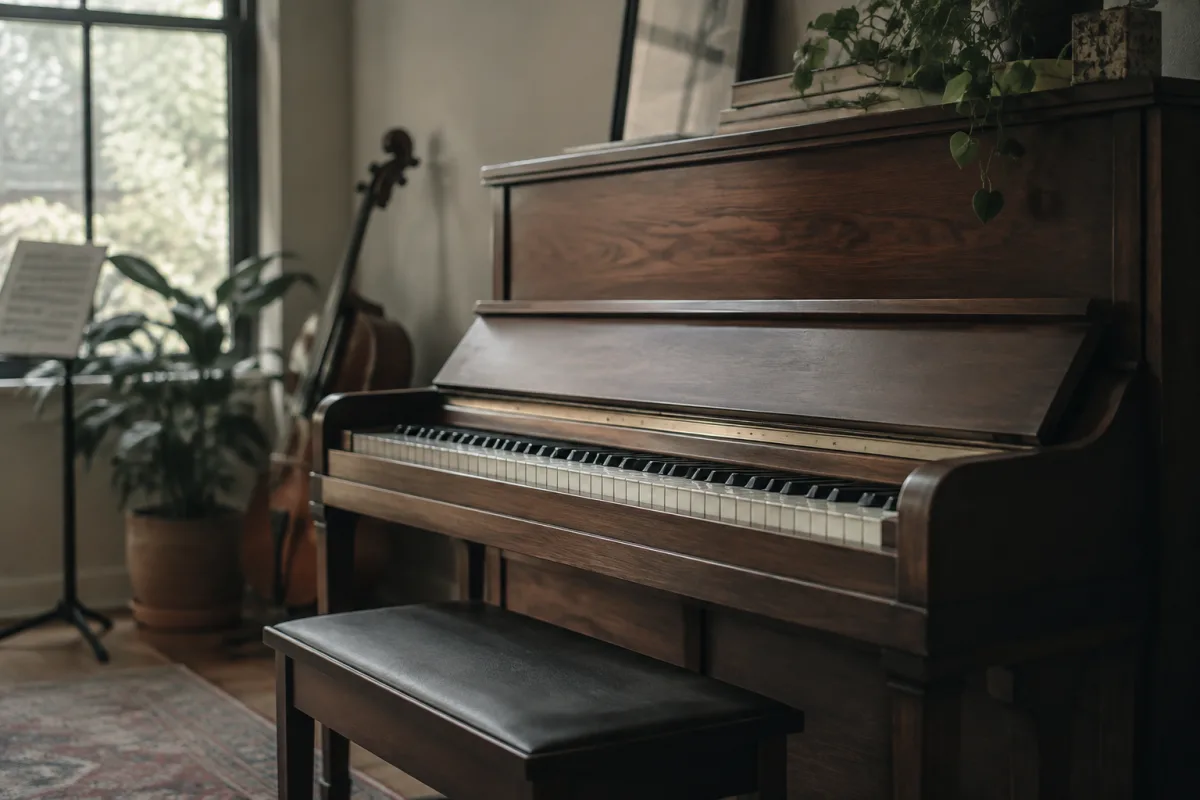
An upright Yamaha piano represents an excellent balance of quality, affordability and compact physical footprint. Whether you're outfitting a music school, furnishing a student's first serious practice instrument, or adding a piano to your home studio, an upright Yamaha piano delivers professional-grade touch and tone in a package that fits typical domestic spaces. Yamaha's reputation for consistent manufacturing quality and long instrument lifespan makes their upright pianos reliable investments.
The appeal of an upright Yamaha piano is rooted in the brand's century-long history of piano manufacturing. Yamaha doesn't compromise on the mechanisms that matter – keybed responsiveness, hammer regulation, pedal function – even in their more affordable upright models.
Yamaha Upright Piano Construction and Design
Yamaha upright pianos use solid spruce soundboards and quality timber for the cabinet. The action mechanism – the complex mechanical system that translates finger pressure on keys into hammer strikes on strings – uses the same precision engineering as Yamaha's concert grand pianos, just scaled to fit vertical case dimensions.
The upright configuration places strings vertically rather than horizontally, reducing overall depth. A typical upright Yamaha piano measures around 1.2 metres wide, 50 centimetres deep, and 1.2 metres tall – dimensions that fit reasonably into apartments or rooms where a 2.5-metre grand piano would be impossible. Despite this physical constraint, the sound quality remains genuinely impressive.
Touch and Playability
Touch – the responsiveness and feel of the keyboard – distinguishes quality pianos from cheaper alternatives. An upright Yamaha piano features weighted keys that simulate the hammer resistance of a concert grand. This weighting is crucial for developing proper technique, particularly for students transitioning toward concert grand or performance contexts.
The repetition mechanism on Yamaha upright pianos lets you replay notes without fully releasing keys – a feature normally found only on expensive instruments. This capability matters for classical repertoire and demanding passages where rapid note repetition is essential.
Yamaha Upright Piano Models
Yamaha manufactures several upright piano lines. The b1 and b2 series represent affordable, entry-level instruments suitable for students and casual playing. The u1, u3 and u5 series offer progressively more refined touch, tone and construction – these are the professional student and semi-professional models. The silent series incorporates digital technology for silent practice with headphones whilst maintaining the acoustic piano touch.
Higher-numbered models offer thicker soundboards, more refined action regulation and premium cabinetry. For serious students and music teachers, the u3 or u5 represent optimal value – the touch and tone are genuinely professional, the construction will last decades, and the price is reasonable relative to the instrument's quality.
Sound Quality and Tone
Yamaha upright pianos produce bright, clear tone with good projection – suitable for teaching, solo practise, and intimate performance contexts. The sound is more transparent than some competing brands, which some players prefer for classical repertoire where clarity matters. Others prefer the warmer character of European manufacturers.
Tone preference is personal. The best approach is to play multiple pianos side-by-side and let your ear decide. Most piano dealers can arrange this, and it's worth the effort – you're making an investment that will sit in your space for years.
Pedals and Expression Control
An upright Yamaha piano features three pedals: the soft pedal (shifts the entire action sideways so hammers strike fewer strings), the sustain pedal (holds notes after keys are released), and the soft sustain pedal (combines effects of the other two). Understanding how to use these pedals properly is essential for expressive playing.
Entry-level upright Yamaha pianos sometimes simplify the soft pedal mechanism due to physical constraints. Mid-range and higher models use the same sophisticated pedal systems as concert grands – an important distinction for players serious about technique.
Maintenance and Longevity
An upright Yamaha piano requires regular maintenance. Annual tuning keeps the instrument in pitch and ensures the action responds properly. Occasional mechanical regulation (adjusting hammer strike point and key balance) keeps the touch responsive. These are routine maintenance tasks, not emergency repairs – budgeting for them is part of responsible piano ownership.
Properly maintained, an upright Yamaha piano lasts 50+ years, often longer. The brand's reputation is built on instruments that remain playable and valuable long after purchase. This longevity is a genuine advantage over cheaper pianos that deteriorate quickly and become unplayable.
New Versus Used Upright Yamaha Pianos
A new upright Yamaha piano carries a manufacturer's warranty and factory regulation. Used models cost significantly less but should be inspected by a qualified piano technician before purchase. Look for straight case alignment (no warping), responsive action, consistent touch across the keyboard, and no obvious internal damage.
A well-maintained used Yamaha upright from 10-20 years ago can be exceptional value – often £2000-4000 when new models cost £6000+. The used market is strong because these instruments remain playable and desirable.
An upright Yamaha piano balances professional quality with practical space efficiency. Whether you're a serious student, a teacher, or a home musician, an upright Yamaha offers touch and tone worthy of genuine engagement.


Comments