
Digital Weighted Keyboard Piano article
The Complete Guide to Digital Weighted Keyboard Piano
A digital weighted keyboard piano delivers authentic piano playing feel with modern convenience. This guide explains weighted action types, key count and how to choose the right model for learning and practice.
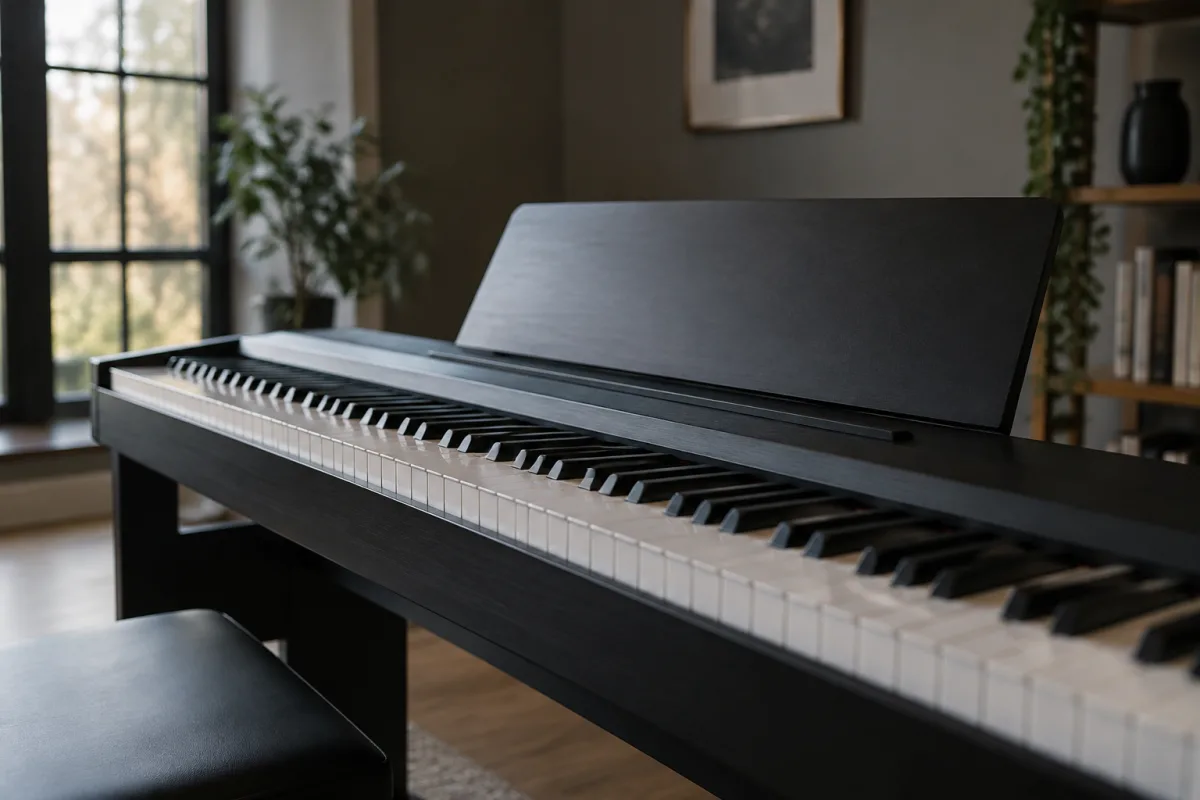
A digital weighted keyboard piano bridges the gap between acoustic piano performance and modern convenience. If you're serious about learning piano but lack the space or budget for a full acoustic instrument, a weighted keyboard piano delivers an authentic playing experience with the flexibility of digital technology. This guide explores what makes weighted keys essential and how to choose the right model for your needs.
What Are Weighted Keys?
Weighted keys replicate the resistance you feel on an acoustic piano. When you press a key on a traditional piano, a hammer mechanism creates resistance that builds as you push deeper. A quality weighted keyboard piano simulates this hammer action electronically, so your fingers develop the proper technique and strength for acoustic piano playing. Without weighted keys, playing feels lightweight and unnatural, weakening your technique development.
This becomes especially important for students who plan to transition to a real piano. Playing on non-weighted keys creates bad habits—light, lazy touch patterns that don't transfer to acoustic instruments. A weighted keyboard piano teaches you the genuine article from day one.
Weighted Action Types
Not all weighted keyboard pianos use identical action mechanisms. Basic weighted actions add simple resistance but miss the nuanced feel of piano keys. Graded weighted actions (heavier in lower keys, lighter in upper keys) mimic acoustic pianos more accurately, where bass keys naturally require more force.
Premium models feature hammer action mechanisms with escapement—the key physically rebounds slightly as you press down, exactly like real piano hammers. This escapement allows advanced techniques like repetition (replaying a note without fully releasing the key), crucial for classical repertoire. Escapement separates beginner-friendly weighted keyboard pianos from instruments serious pianists actually respect.
Touch and Playing Dynamics
A quality weighted keyboard piano captures the relationship between how hard you press and the resulting volume (dynamics). Strike keys gently for soft, delicate passages; press firmly for powerful, brilliant sections. This dynamic control is fundamental to expressive piano playing and becomes impossible without proper weighted action.
Touch sensitivity settings on your weighted keyboard piano let you adjust how dramatically the keyboard responds to your playing force. Beginners often benefit from slightly boosted touch sensitivity (making soft playing easier to hear), whilst experienced players prefer neutral settings for genuine acoustic feel.
Size and Key Count
| Key Count | Dimensions | Best For | Price Range |
|---|---|---|---|
| 61 keys | Compact (~1m wide) | Beginners, limited space, portable use | £200–£400 |
| 76 keys | Medium (~1.3m wide) | Intermediate players, flexible space | £400–£800 |
| 88 keys | Full size (~1.5m wide) | Serious students, teachers, most repertoire | £600–£3,000+ |
An 88-key weighted keyboard piano offers the complete range of a real piano, essential if you plan to progress beyond beginner pieces. Many classical and contemporary compositions require the full range. Whilst 61 or 76-key models suit portable use and casual players, they limit your repertoire.
Sounds and Voices
Modern weighted keyboard pianos include multiple instrument sounds beyond piano—strings, organs, electric pianos and synthesizers. Quality instruments feature multiple piano voices (bright concert grand, warm studio upright, vintage acoustic) so you can explore different tonal characters. This versatility keeps practice interesting and lets you develop a broader musical palate.
Professional-grade models include reverb and effects to add space and character to your sound. Beginners don't need extensive effects, but intermediate players appreciate these tools for refining tone and creating expressive performances.
Choosing Your Weighted Keyboard Piano
Consider these core questions: Will you study with a teacher who has specific requirements? Do you have a dedicated practice space or need portability? What's your realistic budget for this investment? Are you a beginner exploring whether piano suits you, or an experienced player seeking a secondary instrument?
Teachers often recommend specific weighted keyboard piano models based on your learning level and goals. A 88-key instrument with graded weighted action suits serious students committing to classical training. A 61-key portable option works perfectly for busy professionals wanting convenient daily practice without breaking your budget.
Connectivity and Recording
USB and MIDI connectivity on a weighted keyboard piano lets you record your performances and produce music. Connect your instrument to a computer and use notation software, digital audio workstations (DAWs), and music production tools. A headphone socket lets you practise silently without disturbing others—invaluable if you live in a flat or share your space.
Recording your practice sessions on your weighted keyboard piano helps you track progress and identify areas needing work. Play back your performance and listen critically to tempo consistency, dynamics control and technical accuracy.
Maintenance and Longevity
A weighted keyboard piano requires minimal maintenance compared to acoustic pianos. Keep the instrument in a stable environment away from extreme heat, cold or humidity (which can damage electronics and warp wooden components). Dust the keys regularly with a soft, dry cloth. Never use harsh chemicals on wooden or metal parts.
The action mechanism on your weighted keyboard piano will last decades with normal use. Weighted keys rarely wear out or require service. Batteries in wireless controllers or expression pedals eventually need replacement, but that's a simple, inexpensive maintenance task.
Making the Right Investment
Buying a weighted keyboard piano is an investment in your musical future. The right instrument inspires consistent practice and genuine enjoyment, whilst a poor choice discourages playing and leaves you frustrated. Spend time testing multiple models with repertoire you actually want to play. Your fingers and ears know the difference between authentic weighted action and cheap approximation.
A quality weighted keyboard piano with graded or hammer action, full 88 keys and responsive touch opens serious musical possibilities. Whether you're learning for pleasure, preparing for exams or developing professional skills, the right weighted keyboard piano repays your investment many times over through years of inspired practice and genuine musical growth.


Comments