


Udo Synthesizer Buying guide
Udo Synthesizer: A Complete Buyer's Guide
A UDO synthesizer is a serious investment. This guide walks you through specs to compare, what to check before buying, and how to choose the right model for your needs.
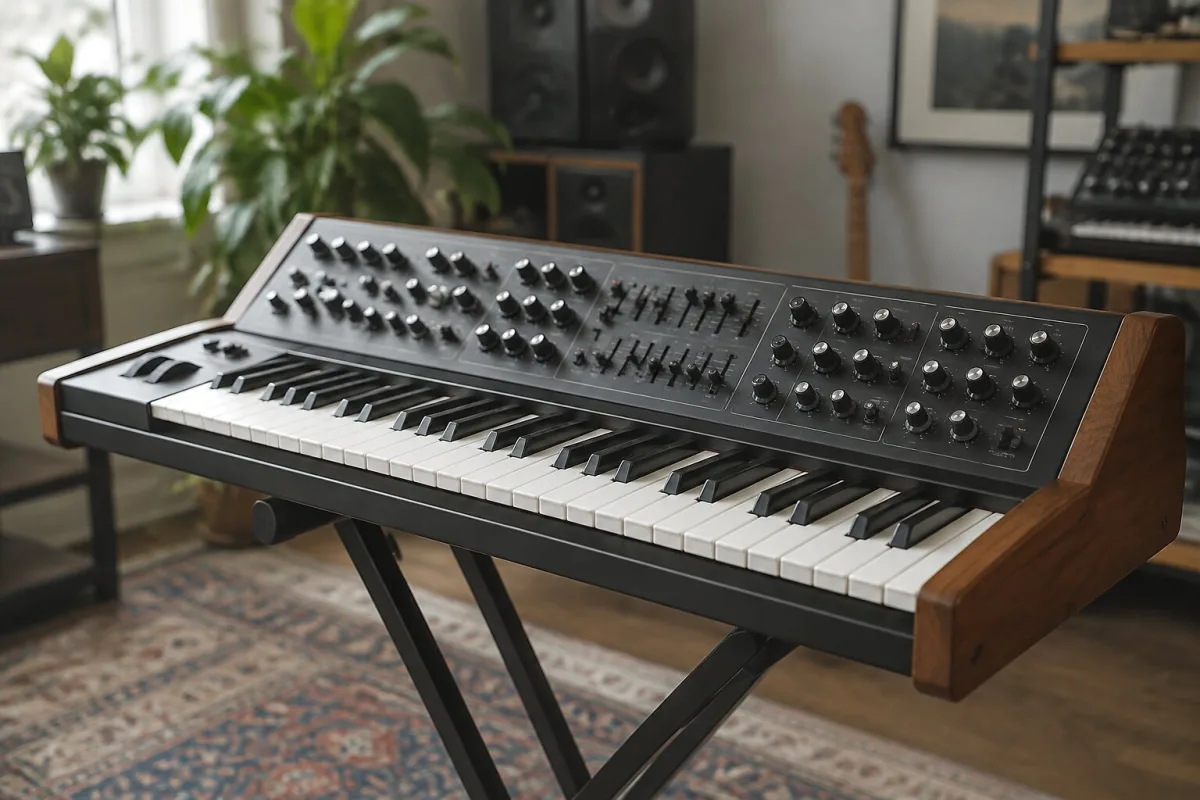
Buying a UDO synthesizer is an investment that deserves careful consideration. These instruments sit at a specific price point with distinctive capabilities, and understanding what you're paying for—and what you're not—is crucial to making the right choice. This guide cuts through the marketing and helps you evaluate whether a UDO synthesizer fits your needs and budget.
Understanding UDO's Price Positioning
These instruments occupy a distinct market segment: professional-grade semi-modular synthesizers with premium build quality and sound. They're not entry-level, but they're also not the most expensive semi-modulars on the market. A typical model costs £2,500–£4,500 depending on which variant you choose. Understanding this positioning matters because it shapes what you should expect from the instrument.
Within their price range, these instruments offer exceptional build quality, hand-wired circuitry, and deeply customisable sound design. They're designed for players who've outgrown entry-level gear and want something substantial that will hold value. If you're shopping in this bracket, you're choosing between this brand and a handful of competitors like Elektron, Teenage Engineering, and Moog semi-modulars.
Key Specs to Compare Across Models
UDO produces several models, and comparing them properly requires understanding what each spec actually matters for:
- Oscillator count. More oscillators give you richer layering and more complex tones. These instruments include models with 2–4 primary oscillators. For a buying decision, 3 oscillators is the practical sweet spot for most players—enough for thick textures but not so many that mixing becomes unwieldy.
- Filter type. These instruments typically use ladder filters with different configurations. Know the difference: a 4-pole filter is brighter and more aggressive; a 2-pole filter is smoother. Both are excellent—it's about your tonal preference and the music you'll make.
- Sequencer capabilities. Does your model have a built-in sequencer? If so, how many steps? Longer sequences (32+ steps) let you compose complex patterns without external gear. Shorter sequences are fine if you'll use external drum machines or DAWs.
- Patch points and modulation routing. Every UDO synthesizer offers semi-modular patching, but the depth varies. More patch points mean more creative possibilities but also more complexity. Count the LFOs, envelope generators, and utility modules before buying—some players need deep modulation, others don't.
- Effects processing. Some models include onboard reverb or delay; others don't. If you buy one without effects, factor in an external reverb unit (£200–£800) to your total investment.
What to Check Before You Buy
When you're seriously considering a UDO synthesizer, these factors separate a good choice from a regretted one:
- Touch and feel of the keyboard. Play the specific model in person if possible. The keyboard is a significant component of your daily experience. If it feels sluggish, cheap, or unresponsive, no amount of great sound design compensates. This is the one spec you absolutely must test directly.
- Real-world CPU load if you're using it in a DAW. If you plan to integrate it as a plugin, check whether it will demand more processing power than your system comfortably provides. Some semi-modulars are more CPU-hungry than others.
- Available presets. These instruments ship with factory presets, but the quality varies. Download demos of the actual model you're considering and listen to the presets. Do they inspire you? Or do they sound generic? This affects how quickly you'll find your sound.
- Warranty and support. UDO Audio is a smaller brand than Moog. Check the warranty (typically 2 years), and verify that support is accessible in your region. A UDO synthesizer is a long-term tool—knowing you can get help matters.
- Resale value. Semi-modulars generally hold value well, and a UDO synthesizer is no exception. But check reverb.com or Discogs for recently sold listings to see typical asking prices. If a model has poor resale value, it suggests something the community isn't happy with.
Common Pitfalls When Buying
Here are the mistakes that trip up buyers considering one of these instruments:
- Assuming you need the flagship model. The largest model isn't always the best choice. If you're primarily a melodic player, a smaller UDO synthesizer with fewer sequencing features might actually be more useful and will save £500–£1,000. Focus on features you'll actually use.
- Forgetting integration costs. A UDO synthesizer doesn't exist in isolation. You'll need a MIDI controller (£200–£500), monitor speakers if you don't have them (£300–£1,000+), audio cables, and probably some outboard gear. The synthesizer is only part of the total investment.
- Not considering your actual workflow. Will you use it primarily in the studio, on stage, or both? Stage use demands portability and ruggedness; studio use allows for more delicate setups. Buying the wrong size or configuration for your actual workflow is a common regret.
- Overlooking the learning curve. A UDO synthesizer is powerful, and that power comes with complexity. If you're coming from simpler gear, budget time to learn patching and modulation before expecting results. Some players underestimate this and end up frustrated.
- Buying without playing one first. Online demos are helpful, but they don't convey how these instruments actually feel to play. If you can't visit a shop or friend who owns one, at least rent or try a similar semi-modular locally before committing.
Models and Their Trade-Offs
UDO produces several distinct synthesizers, and understanding their differences helps your buying decision:
- Super 6. The most affordable UDO synthesizer option. It's a true 6-voice polysynth, making it excellent for keyboard players and those who need polyphony. The trade-off: less deep patching than their semi-modular instruments, and a different sonic character.
- Zoea. A compact semi-modular in the lower price range. Powerful for its size, but fewer features than their flagship models. Ideal if you want the sound and design in a smaller footprint.
- Core and Odyssey variants. The semi-modular flagships. More patch points, deeper modulation possibilities, and premium build quality. The cost is higher, but they're genuinely powerful instruments for sound designers.
When comparing models, think about your actual music and your space. A smaller option that you'll actually use daily beats a large flagship that sits unused because it's too complex or takes up too much room.
Price Tiers and Value
Understanding what you get at each price tier helps prevent buyer's regret:
- £2,000–£2,800. Entry semi-modulars. Solid build, good sound, limited patching complexity. Best for: players who know they want modulation but don't need extreme depth.
- £2,800–£3,500. Mid-tier. This is where you get the full vision: excellent oscillators, deep patching, premium materials. The value is strong at this level—the jump from entry to mid is significant.
- £3,500–£4,500+. Flagship models and larger formats. For specialists and professionals. You're paying for advanced features and absolute build quality. This tier is worth it if you know specifically what those extra features unlock for your music.
The best value in the market is typically the mid-tier: solid instruments without paying flagship prices for features you may not use.
Where to Buy: New vs. Used vs. Second-Hand
A UDO synthesizer is a significant purchase, and where you buy affects both price and your protection:
- Authorised retailers. Full warranty, official support, but full retail price. Worth it if you value peace of mind and local support.
- Reverb.com or Thomann. Often competitive pricing on new units, established return policies, but the retailer relationship is at arm's length. Check the seller's rating if buying used.
- Second-hand markets. Reverb, eBay, Discogs, and local classifieds offer used options at 10–30% discounts. The risk: no warranty. The reward: real savings. Inspect thoroughly and test before collecting if you're buying locally.
Questions to Ask Before Finalising Your Purchase
Use these questions to confirm a UDO synthesizer is the right buy for you right now:
- Will I have time to learn it properly, or will I get frustrated with the learning curve?
- Do I have the other gear (MIDI controller, audio interface, monitoring) to use it effectively?
- Am I buying it for a specific musical project, or is it a general-purpose tool? (Specific projects often lead to better purchases.)
- Have I tested this exact model, or am I deciding based on videos and specs?
- If I regret this in six months, can I sell it without taking a major loss?
Making Your Choice
A UDO synthesizer is an investment in sound and capability. The best purchase is the one that matches your actual musical workflow, sits within your budget including all the supporting gear, and excites you enough that you'll reach for it regularly. Don't buy based on hype or FOMO—buy based on what you'll actually play.


Comments