
Electronic Synthesizer Keyboard article
The Complete Guide to Electronic Synthesizer Keyboard
Electronic synthesizer keyboards generate infinite sound possibilities through programmable oscillators, filters and envelopes. They are essential tools in studios and on stages worldwide.
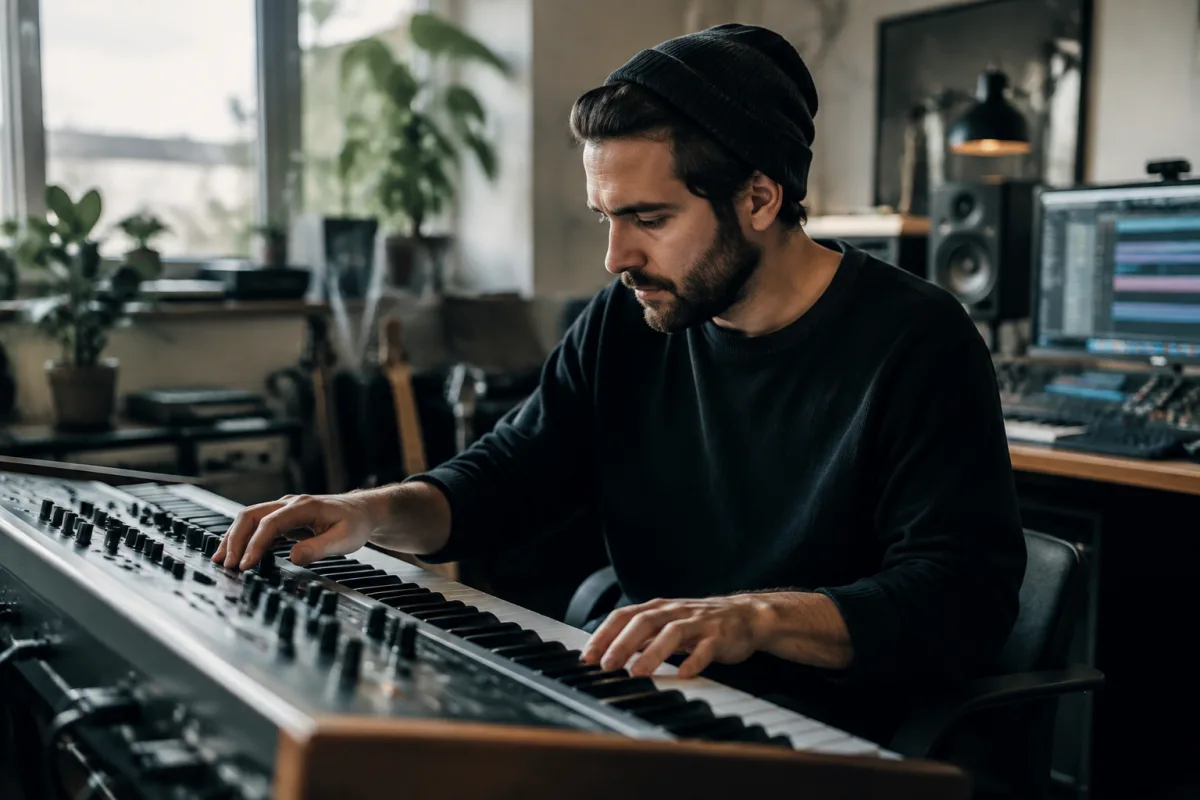
Electronic Synthesizer Keyboards: Sound Design and Expression
A synthesizer keyboard opens endless creative possibilities for modern musicians. From subtle atmospheric textures to driving bass lines and soaring melodic leads, these instruments have become essential across every musical genre. Whether you're composing film scores, producing electronic music or adding layers to a band, understanding the capabilities will help you unlock your artistic vision.
What Defines an Electronic Synthesizer Keyboard?
A synthesizer is an electronic instrument that generates sound through oscillators—circuits that produce raw waveforms like sine waves, square waves and sawtooth waves. These basic tones can be shaped, filtered and modulated to create an infinite variety of sounds. An electronic synthesizer keyboard pairs this sound generation with a musical keyboard interface, allowing performers to control pitch, duration and expression through playing technique.
The defining characteristic is programmability. Unlike acoustic instruments with fixed tones, these instruments' sounds can be edited and stored. You can customise every aspect—harmonic content, envelope (attack and decay), modulation depth and more. This flexibility makes synthesizers both expressive performance tools and design instruments.
How an Electronic Synthesizer Keyboard Works
Every electronic synthesizer keyboard at its core comprises three essential sections. The oscillator section generates raw waveforms. The filter section shapes those waveforms by removing harmonic content—for instance, a low-pass filter rolls off high frequencies, creating warm, mellow tones. The envelope section controls how sound evolves over time: how quickly it reaches its peak (attack), how it settles (decay), whether it sustains at a steady level, and how quickly it fades (release).
Modern designs expand on this foundation with multiple oscillators, sophisticated effects processors, and touch-sensitive keyboards that respond to playing dynamics. Many models add sequencers—built-in tools that record and loop musical phrases—making these instruments both performance tools and composition aids.
Common Types of Electronic Synthesizer Keyboards
Subtractive synthesis remains the most popular method found in electronic synthesizer keyboards today. Using this approach, designers start with complex waveforms and remove frequencies to craft new timbres. This intuitive method lets even new players create professional sounds quickly.
Additive synthesis works oppositely—building complex sounds by layering simple waveforms. This requires more detailed programming but offers extraordinary precision for sound designers who understand harmonic theory.
Wavetable synthesis, popularised by modern soft synthesizers and hardware models, stores sampled waveforms and blends between them. These models can morph smoothly between dramatically different timbres, offering dynamic expressiveness that pure subtractive design cannot match.
FM synthesis, pioneered by the legendary Yamaha DX7, generates sounds through frequency modulation—one oscillator modulates another's pitch to create complex, bell-like and metallic tones. Models using FM synthesis excel at rich, evolving textures.
Keyboard Design and Playability
The keyboard itself profoundly affects playing experience. A weighted keyboard, common on professional models, mimics the resistance of an acoustic piano's action, providing control and expressiveness for pianists. An unweighted keyboard offers lighter, faster response suited to electronic music and fast arpeggio work.
Touch sensitivity—the ability to detect how hard you press each key—matters equally. Most modern designs respond to velocity, allowing expressive playing where harder strikes produce louder, brighter sounds. Aftertouch—detecting continued finger pressure after a key is struck—enables sophisticated modulation control during held notes.
Controller wheels and faders are standard features. These allow real-time parameter adjustment during performance—modulating filter cutoff, adding vibrato, or controlling effects. Professional performers rely heavily on these controls for expressive playing.
Professional Applications
Modern studios and touring acts depend on these instruments for diverse roles. Film composers use them to prototype orchestral arrangements quickly. Electronic music producers build entire tracks layer by layer with a single model. Keyboard players in rock and pop bands add textural elements and lead lines that would be impossible on acoustic instruments alone.
The versatility makes them invaluable across genres. Jazz keyboardists program rich harmonic pads. Heavy metal bands use distorted synthesizer basses as driving rhythmic anchors. Ambient musicians coax evolving, atmospheric textures from sequenced patterns. This breadth of application explains why synthesizers remain central to contemporary music.
Choosing Your First Model
Budget considerations matter, but entry-level instruments today offer capabilities that would have cost thousands just decades ago. Software synthesizers running on a laptop are genuinely powerful and inexpensive. Affordable hardware models with limited presets still deliver professional sound quality.
Consider your primary use case. If you're composing, workflow matters—you want intuitive editing and good hands-on controls. If you're performing live, priority goes to playability, reliability and the sounds you need for your setlist. If you're learning synthesis theory, a model with transparent controls and educational resources helps you understand sound design fundamentals.
Many musicians own multiple instruments filling different roles. A player might use one model for atmospheric pads, another for punchy bass lines, and a third for lead solos. This specialisation, combined with the relatively modest cost of used gear, makes collecting multiple instruments economically feasible.
Learning Sound Design Fundamentals
Mastering synthesis requires patience and curiosity. Start by exploring preset sounds and adjusting parameters to understand cause and effect. Move to sound design tutorials—countless resources teach fundamentals. Join online synthesizer communities where musicians share presets, techniques and troubleshooting advice.
The most important step is playing regularly. These instruments reward hands-on experimentation. Try different filter settings, envelope shapes and modulation routings. Record your experiments and listen critically. Over time, your ears develop—you'll hear relationships between parameters and sounds that seem mysterious at first.
Many professional sound designers began by playing the same models that bewildered them initially. The learning curve is real, but the musical territory it opens makes the effort worthwhile.



Comments