
Analogue Synthesizer article
The Complete Guide to Analogue Synthesizer
An analogue synthesizer generates sound through voltage-controlled circuits, delivering warmth and expressiveness no digital instrument fully replicates. Discover what makes an analogue synthesizer special and why professionals still choose them.
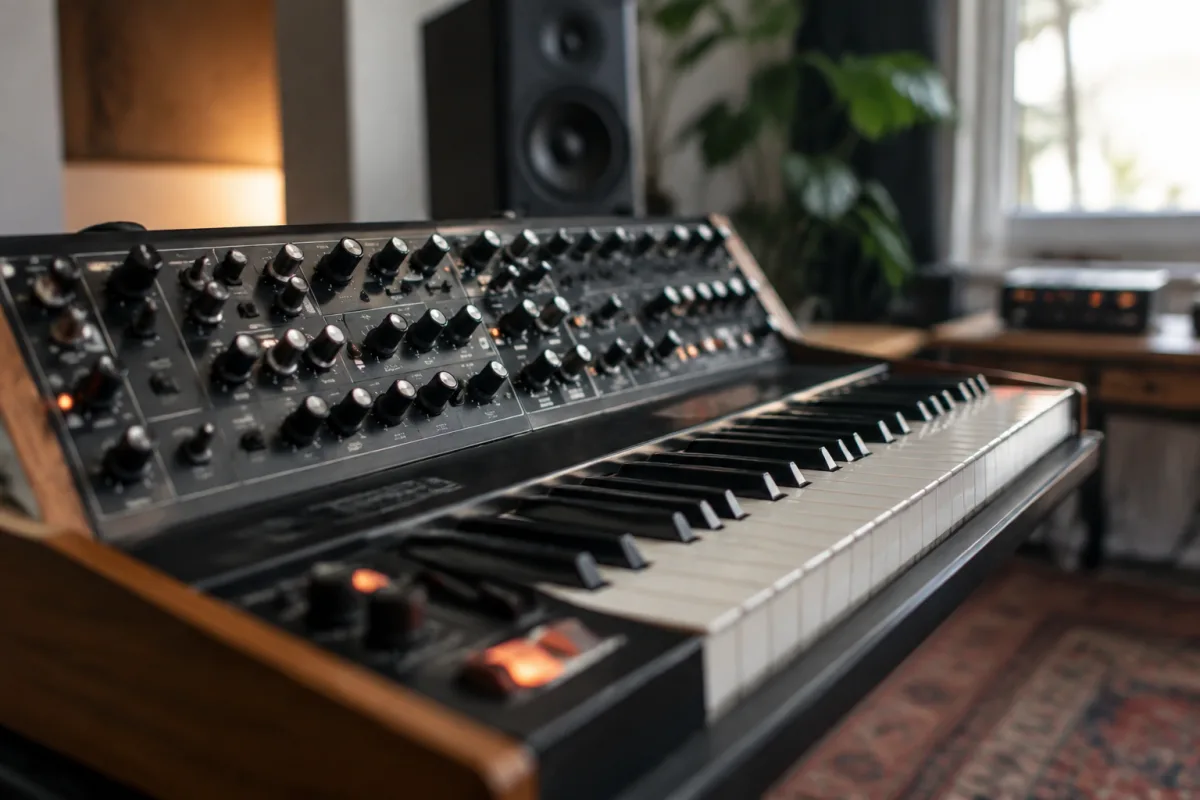
The analogue synthesizer remains one of electronic music's most expressive and sought-after instruments. Since their emergence in the 1960s, analogue synthesizers have defined the sound of progressive rock, electronic music, and modern composition. Whether you're a seasoned producer or curious beginner, understanding what makes an analogue synthesizer special—and how it differs from digital alternatives—is essential to choosing the right tool for your creative vision.
What Is an Analogue Synthesizer?
An analogue synthesizer is an electronic musical instrument that generates, shapes and modulates sound using continuously variable voltage signals—not digital data. Unlike digital synthesizers, which convert sound into numerical information, an analogue synthesizer works with pure electrical signals flowing through circuits. This fundamental difference gives every analogue synthesizer a distinctive warmth, expressiveness, and sonic character that digital instruments struggle to replicate perfectly.
The core principle behind any analogue synthesizer is straightforward: oscillators generate raw waveforms (sine, square, sawtooth), filters shape those waveforms, envelopes control how sounds evolve, and modulation sources (LFOs, sequencers, external control voltages) add movement and complexity. An analogue synthesizer is essentially a modular playground of electronic circuits—each one designed to process and manipulate voltage in specific ways.
The Architecture of an Analogue Synthesizer
Every analogue synthesizer shares a few core building blocks:
- Oscillators—Circuits that generate raw waveforms at audio frequencies. A typical analogue synthesizer may feature one to three oscillators, each tunable independently.
- Filters—Essential to the analogue synthesizer's character. The filter (often a low-pass filter) sculpts the harmonic content of the oscillator output, and the envelope applied to the filter cutoff creates dynamic, evolving tones.
- Envelopes—ADSR (Attack, Decay, Sustain, Release) modules control how a sound unfolds over time. An analogue synthesizer's envelope shapes both amplitude and filter modulation.
- Modulation sources—LFOs, sequencers, and keyboards control how sounds evolve. An analogue synthesizer's modulation capabilities make it endlessly playable and expressive.
- Output stage—Amplifiers, volume controls and often a built-in effects section (reverb, delay) complete the analogue synthesizer signal chain.
Analogue vs Digital Synthesizers
The distinction between an analogue synthesizer and a digital synthesizer matters deeply to tone and workflow. An analogue synthesizer generates sound continuously in real time using voltage-controlled circuits. This gives the analogue synthesizer a warm, organic, slightly unpredictable character—slight circuit variations and thermal drift mean no two analogue synthesizer voices sound identical. A digital synthesizer, by contrast, uses algorithms and processing power to calculate and generate sound, offering perfect stability and repeatability.
Many producers prize the analogue synthesizer for its imperfections: the slight drift, the hum and the noise floor that add character. Others prefer the analogue synthesizer for its intuitive, immediate hands-on workflow—every knob on an analogue synthesizer does something audible, with no menu diving or preset recall. An analogue synthesizer rewards experimentation and spontaneity in ways digital tools often cannot match.
Seminal Analogue Synthesizer Models
Several analogue synthesizer designs became iconic and remain hugely influential:
| Model | Era | Notable Use |
|---|---|---|
| Moog Minimoog analogue synthesizer | 1967–present | Herbie Hancock, Rick Wakeman, Kraftwerk |
| ARP 2600 analogue synthesizer | 1970–present | Studio standard for experimental and academic work |
| Minimoog Model D (analogue synthesizer) | 1970–1981 | The most sampled and iconic analogue synthesizer in pop and rock |
| Moog Taurus pedal synthesizer | 1976–present | Bass synthesizer for live performance |
| Roland TR-808 (hybrid analogue synthesizer) | 1980–present | Rhythm and percussion programming; revolution in electronic music |
Monophonic vs Polyphonic Analogue Synthesizers
An analogue synthesizer may be monophonic (one voice at a time) or polyphonic (multiple voices simultaneously). The original analogue synthesizer designs were monophonic—only one oscillator could play a note at a time, making single-line melodies or bass lines the sweet spot for an analogue synthesizer. This limitation became a feature: the analogue synthesizer's monophonic bass lines defined electronic music.
Polyphonic analogue synthesizers emerged in the late 1970s and 1980s. A polyphonic analogue synthesizer lets you play chords and fuller arrangements. However, a polyphonic analogue synthesizer is significantly more expensive and complex than a monophonic analogue synthesizer—each voice requires its own oscillator, filter, and envelope. Professional studios prize polyphonic analogue synthesizers for orchestral sound design, whilst live performers often prefer the immediacy of a monophonic analogue synthesizer for bass and solo work.
Modular vs Keyboard Analogue Synthesizers
An analogue synthesizer can take two forms: modular or integrated. A modular analogue synthesizer consists of separate modules (oscillators, filters, envelopes, sequencers) connected via patch cables. The infinite flexibility of a modular analogue synthesizer is both its greatest strength and a potential barrier to entry—patching an analogue synthesizer takes time and practice, but rewards deep sonic exploration.
A keyboard analogue synthesizer pre-patches common signal flows into a single cabinet, with a keyboard for note input. A keyboard analogue synthesizer is more immediate to play and less daunting than a modular analogue synthesizer for live performance. Examples include the Minimoog (keyboard analogue synthesizer) or the ARP 2600 (semi-modular analogue synthesizer), which bridge both worlds.
Why Analogue Synthesizers Matter Today
In an era of software emulations and powerful digital instruments, why buy an analogue synthesizer? Several factors drive ongoing interest in analogue synthesizer hardware:
- Unmatched warmth—The analogue synthesizer's voltage-based architecture imparts a cohesive, warm character no digital plugin fully captures.
- Hands-on immediacy—An analogue synthesizer rewards tactile, intuitive sound design; you twist a knob and hear the result instantly.
- No menus or presets—An analogue synthesizer is always "on" and always responsive. No menu diving, no preset recall lag—just pure creativity.
- Imperfection as feature—Analogue synthesizer drift and noise add life to recordings; the analogue synthesizer never sounds "clean" in the way digital synthesis can.
- Investment and longevity—Vintage analogue synthesizer hardware holds value and often improves with age. An analogue synthesizer from the 1970s may be worth more today than when new.
Getting Started with an Analogue Synthesizer
Beginners interested in an analogue synthesizer have more options than ever. Modern manufacturers like Moog, Elektron, Teenage Engineering and Make Noise produce new analogue synthesizer instruments at various price points. Many analogue synthesizer designs focus on semi-modular layouts: a keyboard analogue synthesizer with some patch points, offering simplicity without sacrificing creative depth.
Renting or purchasing a used analogue synthesizer is also viable. Vintage analogue synthesizer hardware, properly serviced, still outperforms many new digital instruments. Starting with a simple monophonic analogue synthesizer (under £1000) lets you explore the analogue synthesizer paradigm before committing to a large modular system.
Conclusion
An analogue synthesizer is far more than a retro curiosity—it remains one of music's most expressive, immediate and rewarding instruments. The analogue synthesizer's warmth, intuitive hands-on interface, and capacity for sonic depth continue to inspire musicians across electronic music, rock, film composition and beyond. Whether you're drawn to the analogue synthesizer for its timeless sound, its tactile creativity, or simply to explore one of music's greatest inventions, an analogue synthesizer rewards curiosity, experimentation and dedicated play. In a digital age, the analogue synthesizer's enduring appeal reminds us that sometimes the oldest ideas remain the most powerful.


Comments