


String Synthesizer article
The Ultimate Guide to Solina String Ensemble Synthesizer
A string synthesizer creates lush orchestral textures through electronic tone generation. From vintage Solina to modern emulations, string synths add warmth and movement to any production.
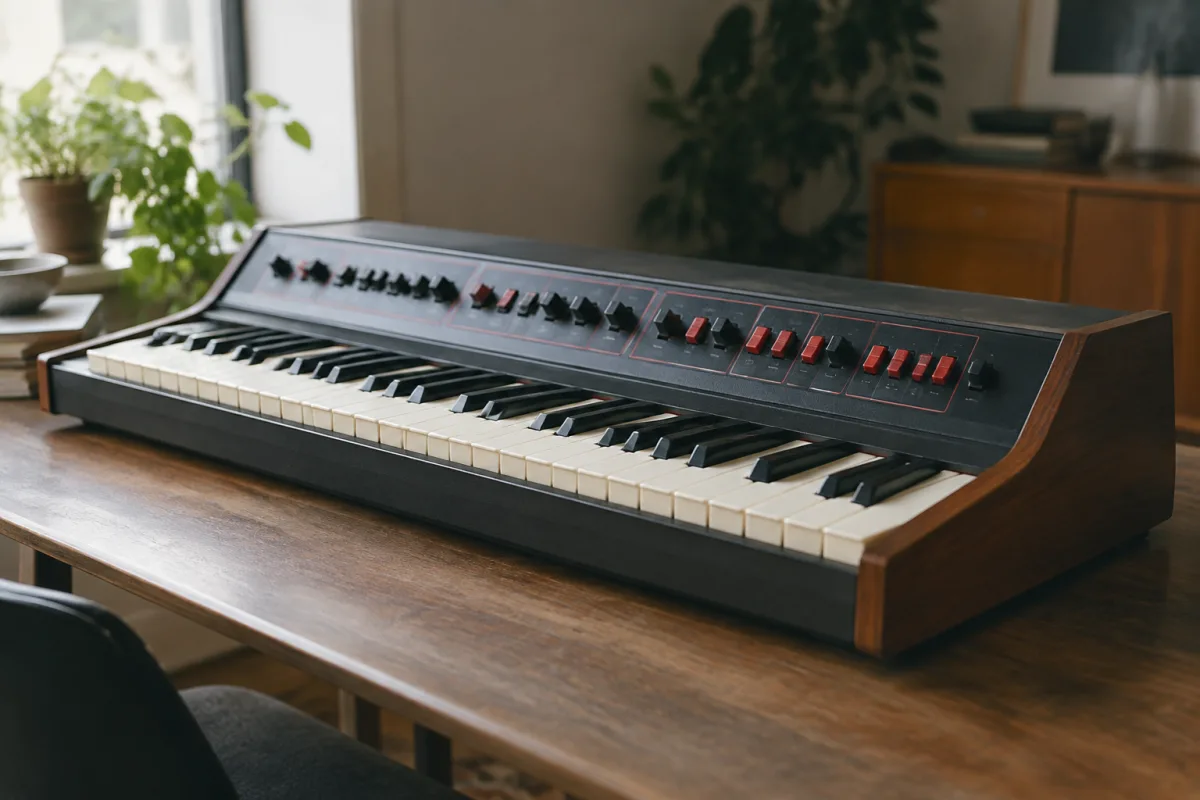
A string synthesizer mimics the sound of orchestral strings — violins, violas, cellos and basses — using oscillators and envelope generators. The vintage Solina String Ensemble, created by Eminent in the 1970s, is the template all modern string synthesizers follow. Unlike a sampler that replays recorded strings, a synthesizer generates string tone electronically, with rich movement and warmth. Modern string synthesizers blend classic analog warmth with digital precision, making them essential for film composers, synth-pop producers and anyone seeking lush orchestral textures.
How String Synthesizers Work
A string synthesizer starts with oscillators generating waveforms — typically sawtooth waves, which contain harmonics that approximate a bowed string's natural tone. An envelope generator shapes the attack, sustain and release of each note. A filter (often a lowpass) sculpts the harmonic content, creating everything from bright, piercing strings to mellow, warm textures.
Chorus or ensemble effects, built into most string synthesizers, add width and movement. These effects layer slightly detuned copies of the signal, mimicking a real ensemble of players — no two performers are perfectly in tune, so slight detuning creates organic richness. This chorus effect is what distinguishes a string synthesizer from a sampler.
Vintage String Synthesizers and Modern Clones
The Solina String Ensemble (1973) is the gold standard. It combines warmth, movement and ease of use in a design so effective that decades later, producers still chase Solina tone. The Crumar Stratus (1975) offers similar appeal but slightly different character. ARP and Oberheim made comparable units.
These vintage string synthesizers now cost £2000–8000 on the secondhand market due to legendary status and limited availability. Modern manufacturers — Roland, Moog, Native Instruments, IK Multimedia — offer digital string synthesizers and emulations. A modern string synthesizer typically costs £50–300 (software) to £1000+ (hardware). They capture classic tone accurately without vintage price tags or maintenance demands.
Key Sound Characteristics
A good string synthesizer sound has three qualities: richness (multiple harmonic layers), movement (chorus and modulation creating organic swelling) and smoothness (low-pass filtering preventing harshness). Attack should be gentle, mimicking the bow's initial contact with the string. Sustain should feel lush and full-bodied.
String synthesizers excel at slow, swelling pads. Detune multiple voices and layer them for orchestral fullness. A string synthesizer can't precisely mimic real orchestral strings, but it creates something beautiful and musical that works differently — more dreamlike and synthetic, yet warm.
String Synthesizer Applications
Film composers use string synthesizers for orchestral textures when a full orchestra is impractical. Rick Wakeman, Jon Lord and Keith Emerson made string synthesizers iconic in progressive rock and art pop. Modern synth-pop, shoegaze and ambient producers layer string synthesizer pads under electronic elements for richness.
A string synthesizer is particularly powerful as a pad layer — underneath melodic elements, vocals or drum grooves — adding warmth and movement without drawing attention.
Vintage vs Digital String Synthesizers
Vintage units like the Solina are warm, portable and immediate — no boot time, no menus. They wear their wear gracefully; a slightly detuned Solina sounds more organic. The downside: limited editing, no MIDI, unreliable components and £2000+ price tags. Vintage string synthesizers are collector's items first, working instruments second.
Digital string synthesizers offer editing depth, MIDI control, preset storage and negligible maintenance. Modern emulations (like Arturia's Solina V software) recreate vintage tone accurately. For working musicians, digital is practical; for collectors and enthusiasts, vintage is seductive.
String Synthesizer Brands and Models
Roland makes the String Pad (compact, affordable). Moog's offerings are typically premium, focusing on vintage aesthetics and sound. Native Instruments offers both hardware (Ableton Link compatible) and software string synthesizer emulations. IK Multimedia's Solina V is a faithful, widely-used software emulation.
Research which string synthesizer best matches your budget and aesthetic — digital convenience, vintage character or a hybrid approach.
Building Strings on a Synth
If you own a polysynth or workstation, you can sculpt string tone without a dedicated string synthesizer. Use sawtooth oscillators, a slow attack envelope, a lowpass filter and built-in chorus. Detune oscillators slightly and layer multiple voices. This approach isn't a string synthesizer proper, but it produces similar results.
String Synthesizers in the Studio
Layers are key. A single string synthesizer pad can feel thin; three detuned layers create orchestral fullness. Blend dry and processed versions — reverb and delay add space. High-pass filter one layer to add brightness while keeping others lush and dark.
String synthesizers respond beautifully to subtle modulation — LFO (low-frequency oscillation) on filter cutoff, pitch or amplitude creates living, breathing textures that static pads cannot achieve.
Learning String Synthesizer Sound Design
Start by exploring presets. Listen to different string synthesizer sounds and how they sit in mixes. Gradually tweak parameters — filter cutoff, envelope attack, chorus depth — and hear how each control affects tone. A string synthesizer teaches synthesis fundamentals because strings are forgiving; harsh mistakes are rare.
Conclusion
A string synthesizer adds orchestral richness and movement to any production. Whether you choose a modern digital unit, a vintage treasure or software emulation, string synthesizers create textures that sampled strings cannot match — organic, warm and endlessly manipulable. For producers and composers seeking lush, evolving pads, a string synthesizer is an invaluable tool that will deepen your sound for years to come.





Comments