
Sequencer Synth article
The Complete Guide to Sequencer Synth
Synthesizers and sequencers are essential for electronic music production and composition. Understand oscillators, filters, ADSR envelopes and MIDI sequencing to create complex arrangements and unique sounds.
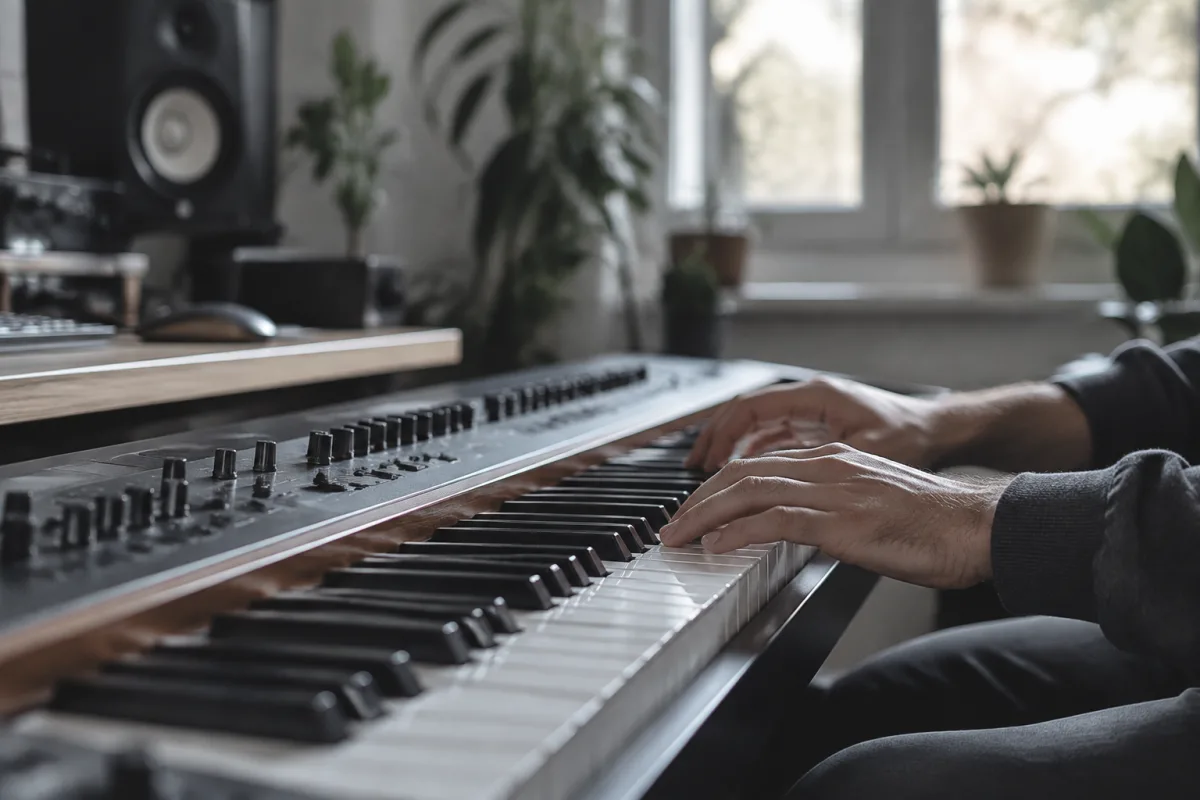
Synthesizers and sequencers are powerful tools for music production, performance and composition. A synthesizer generates sound electronically using oscillators, filters and modulation. A sequencer records and plays back musical sequences, automating the timing and control of notes across instruments. Together, they enable musicians to create complex arrangements, design unique sounds and produce music without live ensemble collaboration. Understanding how synthesizers and sequencers work opens vast creative possibilities across electronic music, pop, film scoring and experimental genres.
Synthesizer Fundamentals
A synthesizer creates sound through electronic signal generation and manipulation. At the heart sit oscillators — circuits that generate raw waveforms: sine (pure, smooth), sawtooth (bright, buzzy), square (hollow, electronic) and triangle (between sine and square). These oscillators feed into filters that remove or emphasise frequencies, shaping raw tone into musical character. An amplitude envelope (ADSR — Attack, Decay, Sustain, Release) controls how a note's volume evolves over time, transforming instant electronic tone into expressive musical sound.
Modern synthesizers employ either subtractive synthesis (start with complex waveforms, filter to shape) or additive synthesis (combine simple waveforms to build complexity). Subtractive synthesis dominates because it's intuitive and musically expressive. Most beginners find subtractive synths immediately playable — adjust one oscillator's filter cutoff and the sound transforms dramatically.
Types of Synthesizers
Synthesizers exist in several physical and software formats:
- Hardware Synthesizers — standalone instruments with physical controls (knobs, sliders, keyboards). Ranging from portable units (£300–£800) to elaborate modular systems (£2,000+), they offer tactile control and sometimes better workflow than software alternatives.
- Software Synthesizers (VSTs) — computer programs running in digital audio workstations. Costing £30–£300 per plugin, they're affordable, updatable and portable — though lack the tactile control of hardware.
- Mobile Synthesizers — iPad and smartphone apps offering surprising capability at £5–£50, ideal for sketching ideas or producing on the move.
- Hybrid Keyboards — instruments combining synthesizer engines with built-in sequencers, drum machines and effects. Popular for live performance and quick composition.
Understanding Sequencers
A sequencer records musical data — note pitches, timing, velocity and controller movements — then plays it back as loops or full arrangements. Step sequencers divide time into discrete steps, allowing you to program notes one step at a time. Piano roll interfaces (used in most DAWs) display time horizontally and pitch vertically, letting you drag notes into position and adjust timing visually. Pattern sequencers (common on drum machines) let you build loops at a fixed number of steps, perfect for rhythmic programming.
Sequencers store data as MIDI (Musical Instrument Digital Interface) — a standardised protocol allowing different instruments and computers to communicate. A sequencer can trigger synthesizers, sample playback, drums and other instruments, coordinating complex arrangements from a single control point.
Synthesis Techniques for Sound Design
Creating synthesizer sounds requires understanding the interaction between oscillators, filters and envelopes. Start with simple patch: one oscillator feeding a filter with an ADSR envelope. Adjust the filter's cutoff frequency to shape tone — high cutoff sounds bright, low cutoff sounds dark. Tweak the envelope's attack time: fast attack creates percussive sounds, slow attack creates swelling pads.
Layer multiple oscillators slightly detuned from each other to create richness and movement (detuning means setting them to slightly different frequencies). Modulate filter cutoff with an LFO (Low Frequency Oscillator) to create wobbling, evolving textures. Add resonance to the filter to emphasise the cutoff frequency, creating the characteristic "synth" sound. These techniques, combined thoughtfully, generate infinite sonic possibilities.
Sequencing Workflow in Modern Production
Contemporary music production typically uses Digital Audio Workstations (DAWs) like Ableton Live, FL Studio or Logic Pro, which include virtual synthesizers and sequencers. You drag synthesizer plugins into tracks, use the DAW's piano roll sequencer to program notes, and automate synthesizer parameters over time. External hardware synthesizers connect via MIDI to the DAW, allowing you to sequence external sounds alongside software instruments.
This hybrid approach offers flexibility: perform expressive synthesizer passages in real time using hardware, then use sequencing to create precise rhythmic patterns or layered arrangements. Many producers combine the tactile feel of hardware with the editing precision of software sequencing.
Synthesizer Sounds Across Genres
Synthesizers define sound across electronic music, synth-pop, ambient, industrial and film scoring. Each genre exploits different synthesizer characteristics. Electronic dance music exploits aggressive filters and sidechain compression for punchy sounds. Ambient music uses extended pads and slow modulation for atmospheric texture. Synth-pop favours clean, melodic synthesizer lines replacing traditional instrumental arrangements. Film scores employ rich, evolving synthesizer soundscapes creating emotional depth and sonic interest.
Getting Started with Synthesis and Sequencing
Beginners should start with a single synthesizer (hardware or software) and master its sound design possibilities before adding complexity. Learn subtractive synthesis thoroughly — oscillator, filter, envelope — before exploring advanced techniques like FM synthesis or wavetable synthesis. Practice sequencing simple melodies and drum patterns using your synthesizer's built-in sequencer or a DAW.
Investing in education accelerates learning. Study tutorials on sound design and synthesis theory. Experiment relentlessly — the best way to understand synthesizers is hands-on exploration. Imitate sounds you love, deconstruct them and understand how each parameter contributes to the final tone.
Conclusion
Synthesizers and sequencers transform how musicians compose, produce and perform. Whether you explore hardware's tactile control or software's editing flexibility, understanding synthesis fundamentals and sequencing techniques unlocks creative possibilities limited only by imagination. Start simple, experiment generously and embrace the learning journey — mastery of synthesis and sequencing rewards curiosity with endless musical expression.


Comments