


Roland Mx 1 Mixer Buying guide
Roland Mx 1 Mixer: A Complete Buyer's Guide
A buying guide for the Roland MX-1 mixer, covering who benefits from owning one, what specifications matter, common purchasing mistakes, and whether it's worth the investment.
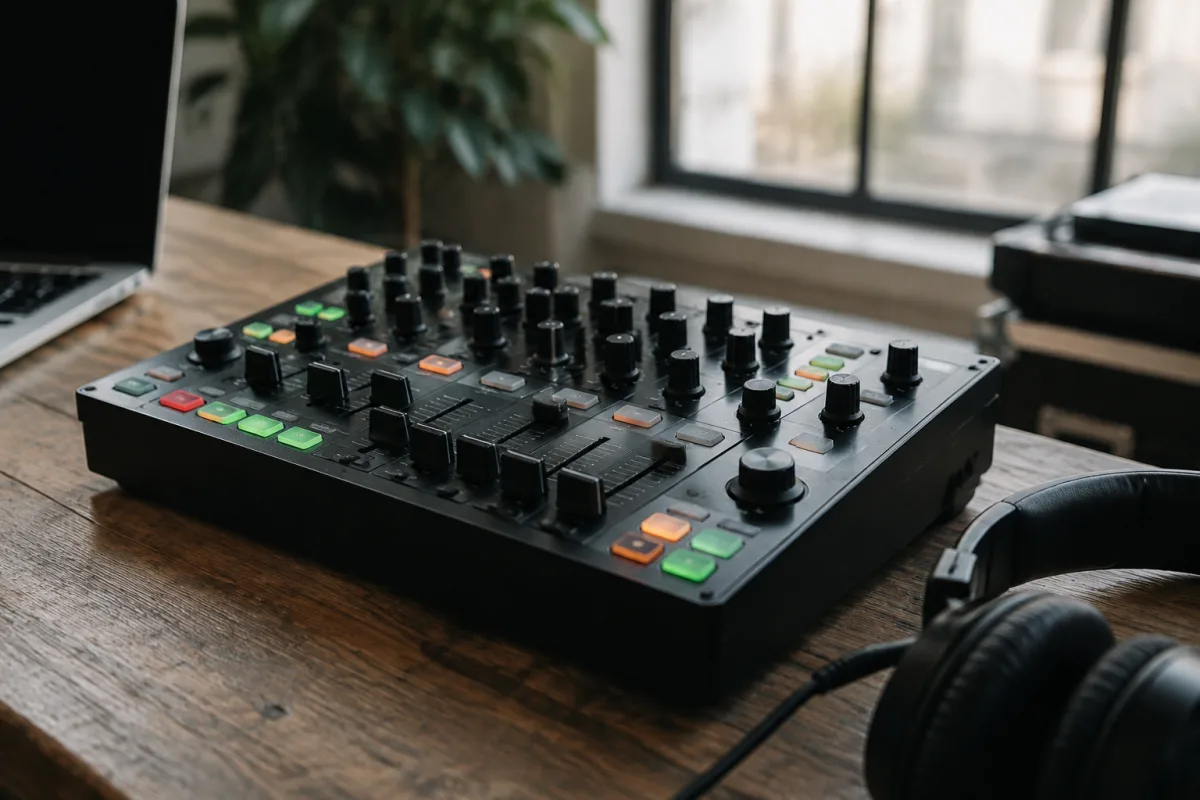
The Roland MX-1 mixer sits in an unusual middle ground: compact enough for portability yet sophisticated enough for serious mixing work. If you're considering purchasing one, you need to understand exactly what it delivers, whether your setup actually needs it, and whether the investment makes sense for your workflow. This buying guide focuses on the practical questions that separate wise purchases from expensive mistakes: who genuinely benefits from owning a Roland MX-1 mixer, what features actually matter for your use case, how it compares to alternatives, and the common pitfalls that frustrate new owners. For detailed specifications and model history, see our complete guide to the Roland MX-1 mixer.
Is a Roland MX-1 Mixer Right for You?
Before spending £300–£400, honestly assess whether you actually need one. A Roland MX-1 mixer excels in specific scenarios but delivers frustration if your needs don't align.
Perfect for: DJs mixing vinyl or digital sources on compact setups, live electronic musicians blending multiple synths or drum machines, small studio producers working with hardware gear, or anyone needing a portable mixing solution that doesn't compromise audio quality. If you regularly transport equipment or work in space-constrained environments, the Roland MX-1's compact footprint is genuinely valuable.
Poor match for: Users with simple needs (one input source, no blending required), bedroom producers working primarily with computer-based DAWs (digital audio workstations), or anyone who rarely needs actual mixing functionality. If you're asking "do I need a mixer?" the answer is probably no. If you already know mixing hardware solves a real problem in your workflow, then you're asking the right question.
Understanding What the Roland MX-1 Actually Does
Mixing equipment confuses beginners because they seem complex and multi-purpose. The Roland MX-1 mixer's core job is simple: combine multiple audio sources, control their individual levels, and route them to an output. Everything else is feature variation.
Channel inputs: The Roland MX-1 has three stereo channels, allowing you to mix up to three separate sources simultaneously. Each channel has independent level control, EQ (bass, mid, treble adjustment), and effects send controls. This flexibility matters more than raw channel count if your source types are diverse.
EQ capabilities: Three-band EQ on each channel—low, mid, high—lets you shape each source's tone independently. For mixing records, synthesizers, or drum machines, this proves essential. Budget mixers omit this; professional mixers add a fourth band. The Roland MX-1 strikes a practical middle ground.
Effects processing: The Roland MX-1 includes built-in digital effects (reverb, delay, and other treatments) controllable via dedicated sends and returns. This means you can add space and character to your mix without external hardware. Effects quality matters; cheap mixers produce cheap-sounding reverb. Roland's effects are genuinely musical.
Compact size and portability: This is the Roland MX-1's defining characteristic. Fitting on a small DJ stand or in a modest equipment rack, it's mobile in ways larger mixers simply aren't. If portability isn't important, larger mixers might deliver better ergonomics and more inputs for similar cost.
Key Specifications That Actually Matter
Specifications sheets overwhelm with numbers that sound technical but don't predict actual usefulness. Focus on these practical considerations instead.
Input impedance and sensitivity: The Roland MX-1 accommodates both line-level inputs (standard for audio equipment) and phono inputs (for turntables, requiring specific impedance and sensitivity). If you're mixing vinyl with other sources, verify that the Roland MX-1's phono stage matches your turntable's output. Mismatched levels create distortion or noise regardless of skill level.
Signal-to-noise ratio: This number (usually 100dB+) indicates how much hiss and electrical noise the mixer introduces. Higher is better. Professional gear measures 110dB+; budget gear drops below 90dB. The Roland MX-1's ratio ensures clean mixes without noise floor interference.
Frequency response: Ideally 20Hz–20kHz, which covers human hearing. The Roland MX-1 meets this standard. Cheaper gear sometimes cuts highs or lows, limiting mix flexibility.
Power supply and connectivity: USB connectivity on the Roland MX-1 allows recording directly to a computer, essential for many modern workflows. Verify USB audio stability with your specific computer before purchasing—some setups have driver compatibility quirks.
Common Mistakes When Buying a Roland MX-1 Mixer
Experienced buyers avoid these errors; first-timers rarely do.
Underestimating connector type importance: The Roland MX-1 uses specific connectors (typically balanced XLR and unbalanced RCA). Your other equipment must match. Buying the Roland MX-1, then discovering your turntable or audio interface uses different connectors, is frustrating and expensive to resolve. Check all cable compatibility before purchasing.
Overestimating onboard effects: While the Roland MX-1's effects are genuine and useful, they're not professional-grade studio reverb or delay plugins. Use them to add character, not to replace external effects units or premium software. Buyers often expect onboard effects to deliver impossible results.
Ignoring size and weight for portability:**The Roland MX-1 is marketed as portable, but portable is relative. At roughly 2kg and compact desk dimensions, it's genuinely mobile compared to larger mixers, but it's not pocket-sized or feather-light. If true portability (DJ club to club, live musician on tour) is essential, verify this fits your exact use case before purchase.
Assuming more inputs automatically means better mixing: A four-channel mixer doesn't guarantee superior mixing capability. The Roland MX-1's three channels, if they're high-quality and you understand workflow, often outperform six-channel budget gear. Buy based on your actual source requirements, not theoretical capacity.
Overlooking input latency for computer-based work: If using the Roland MX-1's USB output to record into a DAW, input latency (delay between hearing sound and recording it) matters for live performance. Test this specifically if live computer recording is central to your workflow.
Comparing the Roland MX-1 to Alternatives
The Roland MX-1 mixer isn't your only option. Understanding alternatives clarifies whether it justifies its cost.
Larger format mixers (Behringer, Allen & Heath, Rane): More inputs, better ergonomics, sometimes cheaper per-channel. Trade-offs: significantly larger, less portable, sometimes excess features for simple workflows. Choose these if channel count or specific mixing applications justify the size increase.
Budget compact mixers (Roland MX-23, Numark Mixer): Similar form factor, lower cost, but compromised audio quality or fewer features. Savings of £50–£100 matter if budget is tight; audio degradation matters if quality is non-negotiable. Listen to demos of each before deciding.
Controller-based DJ solutions (Pioneer DDJ-400, Native Instruments): If your primary use is computer DJ mixing, dedicated controller software might eliminate the need for external hardware. Lower cost, computer-integrated workflow, but less physical control and no standalone operation without a computer.
What to Test Before Buying
If buying from a dealer or music shop, insist on hands-on testing. Remote purchases require careful specification checking.
Sound quality: Mix your intended sources (vinyl and synth, or whatever your setup involves). Does the mix sound clean? Do the EQ adjustments feel smooth and useful? Can you hear distortion, hiss, or noise under real-world levels?
Physical ergonomics: Spend 10 minutes working the controls. Are faders smooth? Can you reach all controls comfortably? Is the layout intuitive or confusing? Physical comfort during extended mixing sessions matters more than specs.
Effect quality: Apply reverb and delay at moderate amounts. Does it sound professional or cheap? Can you adjust effects smoothly without abrupt jumps?
Connectivity: Verify that all your source equipment connects properly. Test USB connection to your computer if relevant. Nothing is more frustrating than discovering incompatibility at home.
Price and Value Considerations
The Roland MX-1 mixer typically costs £300–£400 new, sometimes cheaper used. Understanding value helps justify the investment.
New versus used: The Roland MX-1 is robust equipment; used units often represent excellent value if cosmetically acceptable. Buy used from reputable dealers offering returns or warranties. Private sales carry risk if the unit has underlying damage.
Bundle deals: Some retailers bundle Roland MX-1 mixers with cables or controller software, adding real value at negligible additional cost. Compare total package value, not just mixer price.
What you're actually paying for: The Roland MX-1's premium over budget mixers comes from audio quality, compact design, built-in effects, and brand reputation. These justify cost if they solve genuine problems in your workflow. Pure theoretical capability doesn't; actual use case does.
Making Your Purchase Decision
Buy a Roland MX-1 mixer only if all these conditions apply: you have multiple audio sources requiring simultaneous mixing, your workspace or mobility constraints demand compact equipment, you value audio quality over feature abundance, and you understand the three-channel limitation fits your setup. These conditions are genuine—many setups meet them perfectly, and the Roland MX-1 delivers remarkable value under these circumstances. If you're unsure or if fewer than three conditions apply strongly, reconsider whether external mixing hardware solves a real problem versus aspirational thinking about equipment you might theoretically use.
Good equipment purchases feel obvious in hindsight and irreplaceable in daily use. A thoughtful Roland MX-1 mixer purchase lands in this category. Impulsive purchases, regardless of quality, end up collecting dust.


Comments