


Power Mixer Buying guide
Power Mixer: A Complete Buyer's Guide
Power mixers combine mixing and amplification in compact units. This guide helps you determine whether integrated solutions suit your needs versus separate components.
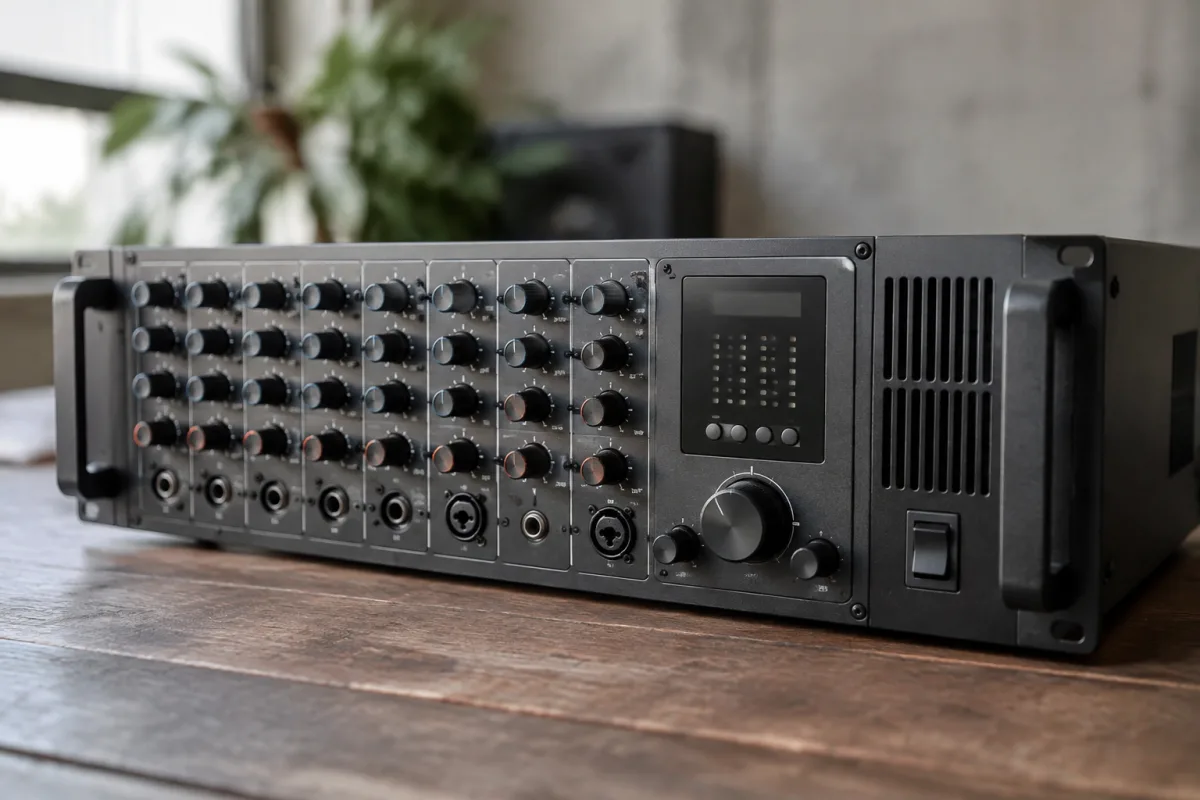
Power mixers combine mixing capabilities with built-in amplifiers, offering compact solutions for venues, bands, and mobile applications where separate mixer and amplifier components create space or portability challenges. Before investing in a power mixer, it's worth understanding whether integrated amplification actually suits your needs, what specifications matter, and how power mixers compare to traditional separate components. This guide helps you make an informed decision.
Understanding Power Mixers and Their Role
A power mixer integrates mixing channels, controls, and amplification into a single unit. You connect microphones and instruments to inputs, mix them using faders and controls, and the built-in amplifier drives speakers directly. This eliminates the need for separate mixer and amplifier components, saving space and reducing equipment complexity. However, integrated design creates trade-offs in upgrade flexibility, component quality, and serviceability. Understanding these compromises prevents frustration after purchase.
When Power Mixers Make Practical Sense
| Application | Why Power Mixer Suits It | Key Considerations |
|---|---|---|
| Portable Band Setup | Single unit replaces mixer + amplifier; easier transport and setup | Limited future expansion; upgrade requires replacing entire unit |
| Small Venue PA | Compact solution for rooms without permanent installations | Limited speaker options; amplifier not upgradeable independently |
| DJ Mixing | Integrated equipment streamlines turntable and device mixing | Dedicated DJ mixers often superior; limited expandability |
| Music Practice Space | Single compact unit for rehearsals and jamming | Output quality acceptable for practice, not touring |
| Studio Monitoring | Compact mixing and amplification for reference speakers | Professional mastering requires better component separation |
Essential Specifications When Evaluating Power Mixers
Channel count: How many input channels for microphones and instruments? Small rehearsal units typically offer 4-8 channels. Venue applications need 12-16+ channels. Ensure adequate channels for your actual inputs without excessive unused capacity.
Amplifier wattage: Measured in watts per channel. Higher wattage drives larger venues and speaker systems. Small portable units deliver 20-50W per channel. Professional systems deliver 100W+ per channel. Match wattage to your speaker system and venue size.
Mixing features: Do you need EQ on individual channels? Built-in effects? Submix buses for grouping channels? Professional models include these; budget models sometimes offer limited functionality.
Input/Output connectivity: XLR for microphones, RCA for instruments, USB for computer integration. Confirm the available connections match your equipment needs.
Built-in effects quality: If the mixer includes reverb or other effects, evaluate their quality. Some budget models have mediocre effects that sound unmusical; professional models include better processing.
Power Mixer Advantages Worth Considering
Portability is the primary advantage. A single compact unit replaces a mixer and separate amplifier, reducing transport and setup demands. For touring bands and mobile applications, this advantage is genuine and significant. Space efficiency is secondary—venues with limited space benefit from integrated equipment. Simplicity is third—fewer cables and components reduce setup time and troubleshooting complexity.
Power Mixer Disadvantages to Evaluate Honestly
Limited upgrade flexibility is the fundamental disadvantage. If your speaker system improves, you can't simply upgrade the amplifier—you must replace the entire power mixer. If mixing needs expand, you can't add channels without replacing everything. This "all-in-one" approach creates lock-in where future growth requires complete equipment replacement rather than selective upgrades.
Component quality sometimes suffers. Fitting mixing and amplification into compact chassis can mean compromises in preamp quality, amplifier efficiency, or cooling systems. Professional separate components often offer better individual quality than integrated power mixers at comparable price points.
Repair and service can be complicated. If the amplifier fails, the entire unit becomes unusable. If the mixing circuitry fails, you've lost both mixing and amplification. Separate components provide redundancy—mixer failure doesn't eliminate amplification options.
Price Tiers and Value Assessment
Budget tier (£200–£500): Compact portable mixers with basic amplification (20-50W). Suitable for rehearsal spaces and small events. Sound quality is acceptable for practice; output is insufficient for large venues.
Mid-range tier (£500–£1500): Legitimate professional quality with reliable amplification (50-100W), better mixing features, and decent effects. Suitable for touring bands, small venues, and professional applications. Best value for portable use.
Premium tier (£1500–£3000+): Professional-standard components with powerful amplification (100W+), extensive mixing capabilities, high-quality effects, and exceptional construction. Justifiable for touring acts prioritising reliability.
Comparing Power Mixers to Separate Components
A separate quality mixer plus amplifier typically costs more initially but offers superior upgrade flexibility. You can improve speakers without replacing the amplifier. You can add mixing channels without replacing the entire system. Component failure doesn't eliminate all functionality. However, separate systems require more planning, more cables, and more space.
Calculate your five-year needs. If you'll consistently need the same configuration, power mixers offer value. If your needs will evolve, separate components prevent lock-in and allow gradual upgrading.
Common Buying Mistakes to Avoid
First mistake: underestimating amplifier wattage needs. Insufficient power sounds thin and distorted at performance levels. Choose wattage matched to your venue size and speaker requirements, not just what feels adequate during quiet demos.
Second: overlooking connectivity limitations. Confirm the power mixer has all necessary input types for your equipment. Discovering you need additional inputs after purchase creates frustration.
Third mistake: prioritising low cost over mixing quality. Budget power mixers sometimes have noisy preamps that undermine good microphones. Professional quality mixing matters more than amplifier wattage for sound quality.
Fourth: assuming power mixers are superior to traditional setups because they're more compact. Compactness creates trade-offs. Separate components often deliver better quality and flexibility, but require more space and planning.
Thermal Management and Reliability Considerations
Power mixers generate heat from integrated amplification. Confirm the unit has adequate ventilation and cooling fans if necessary. Overheating reduces lifespan and reliability. Professional models include better thermal management than budget options. Consider where the unit will be located during use—adequate air circulation matters.
Future-Proofing Your Investment
Power mixers age quickly compared to separate components. As your needs evolve, integrated equipment becomes limiting. Choose expecting to eventually replace the entire unit rather than viewing it as a long-term permanent solution. This realistic expectation prevents frustration when you outgrow the equipment's capabilities.
Making Your Purchase Decision
Honestly assess your needs for the next 3-5 years. Calculate channel count requirements and amplifier wattage needed. Evaluate whether you'll want flexibility to upgrade components independently or whether integrated solutions genuinely suit your workflow. Research power mixers in your budget tier, prioritising mixing quality and amplifier reliability over trendy features. Test in person if possible to confirm the layout and controls suit your workflow. Purchase from authorised retailers offering warranty coverage and technical support.
For comprehensive information on power mixers, specifications, and technical details, see our complete guide to power mixers.
Final Perspective on Power Mixer Investment
Power mixers offer genuine value for portable applications prioritising simplicity and space efficiency. However, they create compromises in upgrade flexibility and component quality. Choose power mixers knowing they're temporary solutions you'll eventually replace, not permanent infrastructure. Invest in quality appropriate to your current venue and band requirements. Don't overpay for wattage and features you don't need, but don't compromise on mixing quality to save money. The right power mixer streamlines your portable setup effectively; the wrong one becomes a limiting frustration.


Comments