
Orchestral String Instruments article
The Complete Guide to Orchestral String Instruments
Orchestral string instruments form the backbone of classical music. Discover the unique voice each instrument brings to the ensemble and why they matter.
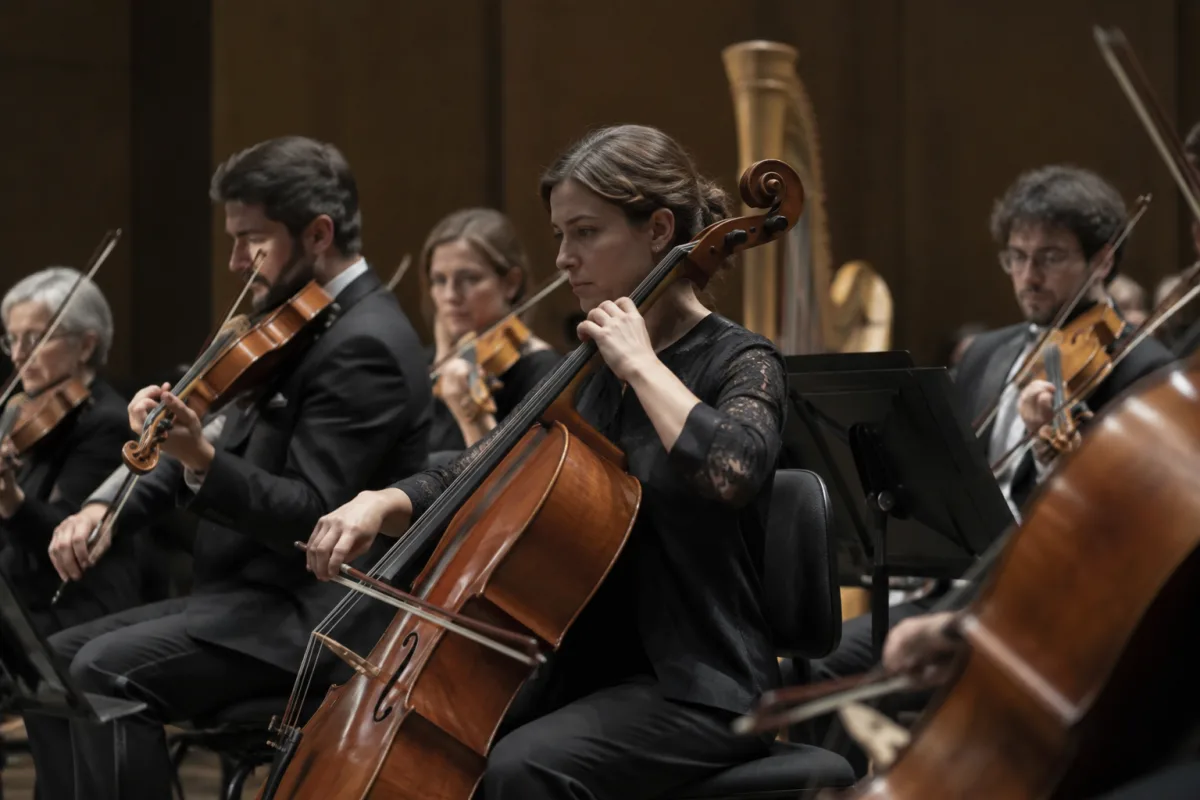
Orchestral string instruments form the heart of nearly every symphony orchestra, providing both the sonic foundation and the expressive voice that audiences associate with classical music. Whether you are a student considering learning one of these instruments, a curious listener wanting to understand what you hear in concerts, or a composer arranging music, understanding the orchestral string family is essential to appreciating Western classical music itself.
The Four Orchestral String Instruments
Orchestral string instruments share a common ancestry and construction method—a wooden body, strings of gut or steel, and a bow for sounding. Yet each instrument occupies a distinct register and voice in the ensemble. The violin leads with brightness and agility; the viola provides warmth in the inner harmonies; the cello brings gravitas and melody in the middle register; the bass anchors the ensemble with fundamental low frequencies.
Unlike guitars or banjos, orchestral string instruments are played primarily with a bow (though pizzicato—plucking—is used for dramatic effect). The bow, strung with horsehair, draws across the strings to create sustained, expressive tones impossible on plucked instruments.
The Violin
The violin is the soprano voice of the orchestra. With four strings tuned in fifths (G–D–A–E), it spans over four octaves from a low G to high E and beyond. Violins are small enough for children to learn yet capable of great expressive range. A professional-quality violin costs £2,000–10,000; master instruments by Stradivarius or Guarneri can exceed £1 million.
The first violins typically carry the melody; second violins provide harmonic support. Violin technique demands precision, endurance and musicality—a single player must sustain a two-hour performance with focus and energy.
The Viola
The viola is the viola—slightly larger than a violin, with a deeper, warmer voice. Tuned a perfect fifth below the violin (C–G–D–A), it occupies the crucial middle register of the orchestra, often reinforcing inner harmonic lines. Violas are less visible in concert than violins, yet their contribution to orchestral sound is irreplaceable.
Viola repertoire is smaller than violin repertoire, yet significant works exist by composers like Hindemith and Viol Wright. Orchestral string sections typically include twice as many violins as violas, reflecting the instrument's supporting role in the ensemble.
The Cello
The cello is the tenor voice of orchestral string instruments. Tuned an octave below the viola (C–G–D–A), it carries melody and bass equally. A cello held between the player's knees combines power with intimacy—Bach's unaccompanied solo suites remain the foundation of the instrument's solo repertoire.
Cellos cost £3,000–15,000 for student and amateur instruments; professional orchestral players use £20,000–100,000+ instruments. The instrument's warm voice makes it a favourite for both orchestral and solo work, equally at home in concertos and chamber music.
The Double Bass
The double bass (or bass) is the foundation of the orchestra. Standing nearly six feet tall, it produces the lowest pitches, providing both harmonic and rhythmic bedrock. With strings tuned E–A–D–G, it can be played with a bow or plucked (pizzicato), which is common in fast-moving passages.
Double basses are less common in small ensembles but essential in orchestras, where typically 6–12 basses anchor the sound. The instrument requires physical strength and musicality—a bass player must provide rock-solid foundation while maintaining musical expression.
Typical Orchestral String Section Makeup
| Instrument | Typical Count | Register |
|---|---|---|
| First Violins | 8–16 | Soprano (highest) |
| Second Violins | 8–16 | Soprano (harmonic support) |
| Violas | 4–12 | Alto (warm middle voice) |
| Cellos | 4–8 | Tenor (melody and bass) |
| Double Basses | 4–8 | Bass (foundation) |
Learning Orchestral String Instruments
Children typically begin violin or cello around age 5–8. Violas and basses are less common starter instruments, though talented young players may transition to them from violin or cello. Learning demands regular practice (30 minutes daily as a minimum), weekly lessons and patience—orchestral strings require years to master. Most music schools offer group lessons and ensemble experience, accelerating progress and providing motivation through peer learning.
The Sound and Role in the Orchestra
Orchestral string instruments create warmth, depth and sustained legato that no wind instrument can match. The human voice most closely resembles a string section in its expressiveness and sustain. This is why string sections are the emotional backbone of most orchestral works—they carry melody, sustain harmonies and create the lush sonority that audiences associate with the orchestra itself.
From Bach's concerti grossi to Shostakovich's string quartets to film scores, orchestral string instruments remain the gold standard for expressing emotion through instrumental music. Understanding the roles and voices of these instruments deepens appreciation for the orchestral experience.


Comments