
Moog Synthesizer Keyboard article
The Complete Guide to Moog Synthesizer Keyboard
Moog synthesizer keyboards define electronic music with distinctive warmth and hands-on sound design. Discover why musicians choose Moog and which model suits your needs.
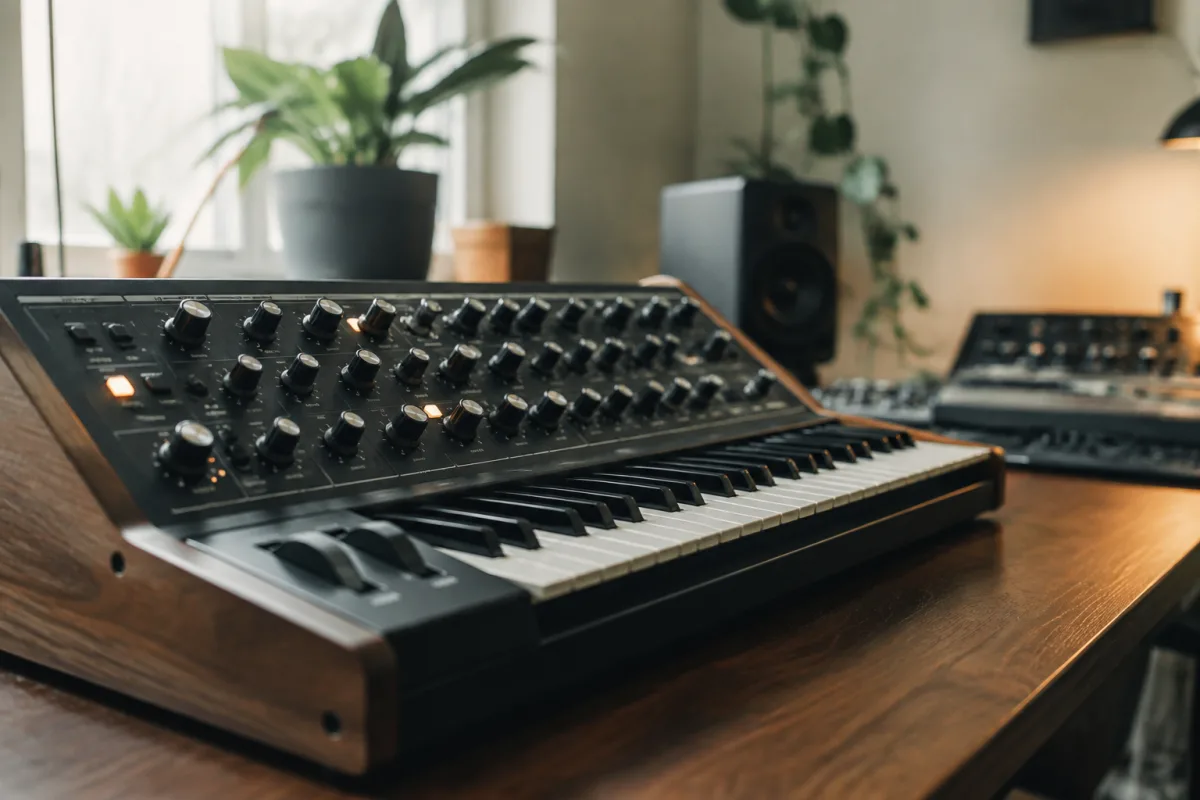
The Moog synthesizer keyboard stands as an icon in electronic music history and a cornerstone of contemporary synthesis. From Robert Moog's original handmade instruments that shaped prog rock and electronic music's golden age to today's digital and hybrid Moog keyboards, these instruments inspire musicians to explore sound in ways conventional instruments cannot. Whether you're a seasoned electronic musician or a curious newcomer, understanding Moog synthesizer keyboard design and capabilities helps you appreciate why these instruments command such respect and premium prices.
The Moog Synthesizer Keyboard Legacy
Robert Moog revolutionised music technology in the 1960s by creating the first practical synthesizer keyboard. Early Moog synthesizer keyboard models defined the sound of experimental and progressive rock. Keith Emerson's Moog synthesizer keyboard performances introduced millions to electronic music possibility. Since then, the Moog name has remained synonymous with warmth, musicality, and distinctive character that digital emulations struggle to replicate. A Moog synthesizer keyboard carries history—playing one connects you to decades of innovation.
The original Moog synthesizer keyboard design emphasised analogue oscillators, voltage-controlled filters, and hands-on sound design. Every Moog synthesizer keyboard parameter was explorable via knobs, patch cables, and sliders, encouraging experimentation. This tactile approach contrasts sharply with menu-diving required by many modern synthesizers.
Moog Synthesizer Keyboard Models
Today's Moog lineup spans entry-level to professional instruments:
- Moog One synthesizer keyboard — a modern flagship featuring six analogue voices, extensive modulation, and a premium keyboard. The Moog One synthesizer keyboard represents the ultimate expression of Moog's design philosophy.
- Moog Mother-32 / Moogerfooger synthesizer keyboard units — compact, semi-modular Moog synthesizer keyboards ideal for live performance or integration into larger setups.
- Moog Moogerfooger pedal synthesizer keyboards — stompbox-format Moog synthesizer units controlled by expression pedals, popular with guitar players exploring synthesis.
- Moog Theremini synthesizer keyboard — a gestural synthesis instrument representing Moog's experimental side, without traditional keyboard.
- Vintage Moog synthesizer keyboard models — original Minimoogs, Moog Mother units, and Moog Voyagers are highly prized by collectors and professionals valuing vintage tone.
Understanding Moog Synthesizer Keyboard Sound Design
| Component | Role in Moog Synthesizer Keyboard Sound |
|---|---|
| Analogue Oscillators | Generate raw waveforms (sawtooth, square, triangle). Moog synthesizer keyboard oscillators are characterised by warm, subtle harmonic coloration. |
| Voltage-Controlled Filter (VCF) | Sculpts tone by filtering harmonics. The legendary Moog synthesizer keyboard filter is warm, slightly musical, and integral to classic Moog sound. |
| Modulation Envelope | Controls dynamics over time. Moog synthesizer keyboard envelopes are responsive and musical, favouring playability over numerical precision. |
| Patch Bay | Allows custom signal routing via patch cables. Moog synthesizer keyboard patch bays enable creative modulation and sound design impossible on menu-driven synths. |
Moog Synthesizer Keyboard Playability
Playing a Moog synthesizer keyboard demands a different mindset than traditional keyboards. Each Moog synthesizer keyboard parameter invites hands-on tweaking during performance. Rather than selecting preset patches and playing, a Moog synthesizer keyboard rewards exploration and expressive performance. The keyboard itself on quality Moog synthesizer units offers weighted, responsive keys with aftertouch—a huge improvement over early Moog synthesizer keyboard models with stiff, unweighted action.
Modern Moog synthesizer keyboards like the Moog One incorporate advanced sequencing, arpeggiators, and MIDI integration alongside classic analogue synthesis. A contemporary Moog synthesizer keyboard balances vintage inspiration with modern workflow conveniences.
Moog Synthesizer Keyboard in Contemporary Music
Today's electronic musicians use Moog synthesizer keyboards across genres—from experimental electronic to hip-hop to indie rock. The unmistakable warmth of a Moog synthesizer keyboard filter adds character that digital plugins struggle to capture. Even producers who primarily work "in the box" often record performances on an actual Moog synthesizer keyboard for that distinctive analogue magic.
The Moog synthesizer keyboard's influence extends beyond music production. Visual artists and installation creators program Moog synthesizer keyboards to generate sounds responding to light, motion, or environmental data. A Moog synthesizer keyboard becomes not just an instrument but a creative tool transcending traditional music boundaries.
Cost and Investment Considerations
New Moog synthesizer keyboard models command premium prices—a Moog One exceeds £5,000. Entry-level Moog synthesizer keyboards like the Mother-32 or Moogerfooger pedals cost £300–800, making Moog sound accessible to curious musicians. Vintage Moog synthesizer keyboards (original Minimoogs, Moog Voyagers) appreciate as collector items, sometimes selling for £5,000–15,000 depending on condition and rarity.
For most musicians, the question isn't whether to purchase a Moog synthesizer keyboard (perhaps impractical), but whether a smaller Moog synthesizer keyboard unit justifies its cost versus alternatives. Many professionals argue that one authentic Moog synthesizer keyboard voice outweighs ten mediocre digital approximations—a belief that Moog synthesizer keyboard prices reflect.
Learning a Moog Synthesizer Keyboard
The learning curve for a Moog synthesizer keyboard is genuine—understanding oscillators, envelopes, and modulation requires study. However, hands-on exploration on a Moog synthesizer keyboard is rewarding because direct parameter access encourages play and discovery. Many musicians report that learning on a Moog synthesizer keyboard teaches fundamental synthesis principles applicable to all synthesis methods.
Start with a small Moog synthesizer keyboard unit or rent one for a weekend. Moog synthesizer keyboard manuals are thorough, and online communities offer support. The investment in learning pays dividends as your Moog synthesizer keyboard playing develops.
Conclusion
A Moog synthesizer keyboard is not simply an instrument—it's a gateway to decades of electronic music tradition and an invitation to creative sound design. Whether you invest in a flagship Moog synthesizer keyboard or explore synthesis through a compact Moog synthesizer keyboard module, you're engaging with history whilst creating sound for today. The warmth, musicality, and character of a genuine Moog synthesizer keyboard justify their reputation and premium positioning in the synthesis landscape.



Comments