
MIDI Pianos article
The Complete Guide to Midi Pianos
MIDI pianos combine authentic weighted keyboard action with unlimited sound possibilities through digital connectivity. Learn how MIDI piano technology works, explore professional models and discover how these instruments unlock music production creativity.
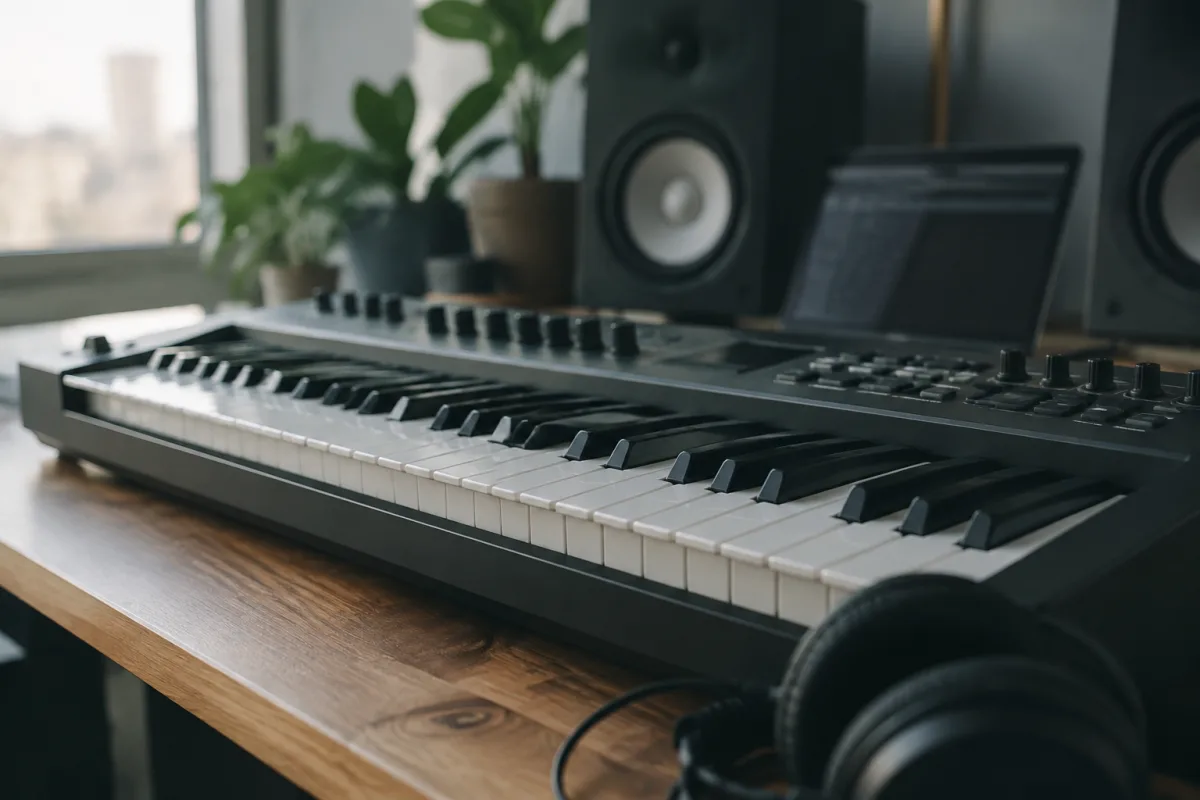
MIDI pianos represent the modern convergence of acoustic piano tradition and digital music production capability, offering unlimited sound possibilities whilst maintaining authentic weighted keys and responsive playing feel. Whether you're composer seeking production flexibility, educator requiring portable performance options or bedroom pianist exploring digital music-making, these instruments bridge acoustic tradition and contemporary creativity. This guide explores everything you need to know about MIDI pianos, their technology, popular models and how to choose the right instrument for your musical needs.
Understanding MIDI Pianos and Their Purpose
A MIDI piano is a keyboard instrument with weighted keys that captures your performance as MIDI data rather than generating sound independently. Struck keys send note information (pitch, velocity, duration) to external sound engines — synthesisers, digital audio workstations, virtual instruments — creating sounds anywhere from authentic piano to experimental textures.
This separation between input (the keyboard) and sound generation (external software or hardware) fundamentally transforms musical possibility. A single weighted keyboard becomes gateway to thousands of sounds, unlimited orchestration and seamless integration with modern music production workflows. Professional musicians rely on MIDI pianos for compositional flexibility and performance expression.
Key Technology: Weighted Keys and Responsiveness
Quality MIDI pianos use weighted hammer action that simulates acoustic piano resistance. Pressing keys requires progressive force, mirroring how acoustic pianos respond to touch. This authentic feel encourages proper piano technique and responsive playing dynamic.
Velocity sensitivity measures strike force, allowing MIDI pianos to transmit nuanced dynamics. Gentle playing produces soft tones; forceful playing creates volume — just like acoustic pianos. This responsiveness enables expressive performance impossible with unweighted keyboards.
Aftertouch measures continued pressure after the key strikes, allowing real-time parameter modulation. Pushing down after striking can increase vibrato, filter depth or other sound parameters, enabling vocal-like expression from keyboard instruments.
Popular MIDI Piano Models
The Yamaha P-125 offers excellent entry-level weighted action and responsive feel, perfect for learners and budget-conscious pianists. The Roland FP-90X delivers professional weighted action, extensive sound library and excellent build quality suited to gigging musicians.
For serious studio work, the Kawai MP7SE features sophisticated wooden-key technology with escapement (authentic grand piano resistance), appealing to classically-trained pianists seeking authenticity. Premium options like the Yamaha CP88 offer exceptional touch, premium sound engines and sophisticated control systems for touring professionals.
Understanding MIDI Connectivity and Integration
MIDI pianos connect to computers and audio interfaces through USB or 5-pin DIN MIDI connectors. This connection transmits performance data to recording software (DAWs), virtual instruments and external synthesisers. A single MIDI piano controls unlimited sounds through software integration.
Modern MIDI pianos support Bluetooth connectivity, streaming performance data wirelessly to iOS devices and computers. This wireless capability enables mobile music creation and reduces cable clutter during performance.
MIDI data transmission enables non-destructive editing. You can record piano performance, then adjust velocities, timing or note values after recording — impossible with traditional audio. This flexibility transforms MIDI pianos into composition and arrangement tools.
Touch and Responsiveness Quality
Piano touch quality fundamentally affects playing experience and expressiveness. Premium instruments feature escapement technology that recreates grand piano's subtle mechanical characteristics, enhancing playing response. Quality weighted actions feel weighty but responsive, encouraging natural playing technique.
Budget MIDI pianos with lighter actions feel less authentic but still transmit velocity data adequately. Your choice depends on budget and playing background — classical pianists typically demand authentic weighted action; producers working primarily with headphones might prioritise sound library over key feel.
Sound Libraries and Synthesis Engines
Professional MIDI pianos include sophisticated on-board sound engines offering multiple piano models (concert grands, uprights, historical instruments), electric pianos, organs and synthesised sounds. Premium models provide thousands of sounds and deep editing capabilities.
The real power emerges through connection to external software. DAWs like Logic Pro, Ableton and Cubase include virtual instrument libraries dwarfing any on-board engine. MIDI piano connection unlocks unlimited orchestration possibilities.
Size and Portability Considerations
Compact MIDI pianos (under 50 cm wide) sacrifice some authentic key spacing and action quality but transport easily and fit small spaces. Standard 88-key models with full-sized keys offer authentic playing experience and are reasonably portable for gigging musicians. Stage pianos balance full features with touring practicality.
Weight varies dramatically — portable models weigh 12–25 kg; full-featured stage pianos exceed 50 kg. Consider transport logistics when choosing size and weight.
Cost and Value Considerations
Budget MIDI pianos cost £300–£600, offering functional weighted action and core MIDI connectivity. Mid-range instruments run £1,000–£2,500 balancing touch quality and sound features. Professional stage pianos exceed £3,000. Used models offer excellent value for budget-conscious buyers.
Viewed as production tools rather than instruments alone, MIDI pianos provide extraordinary value. A single keyboard controlling unlimited software sounds outperforms specialized hardware at lower cost.
Conclusion
MIDI pianos offer creative freedom and compositional flexibility whilst maintaining authentic weighted keyboard response. Whether you choose budget-friendly entry models or professional stage instruments, a quality MIDI piano becomes gateway to modern music production. Connect it to your DAW, explore virtual instrument libraries and discover unlimited sonic possibilities — all with authentic piano touch that encourages expressive performance and proper technique development.


Comments