


LFO Module article
The Ultimate Guide to Lfo Module
LFO modules generate rhythmic modulation that transforms static synthesizer patches into dynamic, animated soundscapes with evolving motion and character.
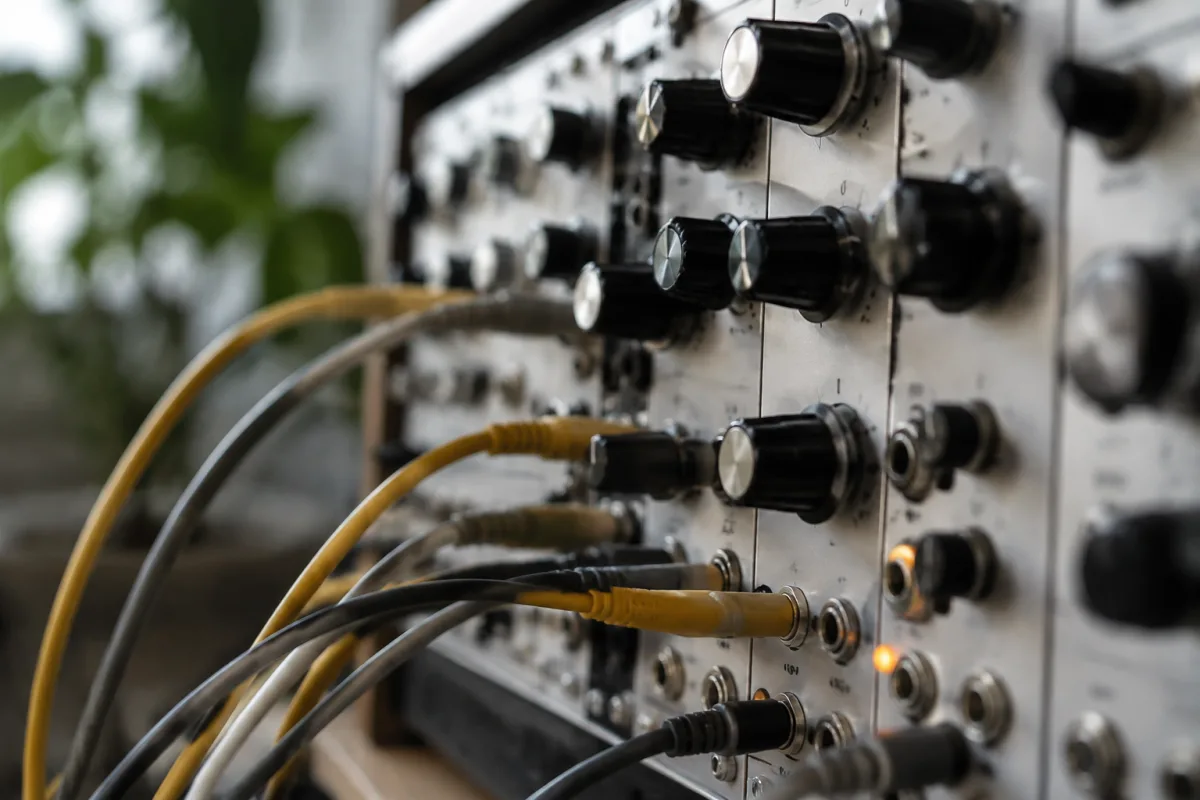
LFO modules represent fundamental building blocks in modular synthesis, enabling rhythmic variation and evolving motion within synthesizer patches. An LFO module generates low-frequency oscillations that modulate other parameters, transforming static patches into dynamic, animated soundscapes. Understanding LFO module functionality and application is essential for any musician working with modular systems or complex synthesizers.
Understanding LFO Module Basics
An LFO module—short for Low-Frequency Oscillator module—produces waveforms below the audible range, typically between 0.1 Hz and 100 Hz. Unlike audio oscillators that create pitched tones, an LFO module operates invisibly, modulating other parameters such as volume, pitch, filter cutoff, or effects intensity. This modulation ability transforms static synthesizer patches into living, breathing timbres with organic movement. The LFO module essentially adds temporal dimension to sound design, creating motion rather than stasis.
Every LFO module contains adjustable parameters controlling modulation speed and depth. The LFO module's frequency—measured in Hertz—determines how rapidly modulation occurs. An LFO module operating at 0.5 Hz creates slow, sweeping changes; an LFO module at 10 Hz produces rapid modulation suitable for tremolo effects. The LFO module's waveform—sine, triangle, square, or sawtooth—shapes modulation character. A sine wave LFO module creates smooth, natural modulation; a square wave LFO module produces abrupt, rhythmic changes.
LFO Module Waveform Types
Different LFO module waveforms serve distinct creative purposes:
- Sine Wave LFO Module — Produces smooth, natural modulation ideal for subtle effects and organic motion
- Triangle Wave LFO Module — Offers balanced, linear modulation combining smoothness with directional motion
- Sawtooth Wave LFO Module — Creates unidirectional, scanning modulation useful for filter sweeps and evolving timbres
- Square Wave LFO Module — Generates rhythmic, stepped modulation perfect for metallic effects and synchronised motion
- Random/S&H LFO Module — Produces unpredictable, sample-and-hold modulation for chaotic, evolving patches
Quality LFO modules offer multiple simultaneous waveforms, enabling sophisticated modulation within single patches.
LFO Module Application Techniques
Creative LFO module use extends far beyond standard modulation. Modulating an LFO module with another LFO module creates complex, evolving modulation patterns impossible with simple waveforms. Many advanced synthesizers and modular systems allow cascading multiple LFO modules for increasingly sophisticated sonic evolution. This capability transforms the LFO module from simple utility to powerful creative tool.
Synchronising LFO module tempo to external clock sources—a feature present on quality LFO modules—enables rhythmic alignment with sequences and drum machines. An LFO module locked to tempo adds coherent movement within musical context, preventing random drift disconnected from surrounding rhythms. Some LFO modules include phase controls enabling precise modulation timing relative to external sync.
Key Features in Quality LFO Modules
Essential LFO module features distinguish quality instruments from basic alternatives. Rate control enabling continuous frequency adjustment from sub-audible to audio-rate frequencies makes LFO modules versatile. Depth control—sometimes called amount or intensity—determines modulation intensity. Many LFO modules offer bipolar and unipolar output modes. Bipolar LFO module output modulates bidirectionally (up and down); unipolar output modulates unidirectionally. This distinction matters significantly for specific applications.
Advanced LFO modules include phase offset controls enabling independent LFO module timing across multiple modulation destinations. Attenuversion—a feature allowing amplitude control with bipolar switching—appears on premium LFO modules. Some LFO modules incorporate waveshaping or morphing capabilities, continuously transitioning between waveform types. These sophisticated LFO module features expand creative possibilities remarkably.
Modular LFO Module Integration
In modular systems, LFO modules typically occupy small footprint space—often 4 to 8 HP (horizontal pitch units). This compact LFO module sizing encourages incorporating multiple LFO modules into patches, as space remains available for other essential modules. Typical modular configurations include at least two LFO modules, often running at different tempos for complex modulation interaction.
Patching LFO modules involves simple cable connections. LFO module output connects to modulation destinations through attenuators or VCA modules, enabling flexible intensity control. The LFO module's elegant, straightforward signal path contrasts with complex synthesis techniques, making LFO modules ideal introductions to modular patching.
LFO Module Speed and Musicality
Selecting appropriate LFO module speeds profoundly affects patch character. Very slow LFO module speeds (0.1-0.5 Hz) create dramatic, evolving changes across bars or phrases. Moderate LFO module speeds (2-5 Hz) produce recognisable wobbling, ideal for familiar modulation effects. Fast LFO module speeds (10+ Hz) create buzzing, metallic timbres when modulating audio-rate parameters. Extremely fast LFO module operation—audio-rate modulation—transforms LFO modules into audio-frequency generators capable of creating pitched effects.
Experimenting with unexpected LFO module speeds often yields surprising results. An LFO module speed matching your sequence's beat creates locked, rhythmic modulation; an LFO module speed fractionally offset creates polyrhythmic tension. The LFO module's straightforward operation belies remarkable creative potential when thoughtfully applied.
Choosing and Implementing LFO Modules
Whether selecting LFO modules for modular systems or evaluating synthesizer LFO module capabilities, prioritise essential features: smooth rate control, multiple waveforms, and bipolar output capability. Beyond these fundamentals, advanced features like waveshaping, tempo sync, and phase control reward exploration for experienced users. Budget LFO modules provide basic functionality; premium LFO modules offer expanded capabilities for musicians developing sophisticated patch libraries.





Comments