
Read next

Eurorack Modular article
Eurorack Modular for Beginners: A Complete Guide
Discover how to start your eurorack modular journey with confidence. This beginner-focused guide covers essential modules, budget tips, and first steps into modular synthesis.
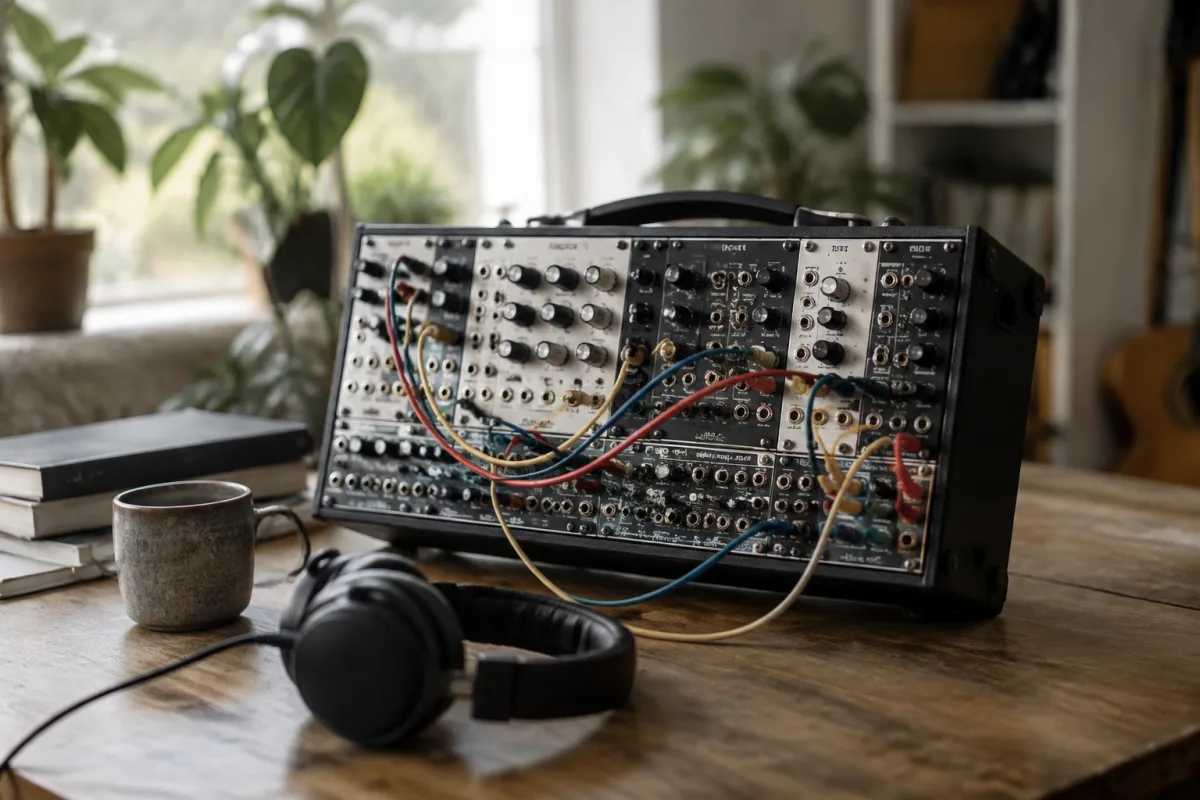
Eurorack modular synthesis might seem intimidating at first glance, but stepping into this world of connected modules and patching cables is far more achievable than many beginners fear. If you've been curious about making music with eurorack modular systems but weren't sure where to start, this guide is designed specifically for you. We'll demystify the basics and help you take your first confident steps into modular synthesis.
Why Eurorack Modular Appeals to Beginners
The beauty of eurorack modular synthesis lies in its modularity itself. Unlike traditional synthesisers where everything is fixed in place, eurorack modular lets you build a system that grows with your skills and interests. You start small, learn the fundamentals, and expand gradually. This approach means you're not overwhelmed by features you don't yet understand—you only engage with the modules you've chosen.
Moreover, the eurorack modular community is remarkably welcoming. Online forums, YouTube tutorials, and local synth meetups provide an incredible support network. New musicians discover that modular synthesis isn't about mastering everything at once; it's about exploring sound in a hands-on, tactile way that many find deeply satisfying.
Starting with the Essential Modules
Your first eurorack modular system doesn't need dozens of modules. In fact, keeping it simple is often the best approach for beginners. Most experienced modular musicians recommend starting with the fundamentals:
- Oscillator – The sound source. A basic VCO (voltage-controlled oscillator) is perfect for beginners.
- Filter – Shapes and sculpts the oscillator's sound. VCF (voltage-controlled filter) modules are essential.
- Envelope Generator – Controls how sound evolves over time: attack, decay, sustain, release.
- Amplifier (VCA) – Controls volume and dynamics. Without an amplifier, you won't hear anything.
- Sequencer – A simple sequencer helps you create melodies and rhythms without needing to perform every note.
- Case and Power Supply – Your eurorack modular system needs a proper case with adequate power delivery.
These six elements form the foundation of any eurorack modular setup. Once you understand how they interact, you're well on your way.
Common Mistakes Beginners Make
Learning from others' experiences accelerates your progress. Here are mistakes many beginners make when starting with eurorack modular:
- Buying too many modules too quickly – It's tempting to fill your case immediately, but this leads to confusion and money wasted on modules you don't truly understand yet.
- Underestimating power requirements – Each module draws power. A case with insufficient power supplies will result in unstable synthesis and strange glitches.
- Ignoring cable management – Spaghetti-like cables are hard to trace and troubleshoot. Invest in a few patch cables and learn to keep your setup tidy.
- Skipping the manual – It's easy to assume you know how a module works, but reading the manual saves hours of frustration.
- Playing alone too long – Connect with the community. Seeing how others patch their systems teaches you possibilities you might never discover alone.
Choosing Your First Case and Budget
Eurorack modular systems come in different sizes, measured in HP (horizontal pitch units). For beginners, a 42 HP case is usually ideal—large enough for essential modules but not so vast that it becomes overwhelming or unaffordable.
Set a realistic budget. A functional beginner eurorack modular case with basic modules typically costs between £300 and £800. This might sound substantial, but you're investing in a system that will last years and grow with your skills. Rather than spreading your budget thinly across many cheap modules, it's better to buy fewer, quality modules that sound good and build skills faster.
The Learning Curve: What to Expect
Understanding eurorack modular synthesis takes time, but you'll have breakthroughs quickly. Within your first few weeks, you'll patch simple oscillator-to-filter-to-output chains and hear how each module shapes sound. Within months, you'll be creating complex, evolving soundscapes and understanding concepts like modulation and CV control.
The learning curve isn't steep so much as it is broad. Each module is relatively straightforward, but the creative potential from combining them is vast. This gradual unfolding is part of what makes eurorack modular synthesis so rewarding.
Expanding Beyond the Basics
Once you're comfortable with your initial setup, you'll naturally gravitate toward modules that excite you. Some beginners love rhythm and add more sequencers and drum modules. Others become fascinated with effects and add reverb, delay, or distortion modules. The beauty of eurorack modular is that there's no single "correct" direction—your system evolves based on your musical interests.
For deeper knowledge and more detailed guidance on eurorack modular systems, consider exploring the complete guide to eurorack modular, which covers the topic comprehensively for musicians at any level.
Taking Your First Step
The best time to start with eurorack modular is now. Don't wait for perfect knowledge or the ideal budget. Start small, stay curious, and embrace the hands-on learning process. Join online communities, watch tutorials, and—most importantly—play with the modules you have. Sound design through eurorack modular synthesis is as much about experimentation as it is about understanding theory.
Your journey into eurorack modular synthesis will be unique. You'll discover sounds and techniques that resonate with your musical voice. Welcome to a world of infinite sonic possibilities.


Comments