
Electric Drum Roland article
The Complete Guide to Electric Drum Roland
Roland electric drums offer quiet practice, extensive sounds and professional recording capabilities. Discover how Roland electronic percussion can enhance your drumming experience.
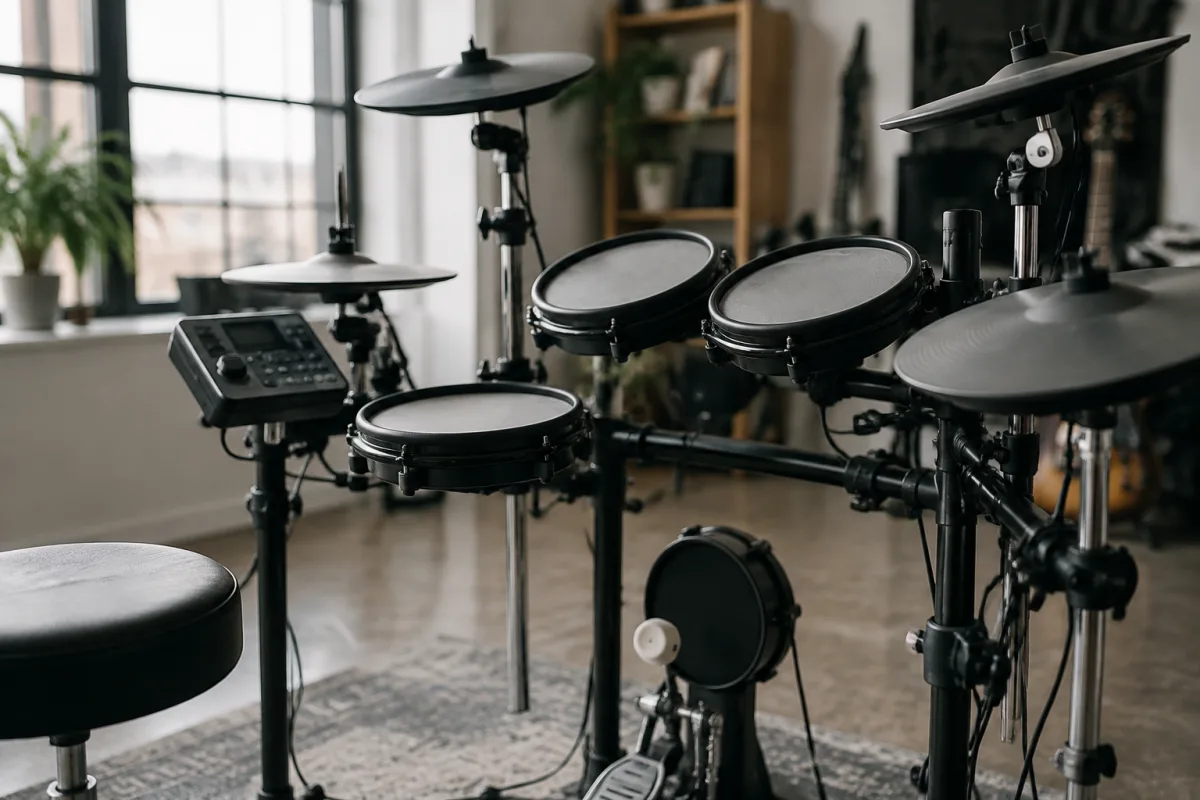
Roland electric drum kits have revolutionised modern percussion by combining the familiar playing experience of acoustic drums with the sonic possibilities of electronic sound design. As pioneers in electronic percussion, Roland's electric drum systems appeal to practice musicians seeking quiet operation, professional performers requiring versatile sounds and recording artists wanting authentic drum response with limitless tonal options. Understanding the capabilities and advantages of Roland electric drum technology helps musicians make informed decisions about their percussion setup.
The Evolution of Roland Electric Drums
Roland has been at the forefront of electronic percussion innovation for decades, introducing technology that transformed how drummers play and record. The company's electric drum offerings evolved from basic drum machines into sophisticated kits offering realistic playing feel, responsive velocity sensitivity and extensive sound editing capabilities. Modern Roland electric drum systems preserve the physical playing experience of acoustic drumming whilst providing advantages acoustic drums simply cannot match.
Types of Roland Electric Drum Systems
Roland's diverse product line offers electric drum solutions for virtually every need and budget level.
Entry-Level Roland Electric Drums
Roland electric drum kits at the budget end provide affordable access to electronic percussion. These entry-level Roland electric drum systems feature basic pad configurations, onboard sounds and straightforward functionality suitable for beginners learning to play drums. Entry-level Roland electric drums excel for practice in volume-sensitive environments and developing stick control before investing in more complex systems.
Professional Roland Electric Drums
At the higher end, professional Roland electric drum systems deliver exceptional playing feel, extensive sound libraries and sophisticated editing capabilities. These professional Roland electric drums feature premium pads with superior sensitivity, multiple trigger zones per pad and advanced sound engine capabilities. Professional Roland electric drums suit touring musicians, studio professionals and serious home recordists.
Hybrid Roland Electric Drums
Some Roland electric drum configurations blend acoustic and electronic elements, allowing drummers to trigger samples and electronic sounds whilst playing traditional acoustic drums. These hybrid Roland electric drums systems bridge acoustic authenticity with electronic flexibility, popular for contemporary music production and live performance contexts.
Key Features of Roland Electric Drums
What sets Roland electric drums apart from competitors? Several sophisticated features characterize Roland's approach to electronic percussion:
- Realistic Playing Feel — Roland electric drums employ responsive pads with velocity sensitivity that respond to dynamic playing variations, creating authentic playing experience
- Extensive Sound Libraries — Roland electric drums include thousands of professionally recorded drum sounds, percussion samples and electronic synthesis options
- Customisation Options — Sophisticated editing capabilities allow drummers to adjust pitch, layer sounds and personalise their Roland electric drums configuration
- MIDI Connectivity — Roland electric drums integrate seamlessly with recording software and other electronic music equipment via MIDI connections
- Quiet Operation — A primary advantage of Roland electric drums, silent practice capability enables late-night sessions without disturbing others
- Compact Design — Many Roland electric drums occupy less physical space than equivalent acoustic setups whilst offering greater sonic flexibility
Roland Electric Drums Sound Quality
Modern Roland electric drums deliver remarkably authentic drum sounds. The company's proprietary SuperNATURAL technology captures the nuances of acoustic drum performance, including sympathetic resonance and natural decay characteristics. Roland electric drums can produce convincing acoustic drum tones for studio recordings and live performances, though purists may prefer the organic characteristics of genuine acoustic instruments. The real advantage of Roland electric drums lies not in replacing acoustic drums but in expanding sonic possibilities beyond acoustic limitations.
Playing Roland Electric Drums vs. Acoustic
The playing experience of Roland electric drums closely approximates acoustic drums, with responsive pads and familiar cymbal trigger layouts. However, subtle differences exist—Roland electric drums pads respond to strike location in ways that mimic traditional drums, but their feel differs slightly from wooden shells and metal cymbals. Most drummers adapt quickly to Roland electric drums within a few practice sessions, though serious players often maintain both acoustic and electronic systems for different applications.
Recording with Roland Electric Drums
One of Roland electric drums' greatest advantages emerges in recording contexts. Direct USB or MIDI connectivity routes Roland electric drums signals directly to your computer, bypassing microphone placement and room acoustics entirely. Studio professionals value this capability for quick tracking, detailed editing and unlimited sound experimentation. Roland electric drums enable recording engineers to capture perfect performance takes without acoustic environment interference.
Practice Applications
Musicians seeking quiet practice options find Roland electric drums essential. Silent practice capability through headphone monitoring eliminates disturbance to flatmates and neighbours while allowing full-volume monitoring for the drummer. Many Roland electric drum systems include practice modes and metronome functions that aid skill development. Some models feature onboard recording for self-evaluation and progress tracking.
Maintenance and Durability of Roland Electric Drums
Roland electric drums require minimal maintenance compared to acoustic instruments. No tuning, no head replacement and no humidity concerns. The primary maintenance task involves occasional cleaning to prevent dust accumulation on pads. Properly treated Roland electric drums should provide years of reliable service. Unlike acoustic drums that degrade over time, Roland electric drums maintain consistent feel and reliability indefinitely.
Conclusion
Roland electric drums represent a sophisticated alternative to acoustic percussion that deserves serious consideration from modern drummers. Whether you're seeking a quiet practice solution, exploring electronic sound design, or requiring versatile percussion for recording and live performance, Roland electric drums deliver genuine value alongside authentic playing experience. By understanding what Roland electric drums offer and evaluating your specific needs, you'll discover why these systems have become essential tools for drummers across musical genres.


Comments