
Digital Drum Sets article
The Complete Guide to Digital Drum Sets
Digital drum sets have revolutionised how drummers create rhythm, offering limitless sonic possibilities within compact, portable packages that bridge traditional percussion and modern music technology.
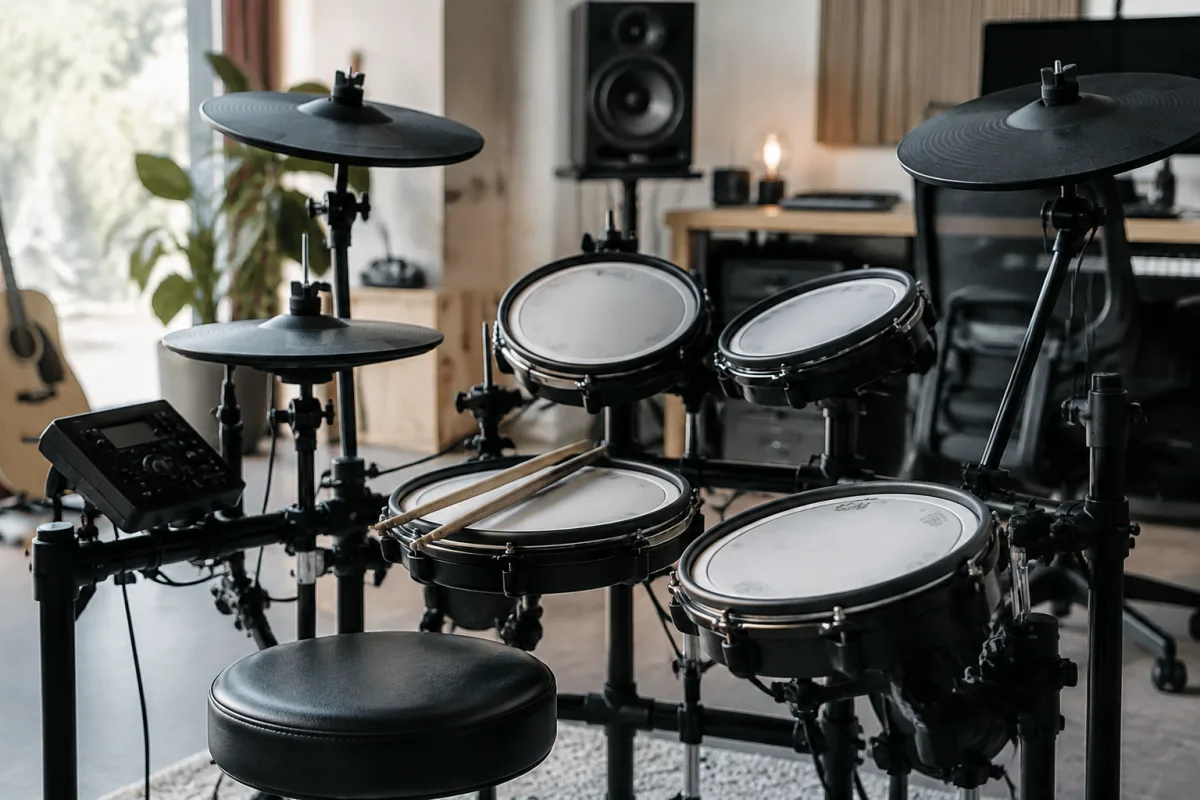
Digital drum sets have revolutionised how drummers create rhythm, offering limitless sonic possibilities within compact, portable packages. Whether you're a professional recording artist, touring drummer, or bedroom producer, modern digital drum sets deliver unprecedented versatility and reliability. From electronic music production to live performance augmentation, digital drum sets bridge the gap between traditional percussion and modern music technology.
What Are Digital Drum Sets?
A digital drum set combines electronic drum pads with sound modules, sensors, and triggering technology to produce drum sounds digitally. Unlike acoustic drums that vibrate air directly, digital drum sets convert pad strikes into electronic signals, which the sound module then translates into recorded drum samples or synthesised percussion tones.
The fundamental components include drum pads (representing kick, snare, toms, and cymbals), a control module or sound engine, and typically a stand or frame holding everything together. Some digital drum sets remain pure electronic instruments, whilst others integrate mesh pads that closely resemble traditional drumheads, offering tactile familiarity with technological advantages.
Advantages of Digital Drum Sets Over Acoustic Drums
Digital drum sets offer compelling advantages for modern musicians and producers:
- Volume control — play silently through headphones without disturbing neighbours, perfect for flat dwellers and late-night practice.
- Portability — setup and transport is dramatically simpler than acoustic kits, ideal for touring and cramped rehearsal spaces.
- Sound variety — access hundreds or thousands of drum sounds instantly, from vintage analogue kits to experimental electronic percussion.
- Recording integration — most digital drum sets connect directly to computers via USB, eliminating microphone placement challenges and simplifying recording workflows.
- Consistency — every strike produces identical samples regardless of hand technique, valuable for programming tight drum tracks in studio environments.
- Durability — no wooden shells to crack, no cymbals to crack or develop unwanted resonances; digital kits tolerate years of professional use.
- Learning tools — many modules include metronomes, backing tracks, and practice games that aid skill development.
Entry-Level Versus Professional Digital Drum Sets
The digital drum set market segments clearly into affordability tiers, each serving different needs:
Entry-level digital drum sets (under £300–500) suit bedroom enthusiasts, beginners, and budget-conscious students. These typically feature compact pads, basic sound libraries, and simplified triggering sensitivity. Sound quality ranges from adequate to good, with limited customisation options.
Mid-range digital drum sets (£500–1500) balance features, build quality, and price. These offer responsive mesh or rubber pads, extensive sound libraries with popular drum kits and percussion samples, and adequate connectivity. Most touring semi-professionals and serious home producers operate in this tier.
Professional digital drum sets (£1500 and upward) feature premium construction, highly responsive pads that feel remarkably similar to acoustic kit playing, comprehensive sound engines with synthesis capabilities, and studio-grade audio outputs. These instruments serve touring professionals and top-tier recording studios.
Key Features to Consider When Buying Digital Drum Sets
Evaluate these features when selecting your digital drum sets:
- Pad responsiveness and playability — The pads should respond consistently across the entire surface, with minimal dead zones. Test multiple units if possible.
- Aftertouch sensitivity — Better kits let you control dynamics after striking, enabling expressive playing.
- Sound quality and library size — Does the kit include drum sounds you'll actually use? Can you import additional samples?
- Connectivity options — USB, MIDI, audio outputs matter for recording and live use. Headphone outputs with mix control are essential.
- Build quality — Solid construction endures touring and daily playing. Check reviews for durability feedback.
- Software bundled — Some digital drum sets include production software or plugins that expand creative possibilities.
Mesh Pads Versus Rubber Pads in Digital Drum Sets
Digital drum sets employ two primary pad technologies, each offering distinct advantages:
Mesh pads replicate acoustic drumhead responsiveness, providing cushioned impact that feels closest to playing traditional drums. Mesh absorbs strike energy naturally, reducing finger and wrist strain during extended playing. The trade-off is that mesh deteriorates with age, eventually requiring replacement.
Rubber pads offer durability that exceeds mesh significantly. They provide snappy, immediate response particularly valued in electronic music and production contexts. Rubber pads feel harder than acoustic heads, potentially causing fatigue during extended sessions, but they'll outlast mesh pads by years.
Connecting Digital Drum Sets to Computers and DAWs
Modern digital drum sets integrate seamlessly with music production software. Most connect via USB and appear as MIDI controllers, triggering drum samples within your preferred DAW—Ableton Live, Logic Pro, Reaper, or others. This opens vast creative possibilities: trigger custom samples, layer sounds, process drums with effects, and compose complex rhythms programmatically.
Some drummers combine digital drum sets with acoustic elements, triggering samples alongside traditional drums for hybrid sonic possibilities. This setup requires careful microphone and triggering technique but yields distinctive rhythmic textures.
Notable Digital Drum Set Brands and Models
Several manufacturers lead the digital drum set market. Roland remains the industry standard, offering reliability and vast sound libraries across their TD-series. Yamaha produces technically sophisticated instruments favoured by recording professionals. Alesis democratised digital drums at affordable price points. Simmons pioneered electronic drum aesthetics. More recent brands like KMC and DW have launched competitive alternatives challenging traditional market leaders.
Gigging and Touring With Digital Drum Sets
Live performance with digital drum sets requires thoughtful setup. You'll need a stable stand, reliable audio outputs, and a backup power solution. Many touring drummers favour 2.1 speaker systems or in-ear monitoring that provides click track and drum backings during performance. MIDI-out connectivity lets digital drum sets control other instruments, synthesisers, or backing track playback, transforming the drummer into an orchestral conductor.
Recording and Production With Digital Drum Sets
Digital drum sets simplify studio recording compared to acoustic drums. Direct USB connection bypasses microphone placement and room acoustics entirely. You record pristine drum performances without the noise and complexity of mic'ing acoustic kits. Post-recording, you retain complete control over drum sound through DAW mixing and processing, adjusting tone long after the actual performance.
Conclusion
Digital drum sets represent mature technology offering legitimate advantages for contemporary musicians. Whether playing small rehearsal spaces, recording in professional studios, or performing on major stages, digital drum sets provide unprecedented flexibility and creative opportunity. Choose the digital drum set matching your current needs and budget, knowing you can always upgrade components as your playing develops and your requirements evolve.


Comments