
Digital Drum Set article
The Complete Guide to Digital Drum Set
Digital drum sets bring authentic drumming experience home with silent practice, professional sounds, and complete creative control. Discover what makes a great electronic kit.
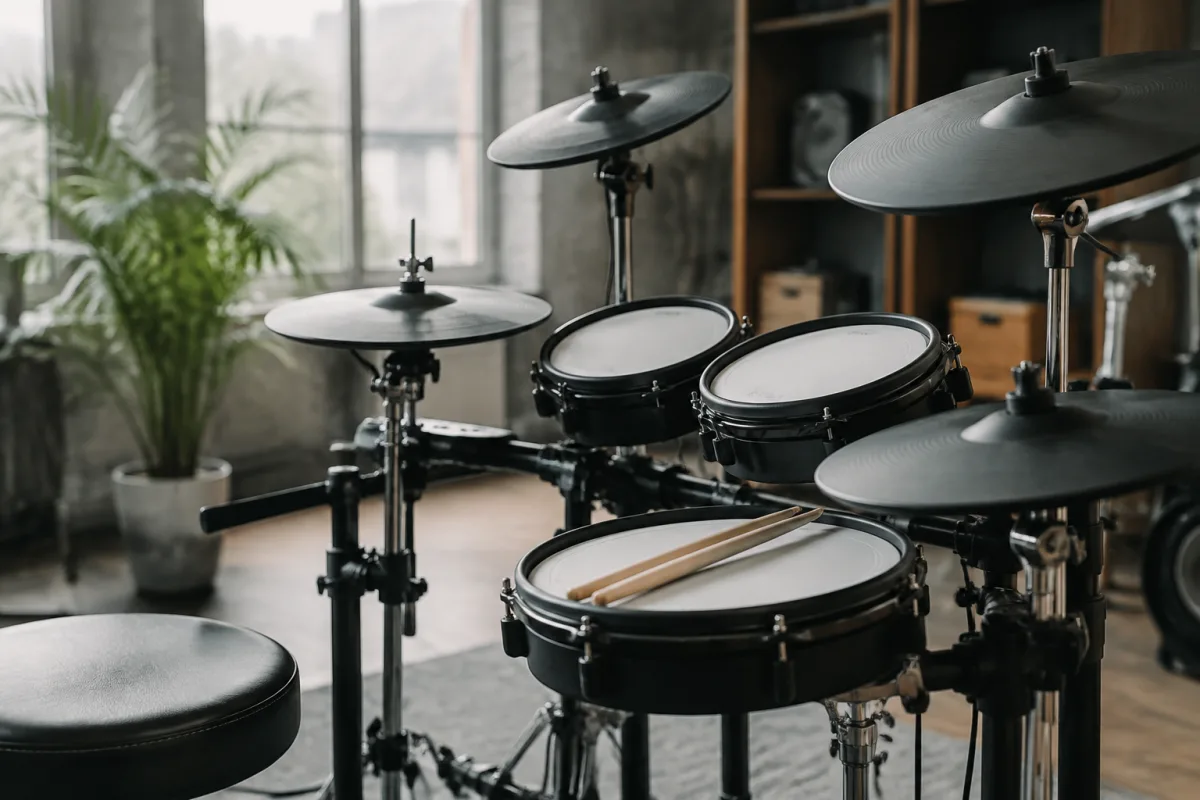
A digital drum set offers complete rhythmic control and sonic flexibility without the volume, space, or maintenance demands of an acoustic drum kit. Whether you're a bedroom producer perfecting production techniques, a gigging musician needing reliability and portability, or a student learning rhythm fundamentals, a digital drum set delivers genuine musicality at every skill level. Modern kits sound exceptionally real—thousands of samples recorded from world-class acoustic drums—and the interface lets you trigger sounds intuitively, just like hitting actual drum heads. That combination of authentic feel, professional sound quality, and practical advantages explains why digital drum sets have moved from bedroom gadgets to legitimate stage and studio instruments.
Why Choose a Digital Drum Set?
An acoustic drum kit demands space, isolation, and constant maintenance. A digital drum set fits in a bedroom, remains silent through headphones, and travels in cases that fit in a car. That practicality alone has transformed who can seriously engage with drumming. But beneath the convenience lies genuine musicality—the best units offer tonal possibilities an acoustic kit simply cannot match. Layer multiple drum sounds, adjust tuning and damping in real-time, and layer samples from different eras—these capabilities are powerful for composition and production.
Volume control is perhaps the most underrated advantage. Practise at midnight without disturbing neighbours. Record at professional levels with clean audio. A unit never forces you to compromise on timing or technique because acoustic concerns exist. You can develop your chops quietly, and when you eventually play an acoustic kit, the fundamental techniques transfer perfectly.
Understanding Digital Drum Types
Drum machines are compact, programmed units that play pre-arranged patterns. Ideal for electronic music producers and beat-makers, but less suited to live performance where you need responsive, velocity-sensitive triggering. Electronic drum pads give large strike zones and excellent responsiveness but often sacrifice realism for performance playability. Proper electronic kits include acoustic-style pads arranged like a real kit, triggering drum samples with velocity sensitivity that captures your playing dynamics and nuance.
The pads matter enormously. Budget kits use cheaper piezoelectric sensors that respond inconsistently. Quality units use mesh heads that respond like acoustic drum heads—strike the centre and you get one tone, strike near the rim and you get a rim click, exactly like playing real drums. This responsiveness transforms how engaging practise becomes.
Sound Quality and Sample Libraries
A digital kit is only as good as its sounds. Top manufacturers record acoustic drum kits extensively—multiple angles, various playing intensities, different tunings—then layer samples so the kit responds musically to your playing. When you strike a pad softly, you hear gentle stick articulation. Strike harder and the tone opens up, mimicking how a real drum head responds to velocity. Some kits include samples of famous studio drums—the kick drum from Abbey Road, the snare used on countless Motown hits. That heritage and quality matters.
Sound editing capabilities vary significantly. Budget units let you adjust tuning and reverb. Professional kits include deep editing—mute layers selectively, adjust sample length, layer sounds, and create custom kits from scratch. If you're a producer, these capabilities unlock creative possibilities. If you're a drummer practising rudiments, the editing complexity is irrelevant—good default sounds are sufficient.
Pad Responsiveness and Playing Feel
The feel of playing determines whether it feels like authentic practice or like you're triggering sounds. Top-quality pads use mesh heads that simulate acoustic feel closely. Cheaper silicone pads feel plasticky and don't respond authentically to different striking positions. Cymbal pads should respond to position—bell zone for bright crashes, bow for warmer crashes, bell edge for splashy accents. When a kit includes these responsive features, playing feels genuinely musical.
Latency—the delay between striking a pad and hearing the sound—affects playability significantly. Modern kits have minimal latency, under 10 milliseconds, which is imperceptible to players. Older models with higher latency feel unresponsive and disconnected. If you're auditioning a set, strike a pad and listen carefully for any lag between impact and sound—if there's noticeable delay, look elsewhere.
Connectivity and Integration
MIDI connectivity is essential. This lets you trigger external synthesizers, drum machines, or software samples. USB connection allows direct audio recording into your DAW. Bluetooth connectivity (on newer models) lets you practise with backing tracks from your phone wirelessly. These integration capabilities transform a set from a practice tool into a complete music production instrument.
Audio outputs vary. Budget units have a single stereo output. Professional kits include separate outputs—kick, snare, toms, cymbals, and additional channels—letting you mix each element independently. This is invaluable for producers and live sound engineers who want to shape individual drum elements.
Practice Features and Learning Tools
Many units include practice modes, metronomes, and preset exercises. These aren't replacements for proper instruction, but they serve as useful practice scaffolding, providing structured challenges and immediate feedback. Some kits include song recording—capture your playing and hear it back, revealing timing issues and areas needing work. This self-evaluation capability accelerates improvement dramatically.
Compatibility with educational software varies. Some drummers use their kit with drum simulation software like Superior Drummer or add-on libraries that expand the sound palette infinitely. This flexibility—upgrading sounds without replacing hardware—is a genuine advantage as your skills advance.
Portable versus Stand-Mounted Kits
Compact, pad-based units are highly portable—they fit easily in a bag, travel in a car, and set up in minutes. If you're busking, recording in different locations, or minimising space, portability is invaluable. However, they often sacrifice the traditional kit layout, requiring you to learn a non-standard arrangement. Proper stand-mounted units mimic the acoustic kit layout—bass drum on the floor, snare between your knees, toms at varying heights, cymbals above—so technique transfers directly. This layout requires more space and setup time but provides superior playability.
Most serious drummers choose stand-mounted setups for practise and recording. Buskers and travelling musicians favour portability over ergonomic ideals. The right choice depends on your primary use and circumstances.
Choosing Your Digital Drum Set
Define your primary use first. Practising at home requires responsiveness and good sounds; portability is secondary. Recording and production benefit from deep editing capabilities and professional sound libraries. Gigging needs reliability, responsiveness, and enough connectivity to integrate with your sound system. These different requirements point toward different kits.
Budget constrains most purchases. Entry-level kits run £300–500 and cover basic practise needs. Mid-range models cost £800–1,500 and include better pads, more sounds, and professional-grade responsiveness. Professional kits cost £2,000+, offering everything—premium feel, countless sounds, advanced editing, and absolute reliability. Test before buying if possible; pad feel is deeply personal. Your hands will quickly tell you whether a kit feels right.


Comments