
Digital Drum Pads article
The Complete Guide to Digital Drum Pads
Digital drum pads enable drummers and producers to trigger samples and control synthesisers with precision and expressiveness, offering unparalleled creative flexibility in both studio and live contexts.
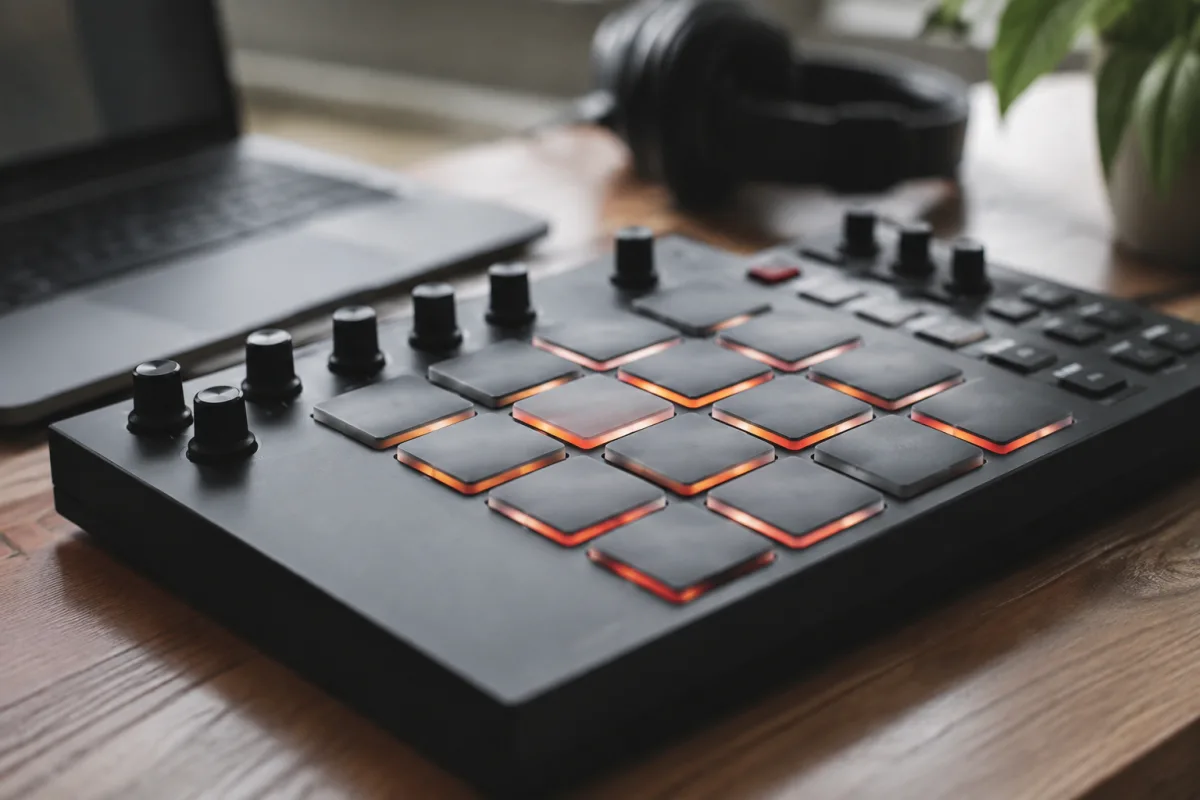
Digital drum pads have fundamentally transformed how modern musicians create percussion sounds in both live performance and studio production. These touch-sensitive electronic devices enable drummers, producers and electronic musicians to trigger drum samples, control synthesizers and manipulate effects with precision and expressiveness. Whether you're exploring beat-making, expanding your live kit or seeking versatile sound design tools, digital drum pads offer unparalleled creative flexibility and sonic possibilities.
Understanding Digital Drum Pads
A digital drum pad is a pressure-sensitive electronic interface that triggers audio samples, MIDI notes or software instruments when struck or touched. Unlike acoustic drums, digital drum pads produce no inherent sound; instead, they communicate with external sound sources—synthesizers, computers running digital audio workstations (DAWs), or standalone sound modules—to generate audio. This separation between trigger and sound source grants producers remarkable flexibility in sound design and control.
Digital drum pads typically feature rubber or silicone playing surfaces that respond to velocity—the force and speed of impact—allowing nuanced dynamic control. Most pads include pressure sensitivity, enabling performers to shape sound by varying strike intensity. This human expressiveness distinguishes digital percussion from quantised, rigid beat programming and makes digital drum pads attractive to both electronic and acoustic musicians.
Key Types of Digital Drum Pads
The digital drum pad landscape encompasses several distinct product categories, each serving specific musical applications:
- Standalone pad controllers: Dedicated devices like the Akai MPD or Roland SPD-SX combine multiple pads with built-in sounds, sequencing and effects processing. Ideal for producers and performers seeking all-in-one solutions without computer dependency.
- Keyboard pad arrays: Integrated pad sections on synthesizers and music workstations (e.g., Korg Volca Sample) enable percussion triggering alongside other keyboard performance controls.
- Clip-on pad controllers: Compact devices mountable on drum kits (e.g., Roland Octapad) allow acoustic drummers to augment traditional kits with electronic samples and effects.
- Finger-drum pads: Highly sensitive, rhythmically-tuned pad grids designed for beat-making and live remix performance, emphasising quick succession triggering and pattern manipulation.
- Software controller pads: Computer peripherals connecting to DAWs via USB or MIDI, ranging from simple four-pad interfaces to complex multi-pad controllers with faders, encoders and transport controls.
Sound Triggering and Sampling
The core functionality of digital drum pads centres on sample triggering and sound synthesis. Each pad typically maps to a specific sound or synthesiser parameter. Striking a pad sends a MIDI note or trigger signal to the connected sound source, which responds by playing the assigned audio content. Modern digital drum pads support multiple triggering modes:
| Triggering Mode | Function | Best For |
|---|---|---|
| One-shot sampling | Each pad strike plays a complete audio sample (kick, snare, vocal slice) from start to finish | Beat-making, sample manipulation |
| Note triggering | Pads trigger synthesiser algorithms or wavetable synthesis, with pad velocity controlling amplitude and tone | Sound design, melodic percussion |
| Loop triggering | Striking pads activates or mutes looped audio sequences | Live performance, loopers |
| Effect manipulation | Pads control effect parameters—reverb depth, filter cutoff, distortion amount—via MIDI continuous control | Performance, real-time sound design |
Velocity and Dynamics
Velocity sensitivity distinguishes expressive digital drum pads from simple on/off buttons. Most quality digital drum pads register pressure variations across their playing surface, translating impact force into MIDI velocity data. This enables drummers to control sample loudness, synthesiser filter brightness or effect intensity through natural striking dynamics. Advanced pads include pressure-sensing after-touch, allowing tonal manipulation even after initial pad contact. This continuous control mimics the expressive potential of acoustic drums, where experienced drummers shape tone through technique and dynamics.
Integration with DAWs and Sound Sources
Digital drum pads connect to external sound sources via MIDI—the Musical Instrument Digital Interface standard that enables communication between musical devices. A typical setup chains a digital drum pad controller (USB or wireless MIDI connection) to a computer running a DAW like Ableton Live, Logic Pro or FL Studio. Within the DAW, each pad maps to a specific software instrument, drum rack or sampler track. This architecture grants performers real-time control over complex sound arrangements, enabling beat-making, live remixing and performance-based composition.
Many modern digital drum pads include built-in wireless MIDI transmission, eliminating cable clutter during live performance. Bluetooth and 2.4GHz digital wireless connections provide reliable, low-latency communication across typical stage distances, freeing performers from tethered controller constraints.
Applications in Music Production and Performance
Digital drum pads serve distinct but complementary roles in studio production and live contexts. In the studio, producers utilise pad controllers for hands-on beat programming, replacing mouse-based sequencing with tactile, intuitive pad interaction. Real-time velocity variation and dynamic control yields more natural, humanised drum sounds than quantised sequencing alone. Live performers employ digital drum pads for sound augmentation, triggering samples or synthesised sounds alongside acoustic drum kits, creating hybrid kits that merge traditional percussion with electronic textures.
Electronic music producers benefit from the expressive, performance-oriented workflow enabled by digital drum pads. Rather than programming beat sequences note-by-note, performers can sketch arrangements in real time, adjust pad assignments mid-performance and improvise new patterns, lending spontaneity and creativity to electronic music production.
Selecting Digital Drum Pads
Choosing appropriate digital drum pads depends on musical application, budget and workflow preference. Entry-level pad controllers (£100–300) suffice for learning and casual beat-making, though they typically sacrifice build quality and response sensitivity. Mid-range options (£400–800) balance durability, velocity sensitivity and feature richness. Professional touring-grade digital drum pads (£1,000+) prioritise durability, responsive pads and advanced control options.
Consider pad count: four pads suit basic beat sketching, whilst eight or sixteen pads enable complex pattern manipulation and live performance flexibility. Examine velocity curves and pressure sensitivity, ensuring the pad responds naturally to your playing style. Wireless connectivity, ergonomic stand mounting and customisable pad assignments enhance practical usability in performance environments.
Conclusion
Digital drum pads represent a powerful intersection of percussion performance tradition and modern electronic music technology. By enabling intuitive, velocity-sensitive control over synthesised and sampled sounds, digital drum pads empower producers and performers to create, manipulate and perform contemporary music with unprecedented expressiveness and creative flexibility. Whether producing beats in the studio, augmenting acoustic kits with electronic textures, or performing live electronic music, digital drum pads offer the control and responsiveness that modern music creation demands.


Comments