


Roland Digital Piano article
Roland Digital Piano Explained: Features, Types and Tips
Elizabeth explains how Roland digital pianos work, what features matter for learning and performing, the different types available, and how to choose the right one for your musical journey.

Learning piano was always supposed to be a journey measured in months and years, not rushed or pressured. That's what drew me to teaching in the first place. Over the years, I've watched technology transform what students can access, and Roland digital pianos have been part of that transformation. They've brought realistic piano feel and authentic sound into homes and studios where a traditional acoustic piano simply wasn't practical. If you're considering a Roland digital piano for learning, performing, or recording, this guide explains what you're actually getting and how to think about the choice.
What Is a Roland Digital Piano?
A Roland digital piano is an electronic instrument that models the sound and feel of an acoustic piano. Rather than striking strings with hammers, your fingers trigger electronic sensors beneath weighted keys. Those sensors communicate with sophisticated sound engines that generate the acoustic piano sound through speakers or headphones. The best Roland digital pianos recreate not just the sound but the physical experience of playing an acoustic piano—the weight of the keys, the resistance during the key travel, the way the sound responds to how hard you strike the keys.
The appeal of a Roland digital piano is practical and artistic. Practical: it costs less than an acoustic piano, takes up far less space, and never requires tuning. Artistic: it delivers authentic piano tone and feel that serves serious musicians and teachers. That combination is why Roland digital pianos have become trusted instruments in music schools, recording studios, and homes worldwide.
Key Technologies in Roland Digital Pianos
Weighted Key Action is foundational to any serious Roland digital piano. Acoustic pianos have heavy, spring-loaded keys with mechanical hammers. Beginners and professionals need that resistance to develop proper technique. Roland's most advanced models use wood and felt construction to approximate acoustic piano weight. Even entry-level Roland digital pianos include reasonably weighted keys. This is where quality digital pianos separate from toy keyboards—if the keys don't feel substantial and responsive, you won't develop the muscle memory that transfers to acoustic pianos.
Sound Engines and Sampling determine how authentic a Roland digital piano sounds. Roland uses sampled recordings of genuine acoustic pianos combined with modelled physics simulation. A Roland digital piano doesn't just play back a recording of a piano note—it creates the note in real time based on how hard you strike the key, how long you hold it, and which pedals you're using. This creates dynamic, responsive sound that rivals acoustic instruments. Different Roland models offer different sound engines, from basic sampling to advanced physical modelling.
Pedal Systems complete the experience. Acoustic pianos have three pedals that fundamentally change how the instrument sounds and responds. A serious Roland digital piano includes proper pedals that function similarly to acoustic pedals. The sustain pedal extends note duration. The soft pedal (una corda) shifts the hammers and reduces volume. The sostenuto pedal sustains selected notes while other keys remain unaffected. Budget Roland digital pianos might have simplified pedals or even substitute buttons for pedals—this is a meaningful limitation for learning traditional piano technique.
Types of Roland Digital Pianos
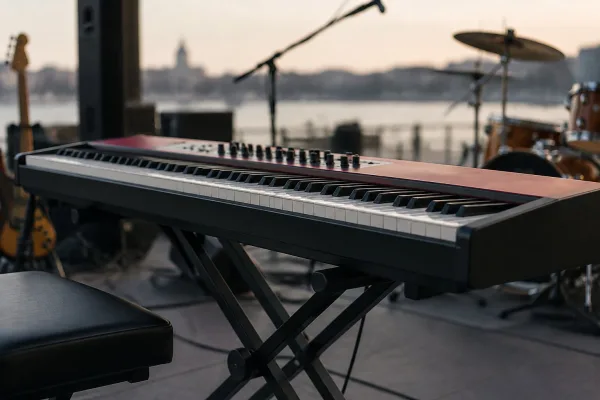
Stage Pianos and Portable Models prioritise portability and versatility for performing musicians. These are the compact Roland digital pianos designed for gigging, recording, and studio work. They include lighter key actions than concert instruments, offer extensive sound variety beyond just pianos, and often feature built-in amplification. Artists choose stage-format Roland digital pianos when they need flexibility and mobility alongside authentic piano sounds.
Console Pianos and Furniture-Style Models are Roland digital pianos built into attractive wooden cabinets designed to sit in living rooms like acoustic pianos. They feature full-weighted key actions, built-in speakers, and often triple-pedal systems. These models aim for visual and acoustic authenticity. If you're buying a Roland digital piano to replace an acoustic piano in your home, console models offer that traditional piano aesthetic alongside genuine functionality.
Portable Keyboard-Style Models represent entry-level or supplementary Roland digital pianos. They offer convenient size and lower price, but they typically include lighter key actions and simplified pedal systems. These suit music enthusiasts who value portability over authentic piano feel or casual players who aren't focused on developing traditional piano technique.
Roland's FP Series occupies a sweet spot: serious portable Roland digital pianos with excellent key action and sound quality, designed for travelling performers and studio musicians who need authentic feel without sacrificing mobility. The FP series defines Roland's approach to balancing portability and performance.
Learning on a Roland Digital Piano
One question students often ask: can I learn piano properly on a Roland digital piano? The answer is genuinely yes, provided you choose a model with weighted keys and proper pedals. Your fingers need resistance to develop the strength and control that real piano playing demands. The sound needs to respond authentically to how you play. When those conditions exist, a Roland digital piano offers legitimate learning advantages: you can use headphones and never disturb family or neighbours, you can record yourself instantly, and you get immediate visual feedback through connected learning apps on many models.
The moment you start taking piano seriously—whether as a child learning through school or an adult pursuing a long-held ambition—your choice of Roland digital piano matters. Cheap pianos with unweighted keys teach poor technique that's hard to unlearn. A decent Roland digital piano with proper key action and authentic sound serves students at all levels and continues serving you if you advance to professional or semi-professional playing.
Maintenance and Long-Term Use
This is genuinely one of the advantages of a Roland digital piano: it requires almost no maintenance. No tuning ever. No humidity concerns. No voicing or regulation. Dust the keys occasionally. Keep liquids away. That's it. A quality Roland digital piano continues sounding and playing identically year after year. You'll never face a tuning bill or a visit from a piano technician.
The electronics in Roland digital pianos are reliable, but like all electronics, they benefit from sensible care. Don't expose the instrument to extreme heat or cold. Keep it away from moisture. If something stops working, Roland's support and service infrastructure is well established globally. Parts are available and repairs are handled by experienced technicians.
Making the Choice
Choosing a Roland digital piano means deciding between authentic piano feel and budget, between portability and aesthetic presence, between simplicity and versatility. For genuine learning and performance, weighted keys and proper pedals are non-negotiable. Beyond those essentials, your choice depends on your living situation, your budget, and whether portability matters to you. If you're serious about piano, a Roland digital piano isn't a compromise—it's a legitimate choice that professional musicians trust and teachers recommend. Take your time, try different models if you can, and choose an instrument that will grow with you rather than limiting you.





Comments