


Stand DJ article
The Ultimate Guide to Musician Stand
A DJ stand is more than furniture—it's the foundation of your mixing workflow. The right stand provides stability, ergonomic positioning, and cable management that transforms your mixing experience.
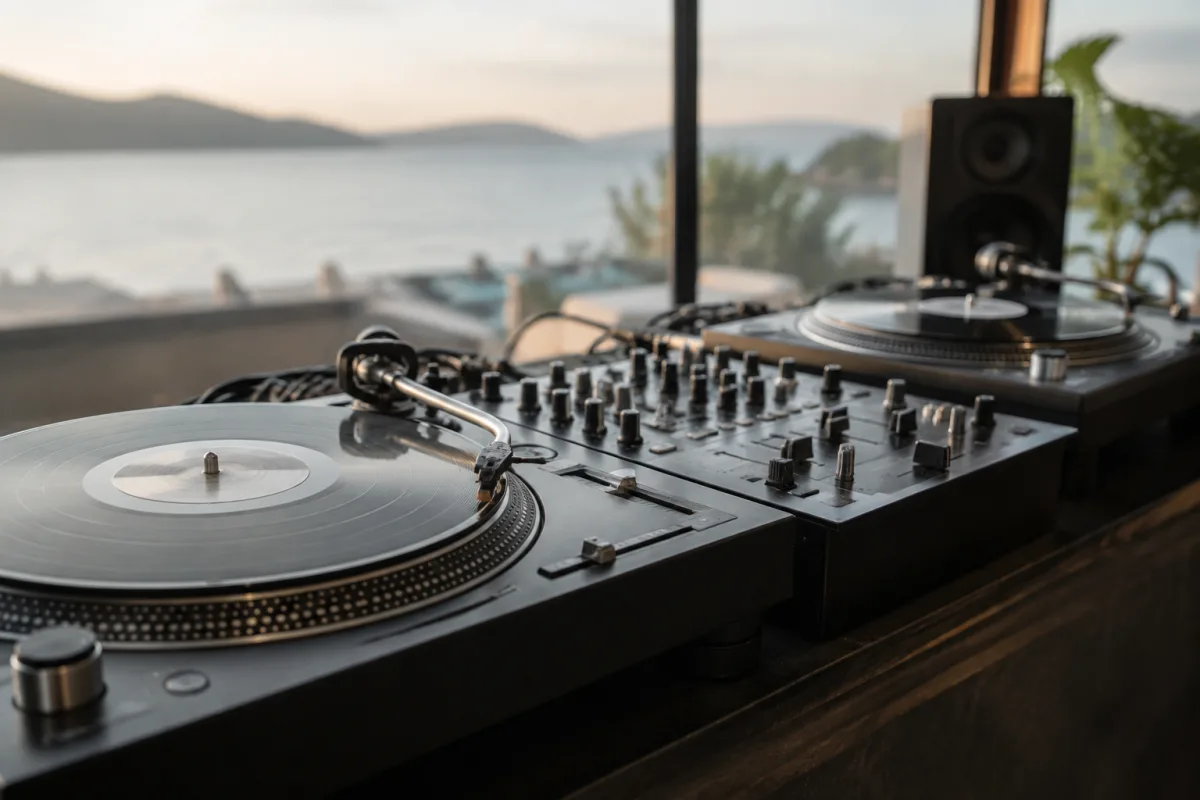
If you've ever watched a DJ mix two records seamlessly, managing turntables, mixer, and headphones all at once, you've seen someone working with precision choreography. A lot of that precision depends on what's beneath their equipment. A DJ stand isn't just a platform to hold your gear—it's the foundation of your mixing workflow, the structure that determines how accessible your controls are, how stable your turntables feel, and ultimately, how confidently you can mix. Whether you're practising at home or playing clubs, choosing the right stand for your DJ equipment makes an enormous difference.
What a DJ Stand Actually Does
A DJ stand is a piece of furniture designed to hold turntables, a mixer, and associated equipment in an organised, accessible arrangement. The best DJ stands do more than just provide a surface—they provide ergonomic positioning, cable management, equipment isolation, and the confidence that your gear won't shift or wobble mid-mix. Unlike a generic desk or table, a stand built specifically for DJs understands the spatial needs of the equipment and the workflow of the person using it.
A solid stand improves your mixing because your equipment is positioned exactly where you need it. Your turntables are at the right height for comfortable playing. Your mixer is within easy reach. Your headphones hang where they won't dangle or snag. This might sound like minor details, but when you're mixing live in front of people, minor details become the difference between a smooth set and a frustrated, cramped one.
Types of Stands and Their Uses
Stands for DJs come in several configurations, each suited to different scenarios. A portable model is typically lightweight and folds or collapses for easy transport—perfect for mobile DJs playing multiple venues or anyone who needs flexibility. These sacrifice some stability and space for portability, but solid designs provide adequate support for professional work.
A permanent setup for home use can be heavier, more substantial, and specifically designed around your exact equipment. These often feature built-in cable management, dedicated compartments for specific pieces of gear, and solid construction that minimises vibration and movement. If you're serious about your mixing and have a dedicated space, a purpose-built home installation allows you to optimise every detail.
Flight-case stands combine portability with protection. Your equipment sits on a structure that doubles as a flight case for travel, keeping everything compact and protected. These are popular with professional touring DJs and radio stations. Some venues also prefer flight-case setups because the equipment arrives properly organised and protected from damage.
Modular designs let you customise the arrangement. You can add or remove shelves, change angles, and adjust the configuration to match your specific equipment and workflow. This flexibility is valuable if your setup changes or if you share equipment with other DJs who work differently.
Height, Spacing, and Ergonomic Considerations
The best DJ stand positions your equipment at a height that lets you mix comfortably without hunching or reaching awkwardly. Your turntables should be high enough that you're looking at them straight on or with a slight downward angle—this reduces fatigue over a long set and gives you better control when cueing. Your mixer should be positioned so your arms sit naturally when operating the faders and knobs.
Spacing between equipment matters too. Your turntables need to be close enough that you can reach both simultaneously without contorting yourself. There should be room to move records on and off, access the cartridge and headshell if needed, and handle cueing without bumping the other turntable. A stand that's too cramped turns mixing into an uncomfortable wrestling match.
The vertical arrangement also affects your work. Some DJs prefer their mixer on the same level as their turntables; others like it elevated for better access to controls. The best arrangement is whatever feels most natural to your body and playing style.
Stability and Isolation
A good DJ stand remains rock-solid even when you're cueing or beat-matching aggressively. Cheap stands wobble, and wobbling turntables ruin mixes. You need confidence that your equipment won't shift when you're bending a record, tweaking a turntable's speed, or reaching across to adjust the mixer. This is where proper construction becomes non-negotiable.
Some premium stands incorporate isolation feet or damping materials that reduce vibration transmission from your equipment to the stand structure. This can actually improve sound quality by preventing feedback loops and mechanical noise. The turntable's suspension already isolates the tonearm from table vibration, but a stand with good isolation principles carries that philosophy further, creating a quieter, more controlled environment for your mixing.
Cable Management and Practical Details
Professional DJ stands include dedicated cable management—clips, channels, or routing systems that keep cables organised and away from your work area. Messy cables aren't just unsightly; they're a safety and workflow hazard. You trip over them mid-set, they get tangled around moving parts of turntables, and they create visual chaos that suggests poor preparation.
Good cable management also protects your equipment. Cables don't get pinched under heavy equipment, yanked accidentally, or strained at odd angles that damage their connectors. A stand that thoughtfully routes cables extends their lifespan and makes troubleshooting easier if something goes wrong mid-performance.
Other practical considerations include space for headphone storage, room for a cueing monitor speaker if you use one, and enough spare surface area to place USB drives, vinyl records, or other items you need during a set.
Choosing the Right Stand for Your Needs
Your choice depends on your specific situation. Are you mixing at home or playing multiple venues? Do you have a consistent equipment setup or do you regularly swap turntables or mixers? How much space do you have? What's your budget? A DJ stand built for bedroom practice has different priorities than one for touring or club residencies.
For bedroom mixing, a basic but solid stand serves you well. For mobile work, portability becomes paramount—you want something you can move easily but that's still sturdy enough for professional use. For permanent club installations, a heavy-duty stand designed for that exact equipment is ideal. Understanding your needs first prevents wasting money on features you don't need or compromising on ones you do.
Investing in Your Setup
A quality DJ stand typically costs between £100 and £500, depending on material, size, and features. It's tempting to improvise with a desk or table, but a stand built for DJing almost always serves you better. The ergonomic thinking, the cable management, the stability—these aren't luxuries. They're practical necessities that protect your equipment, improve your mixing, and make long sets genuinely comfortable.
Think of your stand as essential infrastructure for your mixing, not optional furniture. A solid foundation literally supports everything you do as a DJ, so choose wisely and invest in something built to last.




Comments