
Yamaha Portable Keyboards article
The Complete Guide to Yamaha Portable Keyboards
Yamaha portable keyboards bridge professional studio quality with convenient home musicmaking, offering responsive keys, curated sounds, and genuine musical depth at every price point.
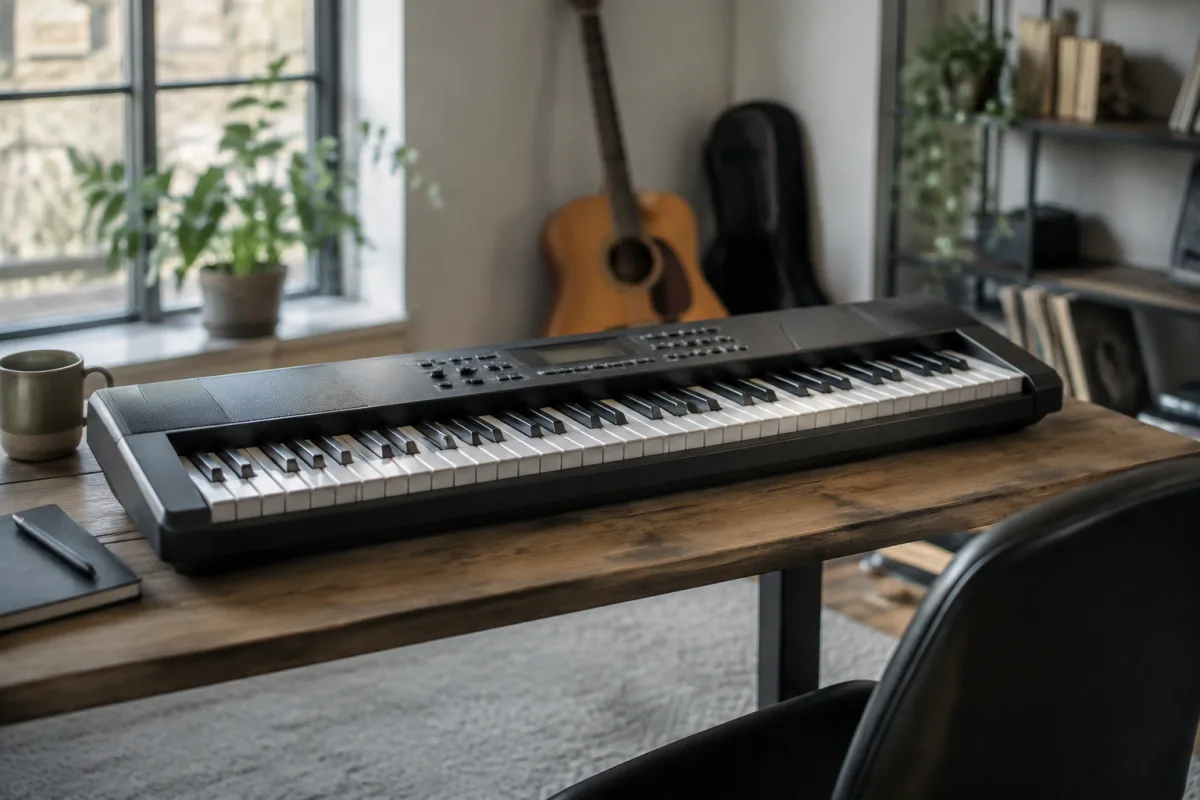
Yamaha portable keyboards have become the bridge between professional studio equipment and accessible home musicmaking. Whether you're a bedroom producer, a touring musician, or someone rekindling a childhood passion for keys, Yamaha's range of portable keyboards offers something genuinely compelling—quality build, intuitive controls, and sounds that don't require compromise. What makes this ecosystem work is Yamaha's ability to deliver professional features at every price point without sacrificing playability or reliability.
Why Portable Keyboards Matter
A portable keyboard serves a specific purpose that a synthesizer or full-size stage piano doesn't quite fill. You need something lightweight enough to travel with, straightforward enough to set up anywhere, yet musical enough to inspire genuine playing rather than mere dabbling. Yamaha portable keyboards solve this elegantly—they're neither toy instruments nor minimalist compromises. They're purpose-designed tools that respect your musicianship whilst demanding minimal setup.
The portability factor changes everything. A traditional 88-key weighted keyboard demands a stand, a power supply, and serious consideration of placement. A Yamaha portable keyboard fits in a backpack or gig bag, runs on batteries or standard USB power, and sounds genuinely professional through headphones or a modest amplifier. That accessibility democratises music-making in ways that expensive studio gear simply can't.
Yamaha's Keyboard Philosophy
Yamaha's engineering culture shows through in every portable keyboard they make. Rather than cutting corners, they prioritise what matters: responsive keys that feel intentional, sounds sourced from their flagship synthesizers, and interface design that respects your time. A Yamaha portable keyboard never feels like training-wheels musicmaking—you're always playing a legitimate instrument, just in a more convenient package.
The sound engine is genuinely the heart of it. Yamaha sources piano voices from their CFX and Bösendorfer concert grand recordings, string sounds that breathe and swell like orchestral players actually perform them, and synthesis capabilities that let you shape and manipulate sounds in meaningful ways. Entry-level models keep the essentials simple; higher-end portable keyboards expand the depth without adding unnecessary complexity.
Keyboard Action: The Feel Matters
One critical distinction separates superior portable keyboards from basic ones: the action—how the keys respond to your touch. Yamaha's commitment to key action shows across their range. Even entry-level portable keyboards use graded hammer action, where lower keys feel heavier (like an acoustic piano) and higher keys feel lighter. This matters because it teaches proper technique and makes transitions to acoustic pianos natural rather than jarring.
Mid-range and premium portable keyboards add weighted keys with escapement, replicating the mechanical behaviour of real piano hammers. When you release a key quickly, you feel a subtle click—that's escapement, and it's essential for serious performance. Yamaha includes this feature in models where it counts, without pretending cheaper keyboards need it.
Sound Libraries and Customisation
Yamaha portable keyboards ship with carefully curated sound selections. You get multiple piano variations—concert grands recorded at different dynamics, intimate upright pianos, electric pianos ranging from vintage Fender Rhodes to modern digital emulations. Organ sounds cover classical through rock applications. String and brass sections are orchestral-quality samples, not synthetic approximations. Synth sounds range from classic analogue recreations to contemporary digital textures.
More advanced portable keyboards add layering capability—play two or three sounds simultaneously, split the keyboard so lower notes trigger one sound and higher notes another, and manipulate each layer's volume, effects, and response independently. This transforms what seems like a single instrument into a small ensemble. Editing tools let you adjust envelope, filter, and effects on the fly, turning basic preset sounds into personal creations.
Effects and Recording Capability
Professional-quality reverb, delay, chorus, and modulation effects ship on even modest Yamaha portable keyboards. The reverb algorithms are particularly strong—they recreate genuine room acoustics rather than generic algorithmic wash. Adding effects feels natural and immediate rather than an afterthought. You can record ideas directly to the keyboard's internal storage or via USB to a computer, capture full songs with drum accompaniment, or simply lay down voice memos for later development.
The built-in rhythm section is surprisingly robust. Rather than tinny drum sounds, Yamaha portable keyboards include sampled drums from quality sources, covering genres from jazz trio to modern EDM. Match a drum pattern to your playing, and you have a complete, professional-sounding backing track. Serious players use these rhythms for song arrangement and composition—they're tools, not novelties.
Connectivity and Integration
Modern Yamaha portable keyboards connect seamlessly to computers, tablets, and other instruments via USB, MIDI, and Bluetooth. This matters if you're composing in a DAW—MIDI data flows naturally from the keyboard to your software, where you can edit, arrange, and produce without wrestling with drivers or configuration. Bluetooth connectivity lets you pair with headphones or wireless speakers, untethering you from cables in ways that matter for live performance or studio mobility.
Some portable keyboards include onboard sequencing and drum machine capabilities, turning them into complete production tools. You can layer ideas, build arrangements entirely on the keyboard itself, and export files for editing elsewhere. Others remain purist performance instruments focused entirely on playing and sound quality. Yamaha's range spans both approaches—choose based on your workflow.
Choosing the Right Yamaha Portable Keyboard
Entry-level models like the Yamaha PSR series offer genuine musicality at modest cost—perfect for hobbyists and beginners who respect sound quality and playability. Mid-range instruments add weighted keys, expanded sound libraries, and more sophisticated controls—these suit serious amateurs and working musicians. Premium portable keyboards like the Yamaha CP and S-series models deliver near-professional capabilities, weighted keys with escapement, and the sound quality needed for recording and live performance.
Key decision points: Do you need weighted keys? Professional players answer yes. Do you want extensive editing and synthesis? That depends on your creative process. Will you perform live or record, or purely play for personal enjoyment? Each question points toward different models within Yamaha's lineup. The good news is that across price points, Yamaha portable keyboards maintain quality standards and musical integrity.
Amplification and Setup
Most Yamaha portable keyboards produce adequate sound through their built-in speakers, suitable for bedroom practice and casual playing. For performance or recording, quality external amplification matters. A modest keyboard amplifier, a studio monitor, or even good headphones transform the experience—suddenly the nuance in the sound engine becomes apparent, and playing becomes genuinely inspiring. Yamaha's sound design shines when you give it adequate amplification.
Battery life varies by model and power consumption, but realistic expectations run 15 to 30 hours of continuous use on AA or rechargeable batteries. USB power adds convenience and eliminates battery concerns during stationary setups. Most serious players combine portable keyboards with a modest power solution—battery for mobility, USB power for the studio.
The Appeal for Different Players
Piano students love Yamaha portable keyboards because they deliver genuine acoustic piano behaviour without the furniture. Singer-songwriters use them for composition and demo recording, trusting the sounds and effects to capture creative intent. Electronic music producers appreciate the synthesis capabilities and MIDI integration. Session musicians and touring players choose them for reliability and playability—a Yamaha portable keyboard never lets you down mid-performance. That versatility across use cases explains their enduring popularity.
Long-Term Value
Yamaha builds reputation on product longevity. A Yamaha portable keyboard purchased today will serve capably for years. They're repairable and supported—finding replacement parts or service remains straightforward. Resale value holds reasonably well because buyers trust Yamaha build quality. That's not guaranteed on cheaper alternatives, which depreciate rapidly if they survive initial failures. Investing in a Yamaha portable keyboard means investing in an instrument that responds to care with years of reliable service.
For anyone exploring keyboard musicmaking—whether returning to an old passion, starting fresh, or seeking a second instrument that complements studio work—Yamaha portable keyboards deserve serious consideration. They're instruments that encourage serious playing whilst respecting your practical constraints. That's rare, and it explains why they've become the default choice for countless musicians worldwide.


Comments