
Yamaha Portable Electronic Keyboards article
The Complete Guide to Yamaha Portable Electronic Keyboards
Yamaha portable electronic keyboards offer reliable quality and professional features across every price point. Learn what sets them apart and how to choose the right model.
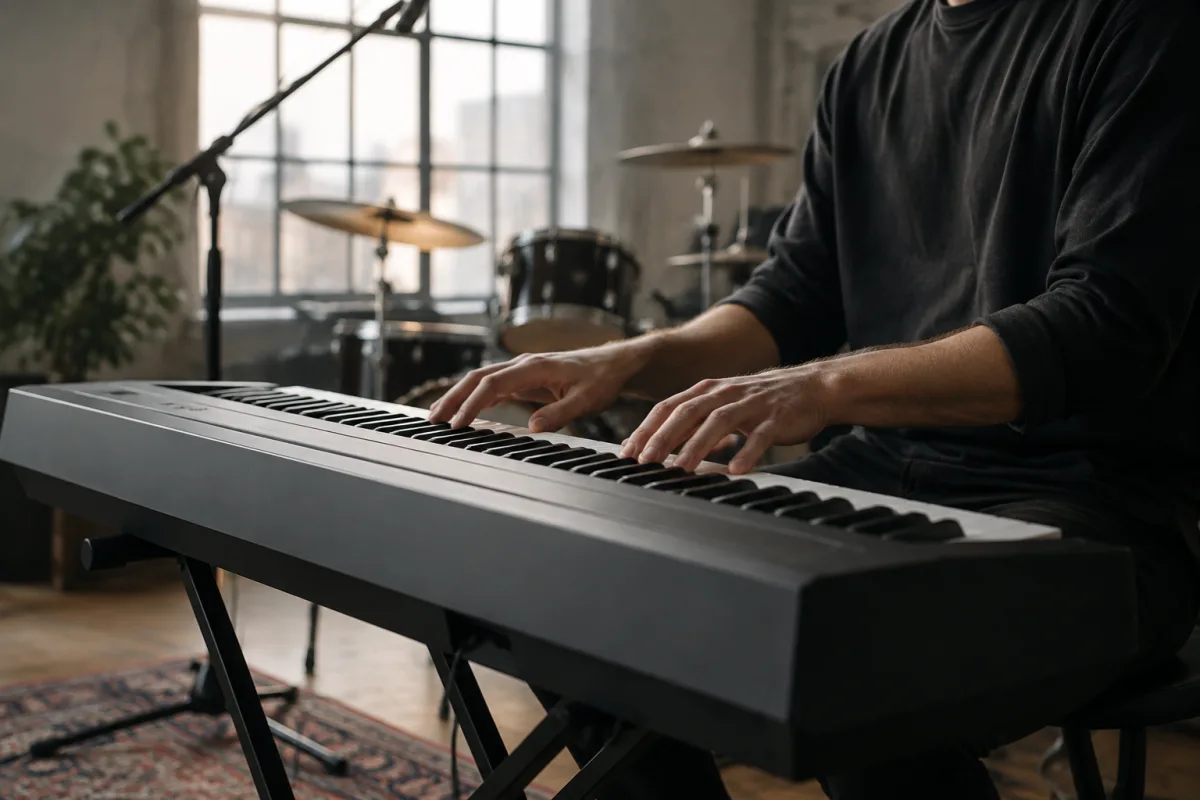
Yamaha has spent over seven decades perfecting the art of keyboard design, and their portable electronic keyboards represent some of the most accessible, reliable instruments you can take on stage or into the studio. Whether you're a gigging musician who needs an instrument that fits in a van, a keyboard player stepping into live performance for the first time, or someone exploring electronic music in a small bedroom, Yamaha's range of portable keyboards offers genuine quality at every price point. What sets their portable keyboards apart isn't flashy marketing—it's the combination of real piano-key action, dependable sound engines, and thoughtful features that actually make sense when you're playing in the real world.
The Yamaha Advantage in Portable Keyboards
Yamaha's expertise comes from building pianos and synthesizers for professional musicians. That heritage matters. Unlike generic keyboard manufacturers, Yamaha understands touch, response, and how a musician's fingers interact with the instrument. Their portable keyboards feature weighted or semi-weighted keys that simulate piano action—your fingers develop proper technique, and when you eventually sit at a concert grand, the transition feels natural. This attention to performance fundamentals runs through their entire portable keyboard line, from budget entry-level models up to professional stage instruments.
The brand has earned trust through consistency. Musicians rely on Yamaha portable keyboards because they sound good, hold their value, and rarely disappoint in live situations. You'll find them in rehearsal studios, on tour buses, in recording sessions, and in music schools across the UK. That omnipresence isn't accidental—it reflects years of getting the fundamentals right.
Understanding Yamaha's Portable Keyboard Range
Yamaha's lineup spans several distinct product families, each designed for different needs and budgets. The PSR series targets hobbyists and learners—affordable, feature-packed instruments with accompaniment styles and built-in rhythms. The P series focuses purely on piano emulation with superb weighted action. The Genos and Tyros lines cater to professional entertainers who need extensive sounds and auto-accompaniment. The CP series bridges the gap, offering sophisticated piano and electric piano emulation without the complexity of a full arranger keyboard.
Choosing between them isn't about which is "best"—it's about matching the instrument to what you actually play. A pianist performing Chopin needs different priorities than a cover-band keyboardist playing everything from funk to Fleetwood Mac. Yamaha's structure lets you find your fit without paying for features you'll never use.
Sound Quality and Variety
Entry-level Yamaha portable keyboards include hundreds of voices—piano, electric piano, strings, brass, synths, and percussion. Most players only truly need a handful of sounds, but having options sparks creativity. The acoustic piano samples in Yamaha portable keyboards use multi-velocity recordings that capture the subtle tonal shifts you get across the keyboard's range. When you play softly, the tone differs from playing hard—just like a real piano. This nuance, called velocity layering, is what separates decent keyboards from instruments that sound mechanical and flat.
The electric piano emulations deserve special mention. If you've ever heard a classic Fender Rhodes or Wurlitzer electric piano, you know their distinctive warm, slightly gritty character. Yamaha's CFX and Bösendorfer samples plus their electric piano models capture that authenticity remarkably well. For contemporary music, their synth engines provide everything from lush pads to crisp leads. The sounds are production-ready—you can record them directly, and they hold their own in professional contexts.
Key Action and Touch Response
This is where portable keyboards vary most dramatically. Budget models use unweighted keys—they're light and responsive, good for learning, but they don't mirror how a real piano plays. Step up to a Yamaha portable keyboard with semi-weighted action, and you get keys that respond to touch more realistically. Professional models feature fully weighted, graded hammer action—the lower keys feel heavier than the upper keys, exactly like an acoustic piano. Your fingers build muscle memory, and technique transfers directly when you sit at a concert instrument.
Touch sensitivity controls how responsively the keyboard responds to velocity changes. Yamaha portable keyboards let you adjust this to match your playing style—aggressive strikers might prefer lower sensitivity so they don't accidentally trigger loud dynamics with careless playing. Gentle players benefit from higher sensitivity that captures every nuance of their touch.
Portability and Build Quality
The appeal of Yamaha portable keyboards is literally in the name. Most weigh between 7 and 30 kilograms—manageable for one person, especially with a basic stand and a decent gig bag. Studio models sit on a desk; gigging musicians toss them in a van. The build quality justifies the weight. Yamaha keyboards use quality plastics and metal hardware that survive years of transport, temperature swings, and the general abuse instruments get on the road. Keys feel solid, the aftertouch mechanism works responsively, and the connections don't rattle loose after a month.
The power supply is a small detail that matters enormously. Yamaha portable keyboards accept both mains power and batteries—essential if you're busking, rehearsing in a venue without readily available power, or recording in a location where the electricity isn't reliable. Battery life typically runs 4–8 hours depending on the model and usage.
Connectivity and Integration
Modern Yamaha portable keyboards connect via MIDI, USB, and audio outputs. MIDI integration means you can trigger external synthesizers, drum machines, or software instruments. USB connectivity lets you record directly into a DAW, dramatically simplifying the recording process. The audio outputs vary by model—budget keyboards have a single stereo output, whilst professional models include separate outputs for keyboards, drums, and bass, letting you mix and process each element independently.
Bluetooth connectivity appears on newer Yamaha portable keyboards, letting you connect wirelessly to speakers or recording interfaces. For gigging musicians, this flexibility transforms how you approach sound reinforcement and recording.
Learning and Performance Features
Yamaha understands that many portable keyboard players are working towards something—perhaps learning classical technique, transitioning from acoustic to electronic music, or developing improvisational skills. Their keyboard models include lesson modes, song recording (capture your playing and hear it back), and in some models, interactive tutorials. Whilst these aren't replacements for proper tuition, they serve as useful practice tools.
Professional models include arpeggiators, effects processors, and sophisticated layering controls. These features sound complex, but in practice they let you create full arrangements playing with one hand or trigger pre-programmed accompaniment that locks to your tempo. Live performers use these capabilities to deliver complex arrangements solo.
Choosing Your Yamaha Portable Keyboard
Start by defining your use case. Are you learning, practising at home, recording, or gigging? Budget constraints matter—Yamaha's range spans roughly £200 up to £3,000+. At the entry level, you get a functional portable keyboard with decent sounds and basic feel. Mid-range options offer much better key action and more refined sound quality. Professional models include weighted hammer action, comprehensive connectivity, and features that professional players actually need daily.
Play before you buy if at all possible. Keyboard feel is deeply personal. Some players love ultra-responsive light action; others want substantial resistance. Many music shops keep Yamaha portable keyboards on display—spend time with the models you're considering. Your hands will tell you which one feels right.
Investment and Longevity
Yamaha portable keyboards hold their value remarkably well. Used Yamaha keyboards command strong prices on the secondhand market because players know they're built to last. If your circumstances change—you need something lighter for touring, or you want to upgrade to a professional model—selling your Yamaha keyboard typically recovers 50–70% of the purchase price, sometimes more for sought-after models.
Think of a quality Yamaha portable keyboard as an investment in your playing, not merely an expense. With proper care, these instruments function flawlessly for decades. They're genuinely future-proof in a way cheap alternatives simply aren't.
Making the Decision
Yamaha portable electronic keyboards represent a genuine sweet spot in modern music—affordable enough for serious hobbyists and students, capable enough for professional gigging and recording, and built with the quality that means they'll still sound good a decade from now. The brand's long history with acoustic pianos gives their electronic keyboards credibility that newer manufacturers haven't earned. When you buy Yamaha, you're buying experience, not just marketing.


Comments