


Electronic Piano Keyboards article
The Ultimate Guide to Electronic Keyboard Piano 88 Keys
An 88-key electronic piano keyboard transforms your musical practice. This guide covers everything from action types to polyphony, helping you choose the perfect instrument.
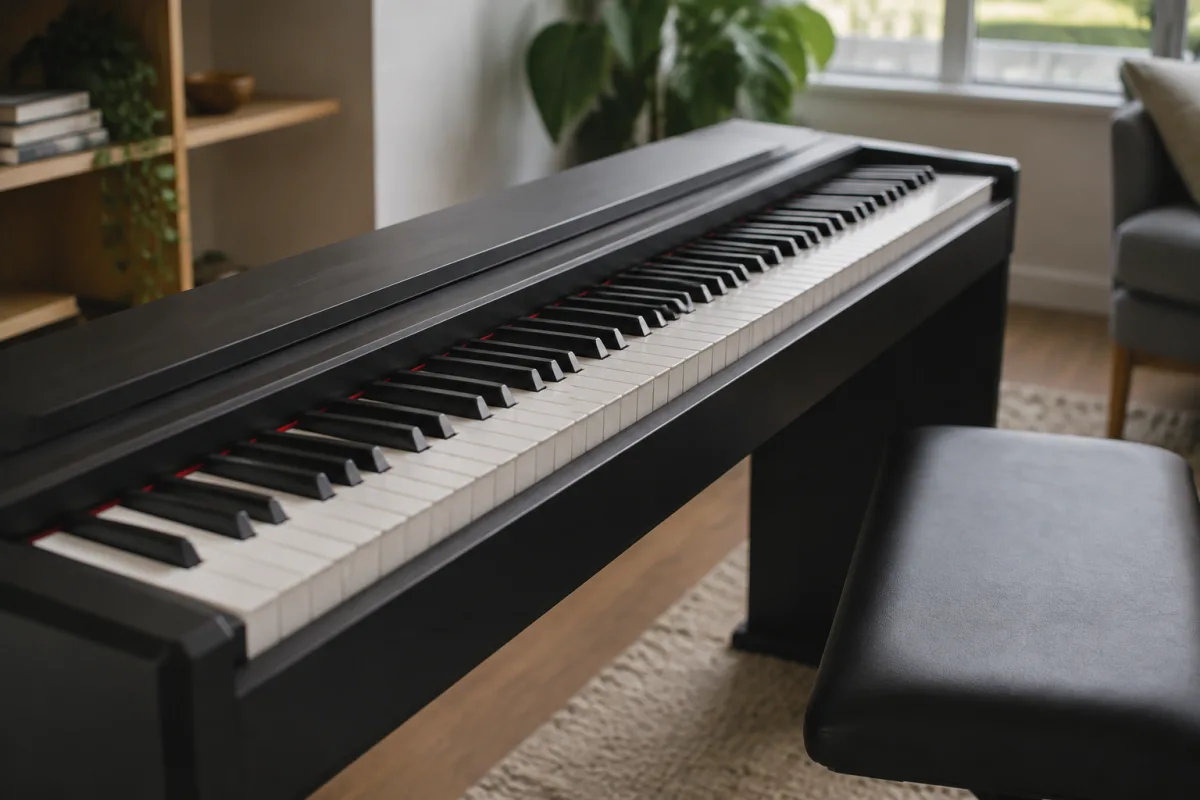
Choosing the right instrument can transform your musical journey, whether you're learning classical technique or exploring modern production. An 88-key weighted electronic piano keyboard mimics the feel and responsiveness of an acoustic piano, making it the gold standard for serious players. This comprehensive guide explains what matters when selecting the perfect option.
Understanding Keyboard Action and Weighting
The key difference between a toy keyboard and a serious instrument lies in the action — how the keys respond to your touch. Electronic piano keyboards come with three main types of key action: unweighted, semi-weighted, and fully weighted.
Unweighted keys offer little resistance; they respond quickly but feel nothing like a piano. Beginners often find them easier to play, but they won't build proper finger strength or technique. Semi-weighted keys add some resistance, mimicking the lower keys on an acoustic piano. Fully weighted keys use mechanical simulations or actual hammer mechanisms to replicate the resistance of all 88 piano keys, from the light treble to the heavy bass. If you want to transition between electronic and acoustic pianos, a fully weighted action is essential.
The 88-Key Standard
A full 88-key layout matches an acoustic piano exactly, spanning seven and one-third octaves from A0 to C8. This range covers virtually every piece written for acoustic piano, from Bach to contemporary composers. When shopping for quality options, choosing full 88-key models ensures you'll never run out of range. Keyboards with fewer keys (61-key, 76-key) are portable and cheaper, but they sacrifice range and authenticity.
For serious study or performance with electronic piano keyboards, the full 88-key specification is essential. The extra keys at both ends of the range appear in classical repertoire more often than many players realise, and having them available prevents frustration when you encounter pieces that use the full range.
Sound Quality and Voice Selection
These instruments offer dozens or even hundreds of built-in sounds — piano, organ, strings, synth textures, and more. The quality of these sounds varies dramatically. Budget models often use basic synthesis that sounds thin and artificial. Professional models employ high-quality sound samples recorded from acoustic instruments, resulting in authentic, expressive tones.
Pay particular attention to the piano sounds; they're the most used voices on quality models. A good acoustic piano sample should sound warm, responsive to velocity (how hard you strike), and sustain naturally. Test before you buy if possible, because a disappointing piano sound can ruin the entire experience.
Touch Sensitivity and Expression
Dynamic touch response — the keyboard's ability to detect how hard you play and adjust volume accordingly — separates toys from real instruments. Most modern electronic keyboards include touch sensitivity, letting you control volume and tone shaping based on your playing dynamics. Some models add weighted aftertouch, letting you create expressive variations by pressing down on a key after striking it, just as you would on an acoustic piano.
For players interested in classical music or expressive contemporary styles, aftertouch and sensitive dynamics are worth the premium cost.
Connectivity and Integration
MIDI (Musical Instrument Digital Interface) connectivity lets you connect your keyboard to computers, tablets, and music production software. If you plan to make music with DAWs (digital audio workstations) like Ableton, Logic, or Reaper, MIDI input is essential. USB connectivity simplifies both audio and MIDI integration with modern computers.
Built-in speakers range from adequate to impressive. Entry-level models often have thin, tinny speakers; higher-end keyboards include larger driver arrays that produce surprisingly full sound. For practice in a bedroom, built-in speakers suffice. For performance or serious production work, plan to connect amplified studio monitors or a mixer.
Pedals and Sustain Control
An acoustic piano has three pedals: sustain (right), soft (left), and sostenuto (centre). High-quality electronic keyboards include separate pedals that function like the acoustic versions. Cheaper models sometimes omit the soft and sostenuto pedals, limiting expression. A footswitch allowing you to engage sustain hands-free is particularly useful during performance.
The sustain pedal is essential; even budget models include it. Confirm that your keyboard supports half-pedal capability, which many modern instruments offer — holding the sustain pedal partially down produces proportional sustain, just like on an acoustic piano.
Electronic Piano Keyboards: Comparison at Different Price Points
| Price Range | Key Action | Sound Quality | Polyphony | Best For |
|---|---|---|---|---|
| £300–600 | Semi-weighted | Basic samples | 64–128 notes | Beginners starting out |
| £600–1200 | Weighted with hammer | Good acoustic samples | 128–256 notes | Serious hobbyists |
| £1200–2500 | Full-weighted hammer action | Professional-grade samples | 256+ notes | Performers and recording |
| £2500+ | Escapement-enabled hammer action | Ultra-realistic samples + modelling | Unlimited polyphony | Professional gigging and studio |
Polyphony: How Many Notes Can Play Simultaneously?
Polyphony refers to the number of notes that can sound at once. Most modern electronic piano keyboards offer at least 128-note polyphony, which is sufficient for contemporary music. However, complex pieces with lots of held pedal and layered sounds can exceed this limit, causing older notes to cut off when a new note plays. Professional electronic piano keyboards promise 256 or unlimited polyphony, solving this problem entirely.
For practice and learning, 128-note polyphony is usually adequate. For recording and performance of complex pieces with quality electronic piano keyboards, higher polyphony is worth the investment.
Size, Portability, and Stand Options
These instruments range from portable models weighing 25 kg to stage pianos exceeding 60 kg. Portability matters if you gig regularly or attend lessons away from home. A 50 kg stage piano in a flight case is awkward to transport but offers superior build quality and professional features. A quality 30 kg portable option is a good compromise: light enough to move frequently but substantial enough to feel like a "real" instrument.
Most keyboards ship with a basic stand. Investing in a proper weighted keyboard stand reduces fatigue and keeps the keyboard at the correct height. A padded bench adds comfort during long practice sessions.
Learning Considerations
If you're learning piano from scratch, prioritise weighted action above all else. Your hands need resistance to build proper finger strength and muscle memory that will transfer to acoustic pianos. A budget model with excellent weighted action beats an expensive keyboard with mushy keys.
When shopping for a learning instrument, look for models with built-in lessons or connectivity to popular learning apps like Synthesia, which display sheet music and highlight which keys to play. Some keyboards include light-up keys or visual learning features, which can accelerate progress for younger players.
Maintenance and Durability
Electronic keyboards are remarkably durable when well maintained. Keep them away from extreme heat, humidity, and dust. Regular cleaning of the keys prevents sticky action. Professional-grade keyboards often come with better warranties (3–5 years) than budget models (1–2 years), reflecting their intended lifespan and repairability.
Making Your Decision
Purchasing a quality electronic piano keyboard is a significant investment. Start by deciding your primary use: learning piano technique, producing music, or performing live. Match your budget to realistic expectations — you cannot expect professional sound and action at beginner prices. Test these instruments before buying if possible; action, sound, and ergonomics are deeply personal. Finally, remember that a quality 88-key keyboard will serve you reliably for years, making it one of the best investments a musician can make.





Comments