


Yamaha 61 Key article
The Complete Guide to Yamaha 61 Key
A Yamaha 61 key keyboard offers the perfect balance of portability and capability. Find the right model for home playing, production or live performance.
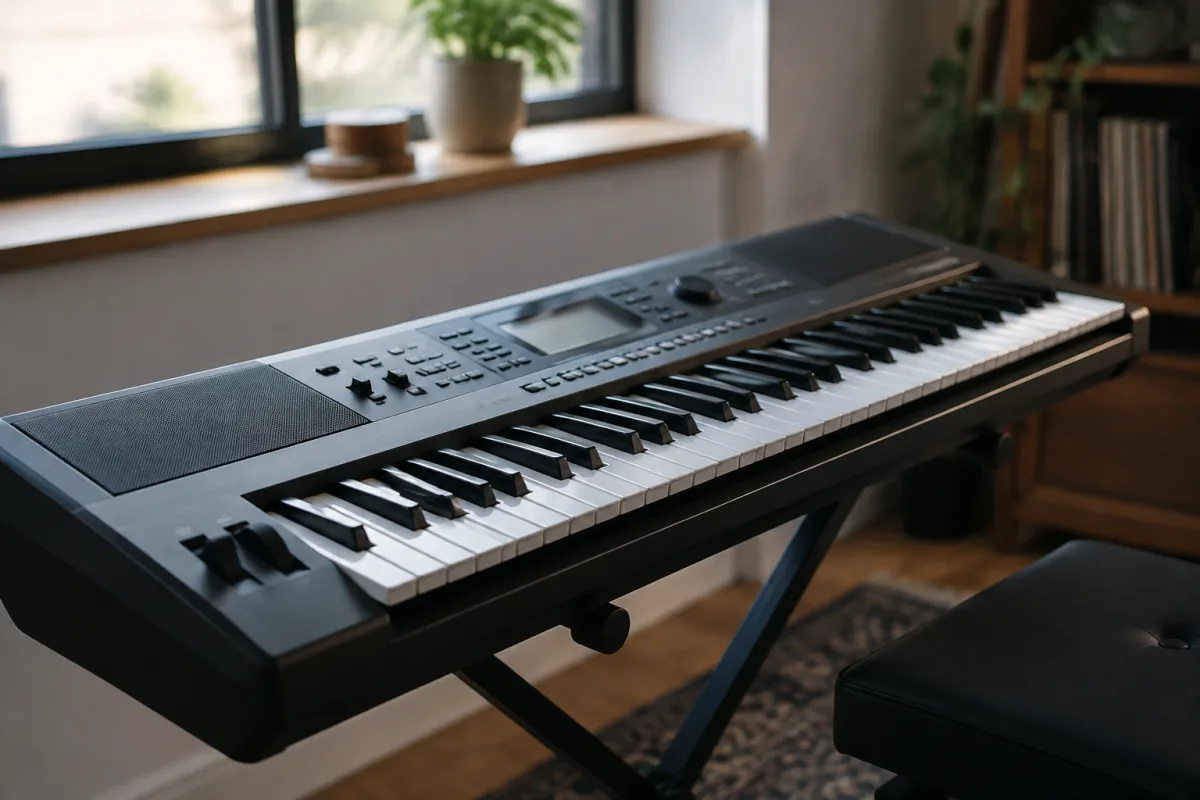
The Yamaha 61 key keyboard represents a versatile sweet spot for musicians seeking a portable instrument that doesn't compromise on functionality. With 61 keys covering five octaves, these keyboards balance portability with expressive range, making them ideal for home recording, gigging musicians, stage performance and serious hobbyists. Yamaha's engineering excellence and affordable pricing make their 61 key models particularly attractive to pianists, producers and keyboard players exploring modern music creation.
Why 61 Keys Makes Sense
The 61 key format has become the industry standard for portable keyboards. Five octaves provides sufficient range for most musical genres without the bulk of 88 key piano-style keyboards. A Yamaha 61 key weighs typically 5-8kg, making it genuinely portable—easily transported to rehearsals, gigs or recording sessions without requiring an assistant.
For classical pianists accustomed to 88 keys, the jump to 61 keys initially feels restrictive. However, most popular music rarely uses the extreme low or high registers. A Yamaha 61 key keyboard covers the practical range needed for contemporary music production, live performance and composition. The trade-off—losing some keys but gaining portability—appeals to gigging musicians and bedroom producers.
Yamaha's 61 Key Range
Yamaha produces several 61 key models across different price points and feature sets:
- Yamaha PSR Series — Home/recreational keyboards with rhythm accompaniment and preset sounds, £150-400
- Yamaha MX Series — Synthesiser-focused models for music production, £500-800
- Yamaha DX Series — FM synthesis models offering advanced sound design capabilities, £600-1,000
- Yamaha NP-Series — Portable stage keyboards with premium weighted keys, £400-700
- Custom Models — Semi-weighted or fully weighted 61 key options for professional musicians, £800-1,500
Each series targets different user types—home players seeking fun and inspiration differ significantly from producers needing synthesis depth and live performers requiring reliability. Yamaha's range ensures suitable options across all budgets and applications.
Sound Engine and Voices
Yamaha 61 key keyboards typically feature extensive sound libraries spanning pianos, electric pianos, strings, brass, woodwinds, synths and percussion. Entry-level PSR models include 400-600 voices, whilst professional models offer 1,000+ sounds with complex layering and splitting possibilities. Advanced synthesis engines in DX and MX models provide infinite sound design possibilities through FM synthesis and subtractive architecture.
Modern Yamaha keyboards employ high-quality sound engines drawing from decades of research. Their grand piano samples, captured from premium instruments, rival dedicated digital pianos for authenticity. Electric piano models emulate classic Fender Rhodes and Wurlitzer instruments with remarkable accuracy. This tonal credibility makes Yamaha 61 key models suitable for professional recording and performance.
Key Action and Playability
The Yamaha 61 key keyboard's key action determines playability quality significantly. Entry-level PSR models feature unweighted plastic keys responding instantly to pressure—adequate for rhythm and melody playing but less expressive than weighted alternatives. Mid-range models incorporate semi-weighted keys with better resistance and natural feel.
Premium Yamaha 61 key keyboards feature fully weighted keys simulating piano hammer action—heavier in the lower registers, lighter higher up. This action encourages proper finger technique and provides expressive control critical for pianists transitioning from acoustic pianos. Weighted keys feel substantially more responsive to touch dynamics, making expression and phrasing feel natural.
Features and Connectivity
Modern Yamaha 61 key keyboards incorporate comprehensive connectivity for production and performance. USB connections allow MIDI communication with computers and external synthesisers. Audio outputs accommodate amplified performance. Headphone jacks enable silent practice at any hour. Many models feature built-in audio interfaces enabling direct recording to computers without additional equipment.
Performance features vary by model. PSR keyboards include rhythm accompaniment, drum patterns and automatic chord recognition—ideal for casual players seeking inspiration and guided composition. Professional models prioritise synthesis depth, sequencing capabilities and integration with modern production workflows. Stage-focused models emphasise quick sound selection and performance effects.
Price Points and Value
Yamaha 61 key keyboards span a wide price range reflecting different applications. Budget models start around £150, providing capable basic keyboards for absolute beginners. Standard PSR models cost £250-400 and offer excellent value for home players. Semi-professional models range £500-800, whilst professional-grade instruments reach £1,000-1,500.
Entry-level 61 key keyboards deliver surprising capability for the investment. A £300 Yamaha PSR keyboard provides thousands of sounds, rhythms, and effects—functionality impossible to achieve with acoustic instruments. This exceptional value makes Yamaha 61 key keyboards particularly attractive to beginners and casual players.
Conclusion
Yamaha 61 key keyboards represent an intelligent balance between portability and musical capability. Whether you're a beginner exploring keyboard music for the first time, a producer needing a portable tool for songwriting and arrangement, or a gigging musician requiring reliable performance equipment, Yamaha's 61 key range offers suitable models across all budgets and requirements. Their combination of quality sound engines, solid construction, extensive feature sets and proven reliability makes Yamaha 61 key keyboards a smart choice for musicians at every experience level.


Comments