


Piano with Light article
Piano With Light for Beginners: A Complete Guide
Light-up pianos transform beginner learning with illuminated keys guiding correct finger placement. Discover how this technology works, why beginners love it, and what to look for.
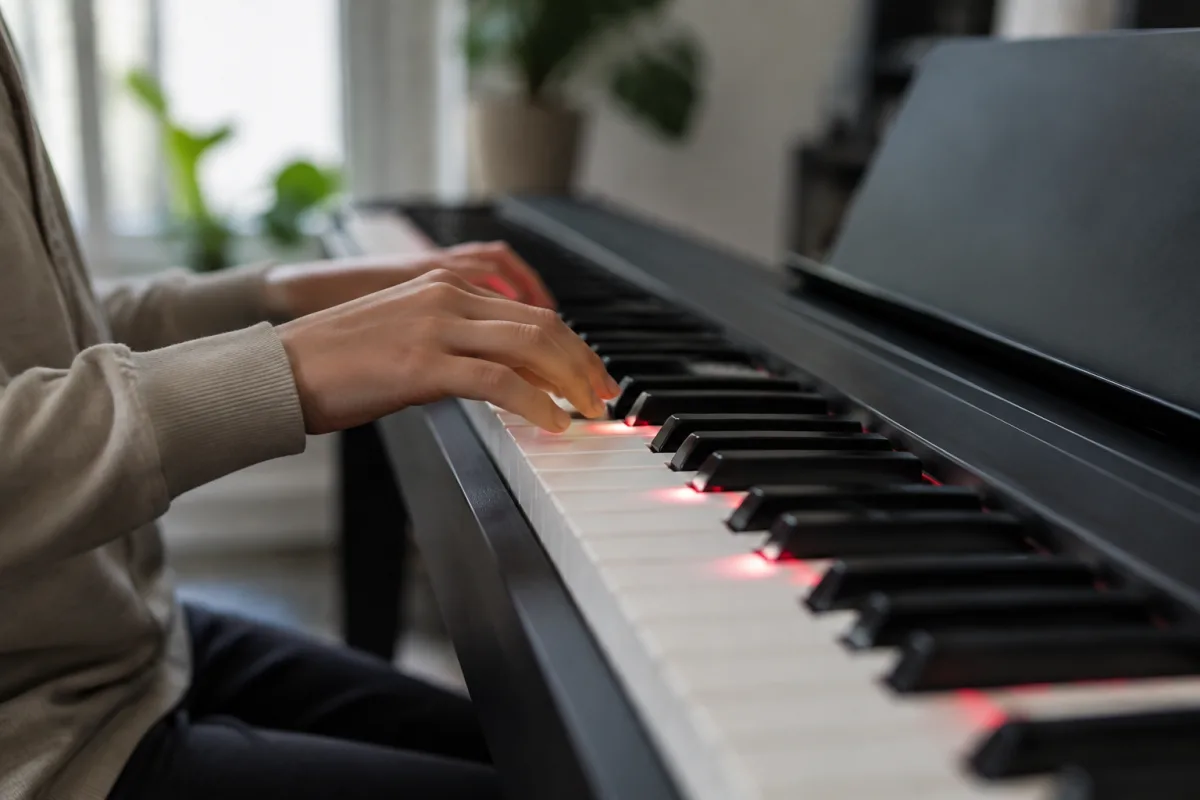
Pianos with light features—illuminated keys that guide your fingers to correct positions—transform beginner piano learning from frustrating memorisation to confident, guided playing. If you're nervous about starting piano because you're unsure about key positions or worried you'll struggle with traditional keyboards, illuminated pianos eliminate this barrier. This beginner's guide explains how light-up pianos work, why they genuinely accelerate learning, and how to select the right instrument for your needs and budget.
Understanding How Light-Up Pianos Guide Your Learning
Light-up pianos use LED technology embedded in the keyboard to illuminate specific keys in sequence, guiding your fingers exactly where they should go. As you follow the illuminated keys and play the corresponding sounds, your muscle memory develops naturally. Unlike abstract notation that requires intermediate translation, light-up pianos provide immediate, visual feedback linking note position to sound.
The system works through proprietary software connected to the piano via USB or wireless connection. Select a song or exercise, and the keyboard illuminates the keys in the correct sequence. You follow the lights and play the correct notes. After following illuminated guides repeatedly, your fingers learn patterns instinctively, gradually requiring less reliance on visual guidance.
This approach mimics excellent piano teachers who physically point to keys and guide hand position. Light-up technology scales that teaching method for solo learners, providing instant feedback without requiring expensive private instruction. For beginners, this guidance is genuinely motivating and accelerates progress dramatically.
Beginner Benefits of Illuminated Keyboard Systems
The primary benefit is demystification. Traditional piano requires memorising 88 key positions and correlating them with music notation—an abstract, overwhelming task for complete beginners. Light-up pianos skip this memorisation phase, allowing you to make music immediately whilst gradually learning key positions naturally.
Motivation and confidence build quickly. You experience musical success within minutes of starting—you're playing recognisable songs and hearing immediate results. This success motivates continued practice far more than traditional methods where beginners struggle with notation and positioning for weeks before hearing decent results.
Solo practice becomes achievable. Private piano lessons are expensive (£30-£50 per hour), and many beginners can't commit to regular instruction. Light-up pianos function as affordable virtual teachers, guiding practice sessions independently. You control pacing, repeat sections endlessly, and never feel rushed.
Learning retention improves through immediate feedback. The piano lights the correct keys; if you play the wrong key, you hear immediately that something's wrong. This corrective feedback trains correct technique faster than vague instruction or delayed assessment.
Technology Variations and What to Look For
Connected pianos pair with app-based systems (iOS and Android), downloading extensive song libraries and exercise progressions. You select songs appropriate to your level, and the app guides you through progressively challenging material. These systems typically offer 1000+ songs spanning classical, pop, jazz, and educational content.
Standalone systems include pre-loaded songs and exercises without requiring separate apps or subscriptions. These suit users preferring simplicity and independence from digital ecosystems. Trade-off: limited song selection compared to connected systems but straightforward, no-subscription operation.
Key quality varies significantly. Entry-level light-up pianos use basic weighted or semi-weighted keys that provide limited feedback. Advanced models feature hammer-action keys mimicking acoustic pianos, creating more realistic playing feel. For serious learning, hammer-action keys transfer better to acoustic piano playing.
Display systems vary from single illuminated keys to multi-colour systems highlighting fingering suggestions and performance feedback. More information can be helpful or overwhelming depending on learner preferences. Test displays before committing to ensure you find them intuitive rather than distracting.
Song Libraries and Progression Paths
Extensive song libraries matter immensely. Quality systems include 1000+ songs across diverse genres and difficulty levels. You find songs you genuinely want to learn rather than being forced through generic exercise progressions. Learning piano becomes enjoyable exploration rather than obligatory practice.
Progressive difficulty systems guide learners through natural skill development. Songs gradually increase complexity, introducing new techniques and key positions as your foundation strengthens. This scaffolded approach prevents overwhelming jumps between beginner and intermediate material.
Genre diversity maintains motivation. A system offering only classical pieces bores most beginners. Quality systems include pop, jazz, film soundtracks, and contemporary music. You choose music aligned with your actual musical interests, making practice feel less like homework.
Original compositions by recognised educators supplement song libraries. These exercise progressions teach specific techniques (scales, arpeggios, rhythm patterns) through structured sequences. They're less fun than pop songs but genuinely develop foundational skills.
Setting Realistic Expectations About Learning Speed
Light-up pianos accelerate learning compared to traditional methods but don't eliminate practice requirements. You still need consistent practice—15-30 minutes daily is more productive than sporadic long sessions. Technology guides you efficiently but can't substitute for time investment.
After several weeks of practice with light guides, you'll start recognising key positions without illumination. This transition from guided to independent playing happens naturally as muscle memory develops. Eventually, you'll play complex pieces from traditional sheet music without illuminated guidance.
Musical understanding develops gradually alongside technical skill. Early learning focuses on playing correctly positioned notes. As you progress, you explore rhythm variation, dynamics, pedal technique, and artistic interpretation. Light-up systems scaffold these progressions appropriately.
Common Beginner Concerns Addressed
Some musicians worry that light-up pianos create dependency or prevent traditional notation learning. Actually, many students successfully transition from illuminated guidance to traditional sheet music reading. The foundational keyboard familiarity established through light-up learning makes notation learning far easier when pursued later.
Others question whether light-up learning reflects "real" piano playing. Consider that elite musicians practice with metronomes, backing tracks, and educational tools—external guidance doesn't diminish musical legitimacy. Light-up pianos are simply tools enabling efficient learning, comparable to training wheels on bicycles.
Budget-conscious beginners worry about cost. Quality light-up pianos cost £400-£1200, comparable to or cheaper than hiring tutors for equivalent learning time. View it as an investment in your musical foundation rather than luxury technology.
Selection Criteria for Your Needs
Consider your musical goals. Classical purists may eventually want acoustic pianos; contemporary musicians might prefer digital keyboard sounds. Choose instruments with features aligning with your eventual musical direction. Light-up guidance accelerates learning regardless of ultimate destination.
Evaluate connectivity needs. Musicians preferring app-based flexibility want internet-connected systems with extensive content libraries. Those preferring independence and offline operation should consider standalone systems. Neither is inherently superior—it's about preference alignment.
Assess keyboard quality carefully. Play-test different models if possible. Key action, sound quality, and display intuition vary significantly. The cheapest option often frustrates rather than excels; mid-range options (£600-£800) typically offer excellent value.
Supplementing Light-Up Learning With Other Resources
Combine light-up guidance with occasional videos explaining technique and theory. YouTube offers abundant free tutorials clarifying finger positioning, posture, and music reading. These supplement illuminated guidance without replacing it.
Consider occasional lessons from human instructors. Even a few sessions with experienced teachers accelerate progress beyond what technology alone provides. Human guidance catches technique issues and provides personalised feedback that algorithms struggle with.
Use metronomes during practice to develop rhythm independence. Pianos with metronomes help train timing and discipline. Progressive tempo adjustment builds speed gradually.
For technical foundations and comprehensive piano instruction principles, explore the complete guide to piano with light, which covers piano technology evolution and teaching methodology integration.
Starting Your Piano Journey With Confidence
Light-up pianos genuinely accelerate beginner learning by eliminating key position memorisation and providing immediate musical gratification. You'll experience success within sessions rather than weeks, motivating consistent practice. Select an instrument with features and content libraries matching your musical interests, commit to regular practice, and enjoy the journey toward musical fluency. Within months of consistent practice with illuminated guidance, you'll recognize key positions intuitively and begin reading traditional notation. Welcome to accessible, enjoyable piano learning.


Comments