
Piano Portable article
The Complete Guide to Piano Portable
A portable piano delivers the feel of a traditional instrument in a compact, transportable package. This guide covers essential features, different types, and what to look for when choosing a portable piano.
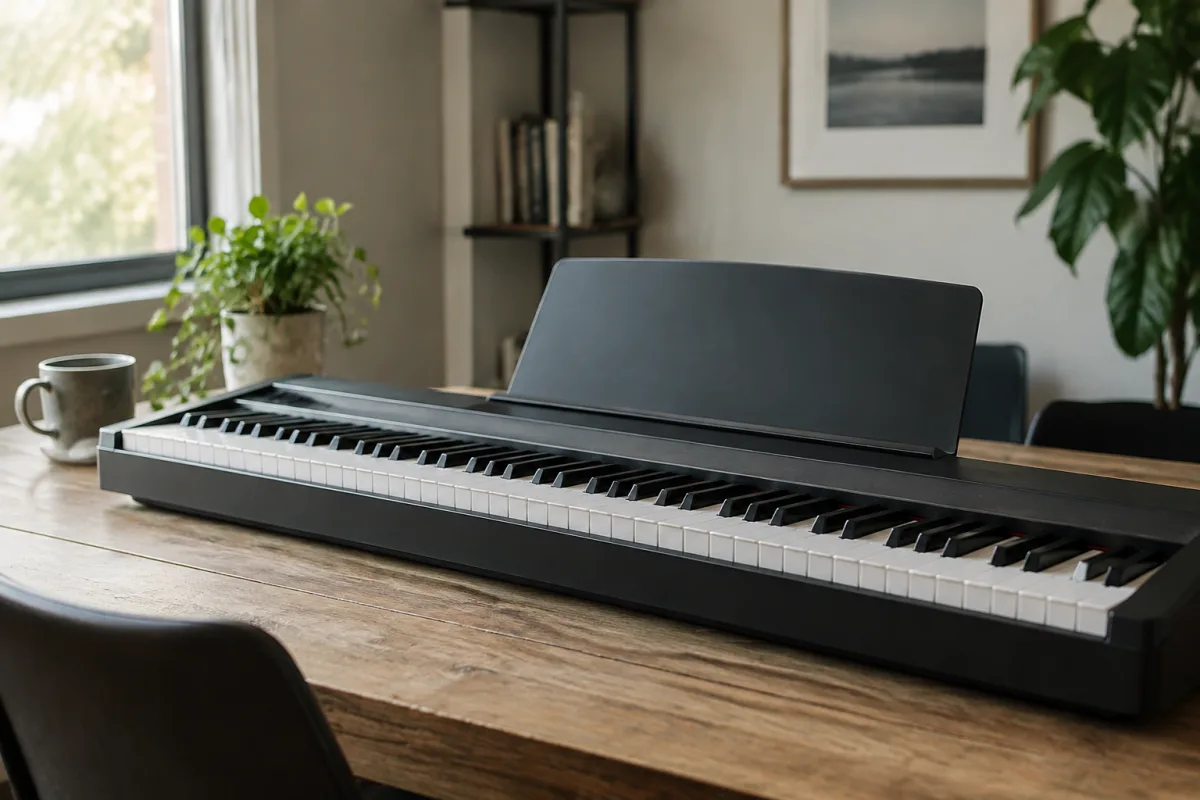
A portable piano offers serious musicians and learners the freedom to practise and perform anywhere without sacrificing a genuine playing experience. Whether you live in a flat with limited space, travel frequently, or need a secondary instrument for gigging, the right portable piano delivers authentic touch and tone in a compact package. This guide explores what sets portable pianos apart and how to choose one that matches your needs.
What Defines a Portable Piano?
A portable piano is a lightweight keyboard instrument, typically between 25 and 88 keys, designed for easy transport. Unlike traditional acoustic pianos weighing hundreds of kilograms, a portable piano usually weighs between 4 and 25 kilograms, fitting easily in a car boot or onto public transport. The defining characteristic is not just size, but the intention: these instruments prioritise transportability without compromising essential playing mechanics like hammer action and weighted keys.
Modern portable pianos come in various configurations. Some are compact 61-key models ideal for beginners and travel. Others feature the full 88-key layout preferred by classical and jazz pianists. Digital technology powers most contemporary portable pianos, offering sounds beyond traditional piano and MIDI connectivity for recording and composition work.
Key Features to Understand
When evaluating a portable piano, three features matter most: key action, sound quality, and build durability.
Key action refers to how the keys feel and respond. Weighted keys simulate the hammer resistance of an acoustic piano, making a portable piano feel like playing a traditional instrument. Semi-weighted action offers a middle ground, whilst unweighted keys feel lighter and suit beginners. For serious practice and classical technique development, weighted or semi-weighted action is essential.
Sound quality depends on sampling technology and speaker systems. Entry-level portable pianos offer basic piano samples and limited voices. Professional models feature meticulously sampled concert grand pianos with 88 individual key samples, meaning each note sounds unique rather than repetitive. Speaker quality affects how well you hear your playing, especially important for practise sessions where feedback is crucial.
Build quality determines how long your portable piano lasts through regular use and transport. Solid wood construction costs more but withstands years of practise. Plastic-heavy designs are lighter and cheaper but may feel cheaper when playing and break more easily. Check that the keyboard mechanism is robust and that connections are solid.
Portable Piano Types
The market offers several distinct categories, each serving different needs:
| Type | Key Count | Weight | Best For |
|---|---|---|---|
| Stage Piano | 76–88 keys | 15–25 kg | Gigging musicians, recording studios |
| Compact Digital Piano | 61–88 keys | 10–18 kg | Home practise, small spaces, learning |
| Arranger Keyboard | 61 keys | 8–14 kg | Song creation, light performance, variety |
| Ultra-Compact Keyboard | 32–49 keys | 4–8 kg | Travel, beginners, studio controllers |
Weighted Keys and Touch Response
Weighted key action is crucial for developing proper piano technique. A weighted key action simulates the gradual resistance of acoustic piano hammers as you press down. This means rapid finger movements require control and precision, just as they do on traditional pianos. Without weighted action, developing genuine musical expression becomes difficult, and transitioning to an acoustic piano later feels jarring.
Hammer action, found on higher-end portable pianos, takes realism further by simulating the mechanical escapement of acoustic pianos. When you play lightly and release slightly before reaching the key's bottom, the hammer returns independently—just like a real piano. This allows true repetition techniques essential to classical repertoire.
Connectivity and Performance Features
Most modern portable pianos include USB and MIDI connections, allowing you to connect to computers, recording software, and mobile devices. This transforms your portable piano into a production tool, not just a performance instrument. You can record practice sessions to review progress, layer sounds, or use your portable piano as a controller for digital audio workstations.
Touch sensors, arpeggiators, and built-in effects expand creative possibilities. Some portable pianos offer hundreds of sounds beyond piano samples—strings, organs, synthesizers, and percussion. For classically trained pianists, these extras matter less; for contemporary musicians and composers, they're essential creative tools.
Practical Considerations for Travel
If you regularly transport your portable piano, practical details matter. Lighter weight (under 12 kilograms) makes travel easier but may compromise sound quality or key action. Look for carrying cases or stands that don't require separate purchases. Battery power versus AC mains affects where you can play—battery-powered portable pianos work outdoors or in venues without nearby power, whilst AC-powered models suit fixed locations like studios or rehearsal rooms.
Durability in transit is critical. Protective cases, reinforced connectors, and solid construction prevent damage from transport vibration and handling. Professional musicians often invest in flight cases for international touring, a worthwhile expense for instruments costing hundreds of pounds.
Sound Quality and Speaker Systems
A portable piano's speaker system dramatically affects how you experience your playing. Small built-in speakers suit bedroom practise but lack the depth and projection needed for performance or serious listening. Higher-end portable pianos feature better speaker systems or allow external speaker connection. Studio monitoring headphones provide another option, allowing silent practise without disturbing others whilst delivering professional-grade sound monitoring.
Sample quality also matters tremendously. Entry-level portable pianos use the same piano sample across all 88 keys, creating an artificial, tinny tone. Professional models sample each key individually on high-quality concert pianos, capturing the natural variation in tone across the keyboard.
Price and Value Considerations
Portable piano prices span from £150 for basic starter keyboards to £3,000 or more for professional stage pianos. The sweet spot for serious practice and light gigging sits around £600–1,200: enough budget for weighted keys, authentic piano sounds, and solid build quality, without excessive features you won't use. Beginners might start cheaper and upgrade after establishing commitment; professionals need higher budgets for tour-grade reliability and authentic sound.
The Bottom Line
Choosing the right portable piano depends on your skill level, intended use, and budget. Beginners benefit from entry-level models with unweighted or semi-weighted keys. Serious practitioners need weighted action and authentic samples. Touring musicians require robust stage pianos with professional connectivity. Whatever your circumstances, a portable piano lets you maintain your practice routine or share your music anywhere—a genuine advantage in an increasingly mobile world.


Comments