
PA Portable article
The Complete Guide to Pa Portable
A PA portable system transforms your live performance freedom. Whether you're busking, teaching, or playing small venues, discover what matters when choosing the right rig for your needs.
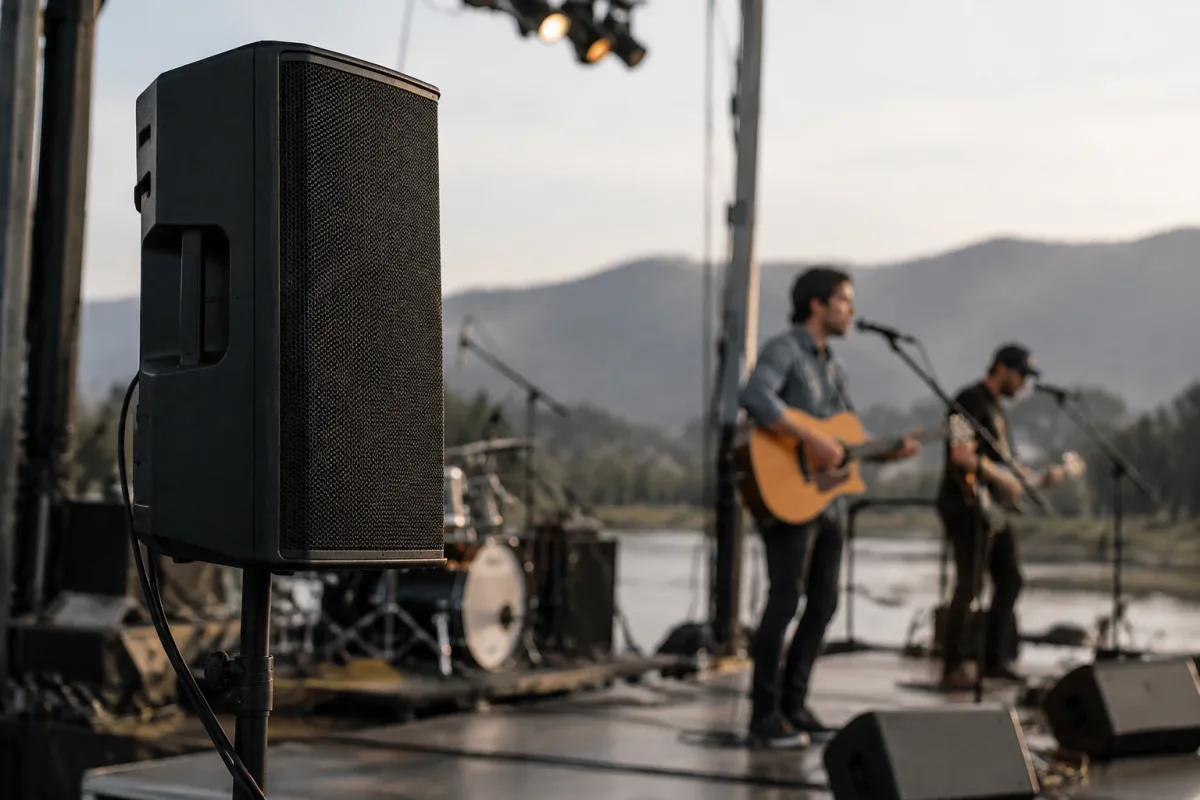
A PA portable system is essentially your personal soundcheck-in-a-box — the bridge between busking with a ukulele and playing to a proper crowd. Whether you're performing in a café, teaching a workshop, or doing small gigs, a portable PA setup gives you the amplification to be heard without needing a truck full of gear. It's the closest thing to sonic democracy: suddenly your acoustic guitar or vocals reach 200 people instead of 20.
What Makes a PA Portable, and Why You Might Need One
A PA portable is a self-contained amplification system designed for easy transport. Unlike traditional P.A. rigs that require separate mixers, amplifiers, and speaker cabinets bolted together with heavy cables, such systems bundle everything into one or two compact units. The speaker has the amplifier built in, the mixing capability is either onboard or via a simple control panel, and you're ready to go.
The appeal is obvious: carry it yourself, set it up in minutes, perform, and pack away. No roadie required. Modern rigs range from tiny mono boxes (10–50 watts) perfect for intimate venues to hefty stereo systems (300+ watts) that handle larger halls. Most sit in the sweet spot of 50–150 watts: enough volume for a band in a 300-seat room, light enough to load in and out solo.
What's genuinely changed in recent years is the quality-to-weight ratio. A decade ago, "portable" meant a compromise in sound. Now, a mid-range unit sounds professional, carries wireless mic inputs, and often includes effects and Bluetooth streaming. The tech has caught up.
Power Ratings, Wattage, and What "Enough" Means
Wattage is where beginners stumble. A 50-watt system isn't half as loud as a 100-watt rig — it's about 3dB quieter, which most ears barely notice. What matters more is the speaker's efficiency (how much sound you get per watt) and the venue size.
Here's a rough guide:
- 10–30 watts: Busking, very small rooms, intimate acoustic sets. Won't fill a café with background music.
- 50–100 watts: Small venues, workshop rooms, outdoor festivals with modest crowds. This is the Goldilocks zone for most musicians — enough volume, still portable enough to carry comfortably.
- 150–300 watts: Larger rooms, bands, outdoor events. Heavier, but still a one-or-two-person job to transport.
- 300+ watts: Large halls, serious events. Verging on traditional rigs — you'll want wheels and possibly a second person.
A rule of thumb: 50 watts reaches about 100 people outdoors on a quiet day; 100 watts reaches 250–300; 150 watts covers most band situations. Adjust for speaker placement, room acoustics and how reflective your venue is.
Battery vs. Mains: Freedom vs. Certainty
Some PA portable systems run on rechargeable batteries; others need mains power. Battery-powered rigs are genuine game-changers for outdoor gigs and venues without convenient outlets. A decent battery system gives 4–8 hours depending on volume and battery capacity. The catch is weight: batteries are heavy, so the wattage is usually modest (30–100 watts). Plus, you're always clock-watching for the next charge.
Mains-powered units are lighter, more powerful, and infinitely "loud" (until the venue trips a breaker). The trade-off is you need a power socket nearby and a cable long enough to reach the stage. For regular gigs in established venues, mains is a no-brainer. For busking or outdoor festivals, battery is liberating.
Inputs, Mixing, and Connectivity
A basic system has two or three XLR inputs for microphones or line-level sources (keyboards, preamps) and maybe an auxiliary input for a phone or backing track. Fancier models add more channels, built-in effects (reverb, echo), EQ controls, and Bluetooth streaming for music playback.
Wireless microphone compatibility is standard on anything worth buying. Most rigs come with a matching wireless mic option; others let you plug in your own. Avoid cheap wireless mics — the interference and dropouts will ruin a gig faster than you'd think.
Onboard mixing desks range from "almost none" (a single volume knob) to "basic but capable" (separate faders for each input, EQ, effects sends). For solo performers and small ensembles, onboard controls are usually fine. If you're juggling five inputs and need tight control, a separate mixing desk and powered speakers might be smarter than a compact system.
Speaker Configuration: Mono vs. Stereo
Most compact systems are mono: one speaker, one amplifier, one output. Sound goes everywhere the same way. It's simple, affordable, and effective for most live performance.
Stereo rigs give you left and right channels, which is lovely for playback music (stereo backing tracks sound wider and more professional) and larger venues where coverage matters. The downside: added complexity, more cables, and higher cost. For a solo acoustic performer in a small room, mono is plenty. For a DJ or a band with a full mix, stereo starts to make sense.
Build Quality and What to Listen For
When demoing a system, play music you know well — a vocal recording, a guitar, a drum loop — at roughly the volume you'd use in a gig. Listen for clarity (do vocals stay clear as you turn up, or do they get muddy?), even frequency response (does the bass balloon while mids disappear?), and hum or hiss (some units have annoying electrical noise).
The enclosure matters. Plastic cabinets are lighter and cheaper but flex more, colouring the sound. Wooden or reinforced polymer shells are stiffer, sounder, but heavier. For a PA portable in the 50–150 watt range, plastic is usually fine — accept it as the trade-off for weight and portability.
Check the handles, wheels (if present), and connectors. You'll be grabbing your rig in a hurry, often in the dark, running late to a gig. Anything that feels flimsy now will break mid-tour. Quality hinges, solid input plates, and cables that won't snap matter.
Complementary Gear: Stands, Cables, and Protection
Your system alone isn't enough. You'll want a sturdy speaker stand (especially if the unit doesn't sit at ear level of your audience), quality microphone cables, a direct box for keyboards or preamps, and a protective gig bag or hard case. These extras aren't glamorous, but they're what separates a weekend of good gigs from a nightmare of dead channels and broken equipment.
A decent gig bag adds maybe £40–60 to your outlay but saves your rig from bumps, spills, and weather damage during transport. Worth every penny.
Picking Your First PA Portable: A Checklist
Start with honest questions: What venues will you play most? How far do you transport it? How many inputs do you truly need? What's your budget? A portable PA for solo singers is completely different from one for a three-piece band playing 200-capacity rooms.
In the 50–100 watt range, well-regarded brands for PA portable systems include Bose (pricy, superb sound), Roland (excellent built-in effects, mixing), Behringer (affordable, surprisingly good), and Mackie (professional-grade, trusted by touring musicians). Try before you buy if you can; rental companies let you test-drive equipment for a nominal fee before committing. That dry run can save you from a £500 mistake.
The Bottom Line
A good PA portable transforms what you can do as a performer. You're no longer limited to acoustic rooms or stages with installed systems. You can gig anywhere, teach workshops, or busk with proper volume. The technology is mature now — you're not buying a compromise, you're buying genuine freedom. Pick the wattage to match your venues, invest in a quality unit with decent build, and you've got years of reliable amplification ahead of you.


Comments