
Mpc Key 37 article
The Complete Guide to Mpc Key 37
An MPC 37-key controller offers beat makers a perfect middle ground: compact enough for tight studios and live use, yet spacious enough for expressive melody and chord work.
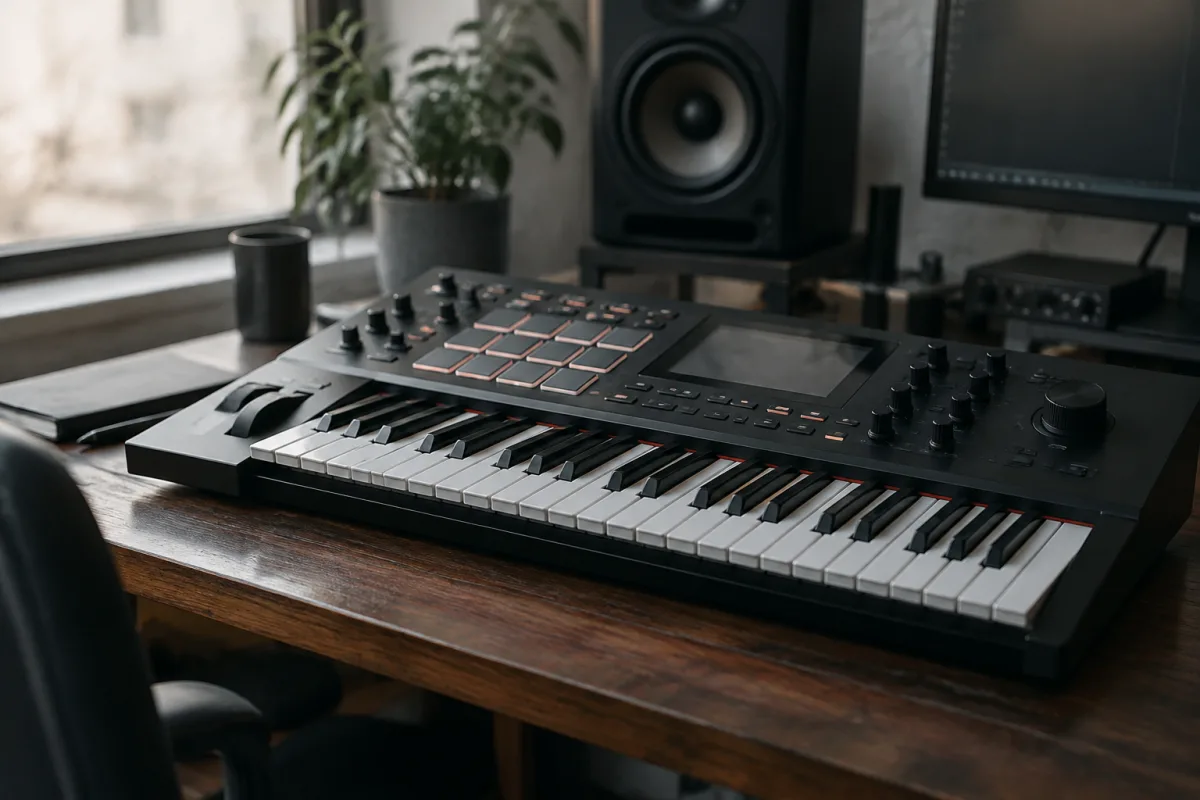
For beat makers and electronic music producers working with limited desk space, the MPC 37-key controller strikes an elegant balance between portability and functionality. These compact controllers are ideal for studio work, live performance, and creative sessions in tight quarters. The MPC 37 has become a staple choice for producers who value hands-on control without the footprint of a full-sized keyboard.
What Is an MPC 37-Key Controller?
An MPC (Music Production Controller) with 37 keys is a mid-sized keyboard designed for beat-making, sample triggering, and musical composition. Unlike full 88-key weighted keyboards designed for piano playing, these compact instruments offer velocity-sensitive pads and touch controls optimised for production workflows. The smaller footprint makes it practical for bedroom studios and mobile setups whilst retaining enough keys for melody work and chord progressions.
The MPC 37 format sits between ultra-compact 25-key controllers and full-sized keyboards. This size category has gained significant popularity with hip-hop, electronic, and experimental music producers who appreciate the balance between playability and portability.
Key Features of 37-Key MPC Controllers
Most MPC 37-key models share common features designed for production environments. Velocity-sensitive keys allow for dynamic expression and responsive beat-making. Many include touch-sensitive pads for triggering samples and loops, along with knobs and sliders for real-time sound manipulation. Integration with major DAWs (Digital Audio Workstations) is standard, making these controllers work seamlessly with software like Ableton, FL Studio, and Logic.
The physical layout of an MPC 37-key controller typically includes:
- 37 velocity-sensitive keys with either semi-weighted or fully-weighted action depending on the model
- 16 drum pads for sample triggering and percussion
- Multiple knobs for parameter control and sound shaping
- A display screen for navigation and feedback
- USB connectivity for power and MIDI communication
- Audio inputs and outputs for integration into studio setups
Some premium models add features like aftertouch, bluetooth connectivity, built-in sounds and instruments, and advanced sequencing capabilities.
Choosing an MPC 37-Key Model
Several manufacturers produce MPC-style controllers in the 37-key format. The original Akai MPC One, MPC Key 37, and their successors are industry standards. Native Instruments, Roland, and other companies offer competing designs with similar functionality. Your choice depends on budget, desired features, and software preferences.
Consider whether you need built-in sounds or plan to use software instruments exclusively. Some MPC 37 models include comprehensive sound libraries and synthesis capabilities; others function primarily as MIDI controllers. Built-in options offer more independence from your computer, whilst controller-only designs keep cost down and offer better integration with preferred DAWs.
Action type matters significantly. Semi-weighted keys (found on most MPC 37-key controllers) respond quickly and suit fast beat-making. Fully-weighted keys demand more pressure and suit pianists transitioning to production work. Try both styles if possible before committing to a purchase.
Studio Setup and Integration
An MPC 37-key controller integrates easily into most music production workflows. Connect it via USB for both power and MIDI, then assign the keys and pads to your DAW's instruments and controls. The compact size means it fits comfortably on a desk alongside your monitor and audio interface.
Many producers use an MPC 37 as their primary instrument for composition and beat arrangement, with additional controllers (like a larger keyboard for extended range or a dedicated mixer controller) for different tasks. The versatility makes it suitable for both focused production sessions and live performance contexts.
Performance and Creative Possibilities
Despite its smaller size, an MPC 37-key controller enables full musical expression and complex beat construction. The combination of keys for melody and chord progressions, plus dedicated pads for drums and samples, creates an intuitive creative environment. The tactile interaction—pressing keys, turning knobs, adjusting sliders—encourages experimentation and spontaneous musical ideas.
Live performance is viable with many MPC 37-key models. The combination of velocity-sensitive keys and accessible pads makes it practical for triggering clips and manipulating sounds in real-time. Many electronic artists perform live using nothing but this type of compact controller paired with laptops running their production software.
Workflow Considerations
Working with an MPC 37-key controller requires adapting your approach compared to full-sized keyboards. The octave range is reduced—you'll need to transpose between octaves using buttons or shift keys when working on extended melodic passages. This is a minor learning curve for most producers, and many prefer the compact size enough to consider it a worthwhile trade-off.
The velocity sensitivity and responsiveness of modern MPC 37-key controllers make them suitable for expressive playing. Layer this with software synthesisers and samplers, and the creative possibilities are extensive. Many hit records have been produced using exactly this type of setup.
Comparison with Other Sizes
A 25-key controller is more portable but sacrifices range and playability for melody work. A 61-key model offers more range but becomes less convenient for mobile and space-constrained setups. The MPC 37-key format represents the practical middle ground—compact enough for portability, large enough for genuine musical work without constant transposition.
Full 88-key weighted keyboards designed for piano emulation are overkill for most electronic music production and significantly more expensive. The MPC 37-key approach prioritises the actual needs of beat makers and electronic musicians rather than attempting to replicate acoustic piano feel.
The Bottom Line
An MPC 37-key controller is an excellent choice for producers seeking a versatile, space-efficient instrument for composition, beatmaking, and performance. Whether you're working in a cramped studio apartment or performing live with a compact setup, this format delivers professional functionality in a genuinely portable package. The combination of responsive keys, tactile controls, and seamless DAW integration makes it one of the most practical production tools available for modern music makers.



Comments