


Childrens Piano article
Childrens Piano for Beginners: A Complete Guide
Getting your child started on a childrens piano is less daunting than you think. This beginner guide walks you through the first steps without overwhelming anyone — no musical background required.
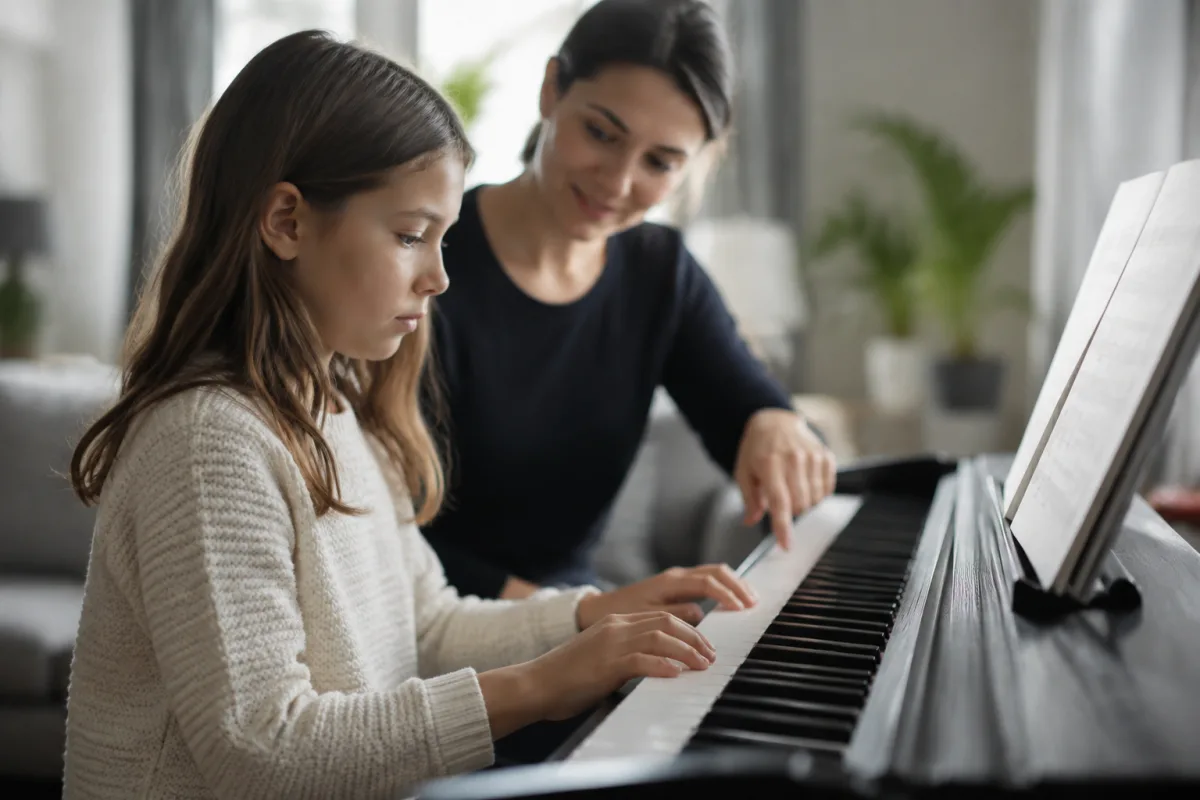
Getting your child started on a children's piano is less daunting than you think, and it's one of the smartest musical investments you can make. If your child has expressed interest in piano or you're thinking of encouraging them, this beginner guide walks you through the first steps without overwhelming anyone. You don't need to be musical yourself, and you don't need to commit to a concert grand — just a thoughtful start and consistent (but gentle) encouragement.
Why start with a childrens piano?
A childrens piano is an excellent first instrument for any child. The notes are physically laid out in front of them, so they can see pitch and patterns immediately. Unlike guitar, there's no tricky finger strength needed to start. Unlike violin, there's no screechy warming-up phase that makes your neighbours groan. Children can play a recognisable tune in their first week, which builds confidence fast. Piano also teaches music theory naturally — the keys are arranged by mathematical intervals — and that foundation helps if they ever switch to another instrument.
Age considerations and readiness
Children can start piano around age 4 or 5, but readiness matters more than age. Can they sit still for 15 minutes? Can they follow simple instructions? Do they want to learn, or are you pushing? A reluctant five-year-old will struggle; a keen seven-year-old will thrive. The ideal age is 6 to 8 — old enough to concentrate, young enough to absorb music naturally.
Younger children (4–5) benefit from "pre-piano" exploration: letting them play freely, singing together, tapping rhythms on the keys without formal lessons. This builds joy and familiarity without frustration. If your younger child is eager, start here rather than jumping to structured lessons.
Choosing your childrens piano: keyboard or full-sized?
This is your first practical decision. A full-sized 88-key weighted piano teaches proper technique because the weighted keys simulate acoustic resistance. An 88-key portable keyboard costs less but won't teach correct finger strength. A 61-key keyboard is tiny and cheap but doesn't have all the notes your child will eventually need.
Here's the honest truth: start with what you can afford. A decent 88-key weighted keyboard (£300–600) is better than a bad full-sized piano (£200). If your child loses interest after six months, you haven't spent £3000. If they're still playing happily at 12 months, you can upgrade to a real piano. Most childrens piano learners start on keyboards, and many become serious pianists who later transition.
The one mistake to avoid: don't buy a toy piano. A miniature keyboard with 32 pre-recorded songs feels exciting for five minutes, then becomes frustrating because the keys don't respond properly and the sound is tinny. Real entry-level keyboards from brands like Yamaha, Casio and Roland are affordable and reliable; toy pianos are expensive regret.
Choosing between lessons and apps
A good teacher is invaluable for a beginner. They correct finger position (crucial for proper technique), tailor pace to your child's progress, provide accountability and make practice feel like playtime rather than a chore. A teacher costs £15–30 per 30-minute lesson, weekly. That's real money, but it's often worth it.
Apps like Simply Piano, Yousician and Flowkey are cheaper (£5–10 monthly) and fun, but they don't correct posture or finger position and can let bad habits develop. Apps work best as a supplement: your child has weekly teacher lessons plus app practice between sessions.
The ideal path for a beginner is one teacher lesson per week plus self-guided practice. If your budget is tight, a teacher every two weeks plus weekly app practice is better than no teacher at all. If a teacher is genuinely unaffordable, an app plus parent encouragement is a reasonable start — many children learn happily this way, though risk developing poor technique.
The first steps: making practice enjoyable
The biggest mistake parents make with a children's piano is turning practice into homework. "Go practise for 30 minutes" breeds resentment. The better approach: short, playful sessions at first. Ten minutes of practise is better than 30 minutes of forced resistance. If your child is having fun, they'll naturally play longer.
Make practice into play. Sit beside them; make it a bonding activity. Let them choose one easy song they love (even if it's a theme from their favourite cartoon). Celebrate tiny wins: "You nailed that passage!" teaches growth mindset. Avoid criticism; focus on effort. "That's hard, but you're getting better" beats "You made a mistake."
Practice in short bursts: five minutes after breakfast, five minutes after school. Consistency matters far more than duration. A child who plays 10 minutes daily improves faster than one who plays 60 minutes once a week.
Common first-month mistakes to avoid
Expecting perfection too soon is the quickest way to kill motivation. Your child will be clumsy; their hands will wander; they'll forget note names constantly. That's completely normal. A five-year-old's brain is still developing hand-eye coordination and fine motor skills. Patience from you means everything.
Don't compare your child's progress to other kids. Every child learns at their own pace. Your child might master rhythm quickly but struggle with reading notes. Another child might fly through note-reading but find rhythm tricky. Neither is better or worse — they're just different learners.
Don't give up after a bad lesson or a week where they refused to practise. Every child has moments where they resist. Often it's not the piano they're tired of; it's something else (school stress, hunger, being too tired). Take a break, come back refreshed, and try again.
Setting realistic expectations
In the first month, expect your child to learn their first five notes and maybe pick out "Twinkle, Twinkle, Little Star" by ear. In three months, expect them to read simple music and play a few recognisable songs. In six months, expect confidence and the ability to learn new pieces with guidance. Real proficiency takes years, but enjoyment and basic competence come quickly.
The goal for a beginner isn't concert-hall skills; it's to fall in love with making music. If your child can play a simple song from memory and feel proud, that's a success.
Budget breakdown for a childrens piano setup
- Entry-level keyboard: £300–600 (88 weighted keys, reliable brands)
- Teacher: £15–30 per 30-minute lesson, weekly (£60–120 monthly)
- Books and materials: £20–50 (method books, music notation sheets)
- Music stand: £15–30 (to hold sheet music)
- Total first-year cost: roughly £800–1200 including the childrens piano itself
After the first year, ongoing costs are mainly teacher fees and occasional new books. Most childrens piano keyboards last for years, so you won't need to replace them soon.
Where a children's piano fits in your home
Keep the keyboard or piano in a common area where your child can see it and access it easily. A keyboard stuffed in a bedroom often sits untouched. In the living room or kitchen, your child is more likely to hop on and noodle around. Casual play between formal practice sessions is how most children deepen their love of music.
If you're looking for deeper context on piano learning for children, our complete guide to children's piano covers the theory and music fundamentals. This guide focuses on making the first steps easy and joyful.
The bottom line
Start your child with a decent 88-key weighted keyboard (or better, a real piano if affordable), find a teacher if you can, and keep early practice sessions short and playful. The first month is about joy and discovery, not perfection. If your child enjoys piano after three months, you've made a wonderful choice. If they lose interest, you've learned valuable information about their musical preferences — and they've gained exposure to music, which is never wasted. Most children who fall in love with piano do so because someone gave them a chance to explore without pressure.


Comments