


Piano with Headphones article
Piano With Headphones for Beginners: A Complete Guide
A encouraging beginner's guide to learning piano with headphones, covering how to get started, your first week of practice, common mistakes, and building confidence.
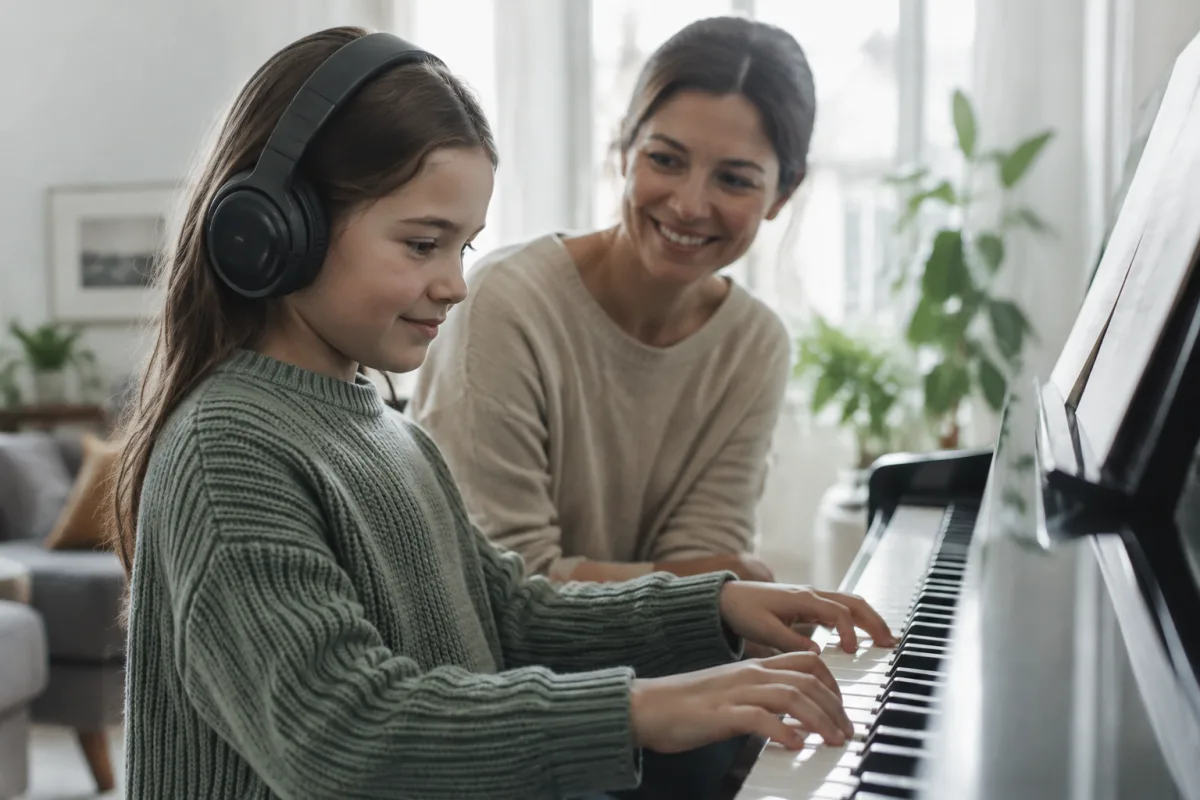
Learning piano is exciting but intimidating, especially when you're worried about disturbing family or neighbours. Using a piano with headphones transforms the experience, allowing you to practise whenever you like without noise concerns. This guide walks you through getting started with piano with headphones, helping nervous beginners take their first confident steps into learning this rewarding instrument.
Why Piano with Headphones is Perfect for Beginners
One of the biggest barriers to learning piano is guilt about making noise during practice. With a piano with headphones, you eliminate that worry entirely. Whether it's midnight or early morning, you can practise guilt-free. This freedom to practise whenever inspiration strikes means you'll actually sit down more often, which is the secret to real progress as a beginner.
Headphones also create a focused, immersive learning environment. The sound reaches your ears directly without room acoustics colouring what you hear. This clarity helps you develop accurate listening skills and learn to identify mistakes in your own playing. Additionally, many modern pianos with headphone capability include built-in tools like metronomes and recording playback, all accessible through headphones without bothering anyone around you.
Getting Your First Piano with Headphones Setup
The easiest path for beginners is purchasing a digital piano with built-in headphone jacks and solid key action. You don't need anything fancy—entry-level 88-key weighted digital pianos (around £200-400) provide everything you need. The weighted keys are crucial because they simulate the resistance and feel of an acoustic piano, which helps you develop proper technique from the start.
When you first get your piano with headphones, start simple. Plug in a pair of basic headphones, adjust the volume to a comfortable level, and just explore. Many beginners worry they'll instantly "break" their piano, but that's impossible. Press keys, try the sustain pedal, adjust settings. This exploration builds confidence and helps you understand how your instrument responds.
Don't worry about looking foolish or sounding terrible. Everyone starts exactly where you are now. Professional pianists remember struggling with the most basic hand position. Accept that awkwardness is part of learning, and it disappears with surprisingly little practice.
Your First Week of Practice
Start with fifteen minutes daily rather than one long weekend session. With your piano with headphones, morning or evening doesn't matter—practise when you actually have fifteen free minutes. Short, regular sessions build neural pathways far more effectively than sporadic marathon practice.
Learn hand position first. Your hands should curve naturally as if holding a ball. Fingers contact keys with your fingertips, not the flat of your finger. This feels awkward initially, but proper positioning prevents injury and develops better control. Most piano teachers focus heavily on hand position because it's foundational.
Progress through simple exercises—scales, basic finger patterns, perhaps a simple children's melody. Your piano with headphones typically includes beginner learning modes or backing tracks that make this practise feel less repetitive. Use these features liberally. Learning should feel engaging, not like punishment.
Common Beginner Mistakes to Avoid
Many beginners make the mistake of playing too loud through their headphones. This actually strains your hearing and prevents you from hearing subtle mistakes. Keep the volume at a conversational level—you should be able to talk normally while wearing your headphones. Volume isn't about sound intensity but about being able to hear what you're playing clearly.
Another common error is neglecting the sustain pedal completely. Beginners often think pedals are advanced features, but they're actually essential from early on. The sustain pedal (the right one) is your friend when learning to play smoothly. Experiment with it during your first weeks using your piano with headphones, since headphones let you hear subtle tonal differences without disturbing anyone.
Trying to learn too much too fast causes many beginners to quit. Resist the urge to jump from beginner pieces to complex classical works. Trust the progression. Small, achievable goals feel wonderful when accomplished, building motivation for tomorrow's practise session.
Making Piano with Headphones Feel Encouraging
Record yourself occasionally. Many piano with headphones setups include recording features. Listening to yourself after a week of practise reveals progress that you don't notice day-to-day. Beginners especially need this evidence that they're actually improving, even if progress feels slow.
Use your piano with headphones to learn songs you genuinely love. Yes, you need foundational technique, but surrounding that with music that excites you makes practise feel like pleasure rather than obligation. If you want to play specific songs, include them in your routine. Hearing yourself play something you love, even imperfectly, is profoundly encouraging.
Consider connecting with other piano beginners. Online communities dedicated to piano learning are astonishingly supportive. Sharing your progress and hearing about others' similar struggles normalises the beginner experience and keeps you motivated.
When to Consider a Teacher
Many beginners wonder if they can learn entirely from apps or YouTube. The answer is maybe, but having someone occasionally check your hand position and technique prevents bad habits from forming. Bad habits are incredibly difficult to break once established. Consider even occasional lessons—monthly check-ins with a teacher can correct small issues before they become serious problems.
The beautiful thing about piano with headphones is that you can practise independently between lessons without worrying about neighbours. This combination—regular teaching feedback plus daily independent practise with headphones—is the ideal setup for rapid beginner progress.
Your Path Forward
Starting piano with headphones removes a major barrier to learning. You can practise whenever you wish without guilt or inconvenience to others. This freedom means you'll practise more, progress faster, and stay motivated longer than you would with an acoustic piano or without headphone capability.
Your first weeks should feel like exploration and play, not pressure and performance. Build confidence with short, enjoyable sessions. Record yourself to hear progress. Learn songs you love. Avoid common mistakes through mindful hand position and pedal exploration. For a comprehensive understanding of piano with headphones technology and options, refer to our complete guide to piano with headphones.


Comments