


Piano Dust Cover article
Piano Dust Cover for Beginners: A Complete Guide
You've just acquired a piano. A piano dust cover is one of the simplest and most effective investments you can make as a new piano owner.
You've just acquired a piano—congratulations. Now comes the practical matter of keeping it in good condition. A piano dust cover is one of the simplest and most effective investments you can make as a new piano owner. If you're wondering whether a dust cover is necessary or how to use one properly, this guide covers everything you need to know to protect your investment.
Why Piano Dust Covers Matter for Beginners
Pianos are mechanical instruments with thousands of precisely engineered parts. Dust settling inside the mechanism causes problems: sluggish keys, muffled tone, and eventual deterioration of moving parts. A simple dust cover prevents most of this damage without any effort beyond throwing it on when the piano isn't in use.
New piano owners often underestimate how quickly dust accumulates. Within weeks of leaving a piano uncovered, visible dust layers form on the wood, inside the lid cavity, and eventually works its way into the action mechanism. A cover stops this before it becomes a problem.
Proper protection now prevents expensive repairs later. A dust cover costs 30-100 pounds depending on quality. Full internal cleaning by a technician costs 150-300 pounds. The arithmetic is simple: invest in a cover immediately.
Choosing the Right Dust Cover
Measure your piano first—length, width, and height. Dust covers come in standard sizes for upright and grand pianos. An ill-fitting cover leaves gaps where dust enters, defeating the purpose.
Quality matters. Cheap plastic covers trap moisture and can damage the finish over time. Invest in a padded, breathable fabric cover. These allow the wood to breathe while protecting against dust, and they're substantially more durable than plastic.
For grand pianos, you have two options: a closed lid cover or a designer-style cover that leaves the lid propped open slightly. Closed covers are simpler and more protective. Designer covers look nicer but provide less protection from dust.
As a beginner piano owner focused on protection, choose a closed cover. Aesthetics can wait until you're confident in your piano's condition.
Getting Started with Your Dust Cover
Before your first use, ensure your piano's surface is completely clean and dry. Dust covers can trap moisture, so avoid putting one on a damp instrument. If your piano feels clammy or smells musty, let it air out for an hour before covering.
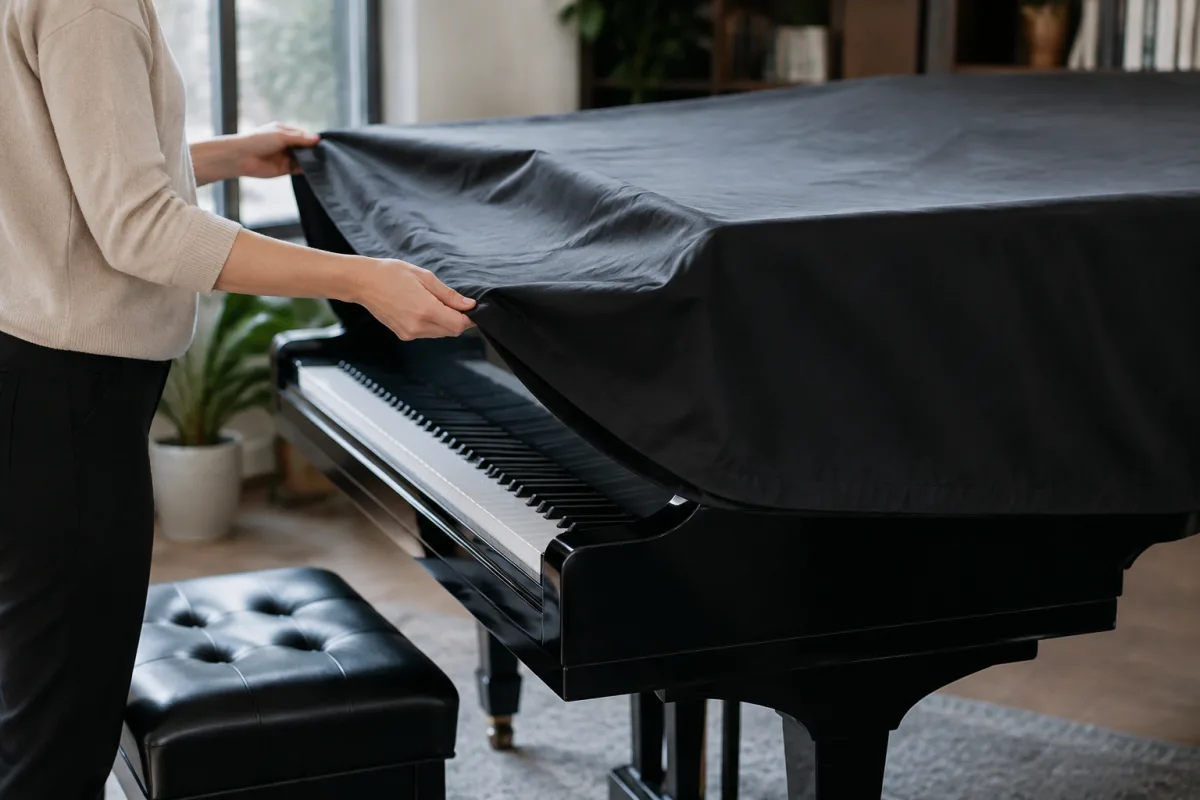
Putting on an upright piano cover is straightforward—drape it from the top and tuck it behind the base so it doesn't billow with air movement. For grand pianos, carefully lower the closed cover over the entire instrument, ensuring it's symmetrical.
Get comfortable with this routine. The goal is to cover your piano every time you finish practising. Within a week, it becomes automatic and requires just 30 seconds of effort.
Common Mistakes New Owners Make
Many piano beginners protect their instruments improperly. Avoid these predictable errors:
- Using plastic covers: Plastic traps moisture and can damage the finish or cause mildew. Invest in fabric from the start.
- Covering a dirty instrument: Dust trapped under a cover scratches the finish over time. Dust your piano gently before covering it.
- Leaving the lid propped open: Some owners leave the lid half-open for "air circulation," which defeats dust protection. Either open it fully when playing or keep it closed and covered.
- Forgetting the keyboard: If your cover doesn't extend to the keyboard area, use a keyboard cover as well. Keys collect dust remarkably fast.
- Ignoring ventilation in humid climates: In damp environments, leave the cover off for brief periods to allow the piano to breathe. Consult a technician if humidity is consistently above 60%.
- Wearing away the finish: Rough or dirty covers can damage the piano's finish when you put them on or remove them. Keep your cover clean and handle it gently.
Combining a Dust Cover with Regular Maintenance
A dust cover is just one part of piano care. Combine it with simple habits that protect your investment. Gently dust the exterior monthly using a soft microfiber cloth. Wipe down the keys occasionally to remove skin oils and residue that accumulate with playing.
Schedule a professional technician visit annually, especially as a beginner. They'll check voicing, regulation, and internal conditions. They'll also advise on cover usage and humidity management specific to your home.
Humidity control matters. Pianos perform best between 40-60% relative humidity. Extremely dry or damp environments damage the wood and affect tuning stability. If your home is particularly dry or humid, ask your technician about solutions beyond just covering the piano.
Storage and Care of Your Dust Cover
Your dust cover needs care too. Store it in a clean, dry place when not on the piano. Never fold and leave it in a damp basement, where it'll develop mildew. Hang it, or store it flat in a protective bag.
Check the cover periodically for wear. Reinforced seams and quality straps deteriorate over years of daily use. Once a cover starts to fray or tear, replace it rather than risking dust infiltration through damaged areas.
A well-maintained dust cover lasts 5-10 years with regular use. When the time comes to replace it, you'll have protected your piano beautifully.
Building a Piano Care Habit
The primary benefit of a dust cover for beginners is it creates an instant habit: cover your piano when you're finished. This single ritual, repeated daily, protects your instrument far more than sporadic major maintenance efforts.
Within a month, covering your piano becomes as automatic as closing a book or putting away a guitar. Within a year, you'll wonder how piano owners ever survived without covers. Your future self—and your piano—will thank you for this simple investment.
A piano dust cover isn't an optional luxury for new owners. It's a practical, affordable protection strategy that prevents damage, extends instrument life, and costs just a few pounds per year in prevention. Start with a good cover, use it consistently, and your piano will reward you with years of reliable performance.


Comments