


Moog One article
Moog One for Beginners: A Complete Guide
The Moog One is the most beginner-friendly Moog synthesiser ever created. Discover why it's perfect for curious learners, understand essential controls, create your first patches, and start exploring legendary Moog sound with confidence.
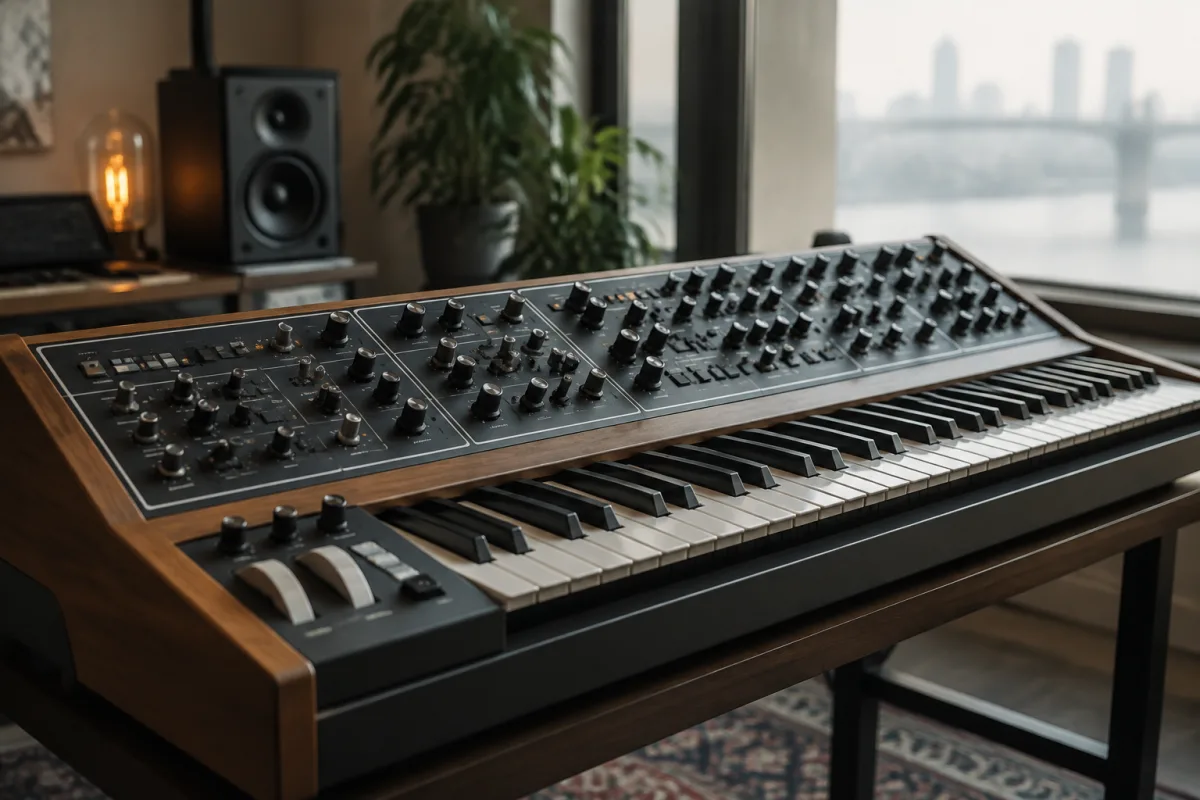
The Moog One stands at the intersection of legendary synthesiser heritage and modern accessibility. It's a Moog—meaning it carries 50 years of sound design tradition—yet it's actually one of the most beginner-friendly Moog instruments ever made. If you've been intimidated by Moog's reputation for complexity, worried you'll need an electronics degree to operate one, or concerned that vintage Moog equipment demands specialist knowledge, the Moog One dispels all these worries. This guide walks you through why the One is genuinely beginner-friendly and how to approach it with confidence.
Why the Moog One Is Perfect for Curious Beginners
Moog built the One specifically acknowledging that modern producers want legendary Moog sound without the complexity of vintage instrument design. It retains everything sonically distinctive about Moog—the warm oscillators, the intuitive filter, the powerful sequencer—whilst eliminating obtuse vintage controls that served specialised uses and confused learners.
The result is an instrument that sounds unmistakably like a Moog from the moment you press power on. Your first patches will sound professional and musical. Unlike many synthesisers that sound thin and disappointing until you understand advanced synthesis techniques, the Moog One rewards immediate exploration with genuinely impressive sounds.
Understanding What Makes Moog Sound Unique
Before diving into controls, understand the philosophical difference Moog represents. Most synthesisers pursue technical perfection—clean, clinical sound, precise control. Moog pursued musicality. The oscillators deliberately drift and interact organically. The filter is designed to sound beautiful, not neutral. The resonance can sing and sustain musically. This philosophy means your sounds have character and life immediately, not sterile electronic perfection.
Beginners often worry they'll create bland, generic synthesiser sounds. Moog design philosophy prevents this—the instrument naturally pushes you toward characterful, musical territory. Even experimenting randomly produces interesting results because the components are designed to sound good together.
The Essential Controls Explained Clearly
The Moog One's control layout is intentionally clear—all essential synthesis happens on the main panel without menu-diving:
- Oscillators Section: Three oscillators generate raw sound waves. They detune slightly from each other creating the classic Moog warmth. For learning, leave the tuning controls alone initially and focus on selecting which oscillators sound good together. Try one oscillator alone, then add a second and listen to the combination.
- Filter Section: The Moog filter is the heart of the instrument. The cutoff knob controls how bright or dark the sound is. Turn it fully open and sound is bright. Turn it down and it becomes thick and deep. The resonance knob emphasises the cutoff frequency—turn it up carefully and the filter begins to sing and self-oscillate. This is where Moog's musicality lives.
- Envelope Section: Controls how sound evolves over time. Attack determines how quickly the sound swells when you press a key. Decay/Release determines how it fades when you let go. Sustain is the level the sound holds between attack and release. Master envelopes and you've unlocked the core of synthesiser expression.
- Sequencer: The Moog One includes a simple sequencer—you can program a melody and let it loop. This is genuinely fun to explore immediately without understanding complex synthesis. Press the Sequence button and start playing.
Your First Session: A Simple Exploration
Forget theoretical knowledge initially. Just explore:
- Press power and select one oscillator
- Play notes and listen to the basic tone
- Slowly turn the filter cutoff down and up whilst playing. Notice how the tone transforms
- Turn up the resonance whilst playing with cutoff. Hear the filter begin to "sing"
- Adjust attack envelope—make it slow and watch the sound swell gently
- Try adding a second oscillator and listen to the warmth that emerges
That 20-minute exploration teaches you more than any manual. You've experienced the core of how Moog synthesisers work—oscillators generate sound, filters shape it, envelopes control its evolution, and resonance creates character.
The Sequencer: Creative Possibilities Immediately
The Moog One includes a step sequencer that's genuinely musical even for complete beginners. Press Sequence, select 8 or 16 steps, and press Step Buttons in any pattern you like. The synthesiser plays your pattern as a loop. This immediately creates grooves and melodies without needing to hold the keyboard. It's powerful enough that professional musicians use it creatively, yet intuitive enough that beginners create interesting results within minutes.
The sequencer teaches you how synthesisers think—discrete steps, rhythm, pattern. Many musicians prefer sequencer-based creation to keyboard playing. If you prefer sequencing over keyboard, the Moog One celebrates this approach.
Connecting to External Gear
The Moog One accepts MIDI—Musical Instrument Digital Interface cables from keyboards and controllers. If you want to trigger the Moog One from your main keyboard, MIDI connections handle this simply. It also sends CV—control voltage—to other synthesisers, allowing deep integration with modular setups. Start by ignoring these advanced connections. Focus on the One itself until you're confident.
For recording into your DAW, simply patch the One's audio outputs into your audio interface. This lets you record performances directly or layer Moog textures into digital productions.
Common First-Timer Mistakes to Avoid
Learning from others' stumbles accelerates your progress:
- Leaving Oscillators Detuned Excessively: The One ships with slight detuning for warmth. Over-detuning creates unusably sloppy tone. If everything sounds weak and blurry, check oscillator tuning—most likely your issue.
- Ignoring the Filter Resonance: Many beginners fear turning resonance up, thinking it'll break something. Turn it up carefully and the filter begins to self-oscillate, singing musically. This is exactly what should happen. Resonance is where Moog magic lives.
- Overwhelming Yourself With Advanced Controls: The Moog One has plenty of advanced synthesis features. Ignore them initially. Focus on oscillators, filter, and envelope. Advanced controls enhance your creativity, not essential for musical results.
- Assuming Randomness Equals Creativity: Twisting every knob randomly rarely produces music. Change one parameter at a time and listen carefully. Focused exploration beats chaotic experimentation.
- Forgetting to Save Patches: Create something beautiful and forget to save it? You'll be disappointed when the power cycles. Always save patches before powering off.
- Expecting Instant Mastery: Synthesiser sound design rewards patient exploration. Expect a month of daily experimentation before you achieve intentional, repeatable results. This is normal and completely fine.
Your Learning Path Forward
Week one: Explore oscillators and filter freely. Play random combinations and enjoy the Moog sound. Week two: Learn envelopes deliberately—create pads, plucks, and evolving tones. Week three: Start using the sequencer and create looping patterns. Week four: Combine sequencer, envelopes, and filter modulation intentionally. By month two, you're creating genuinely sophisticated patches.
The Moog One is genuinely the most beginner-friendly Moog synthesiser ever created. It retains legendary Moog musicality whilst removing complexity that confuses learners. For deeper exploration of advanced synthesis techniques and understanding how the One integrates with production setups, our complete guide to the Moog One covers sophisticated techniques and workflow integration.
Moog synthesisers carry genuine mystique, but the One demystifies them completely. You're not learning to operate complex vintage equipment—you're learning to think like a sound designer on an instrument that rewards musicality. Start exploring, trust your ears, and the Moog One will teach you everything you need to know.



Comments