


Mini Moog Synth article
The Complete Guide to Mini Moog Synth
The Mini Moog synthesizer revolutionised electronic music in 1970, bringing synthesiser technology to individual musicians. Its warm tone and expressive capabilities continue to influence music production today.
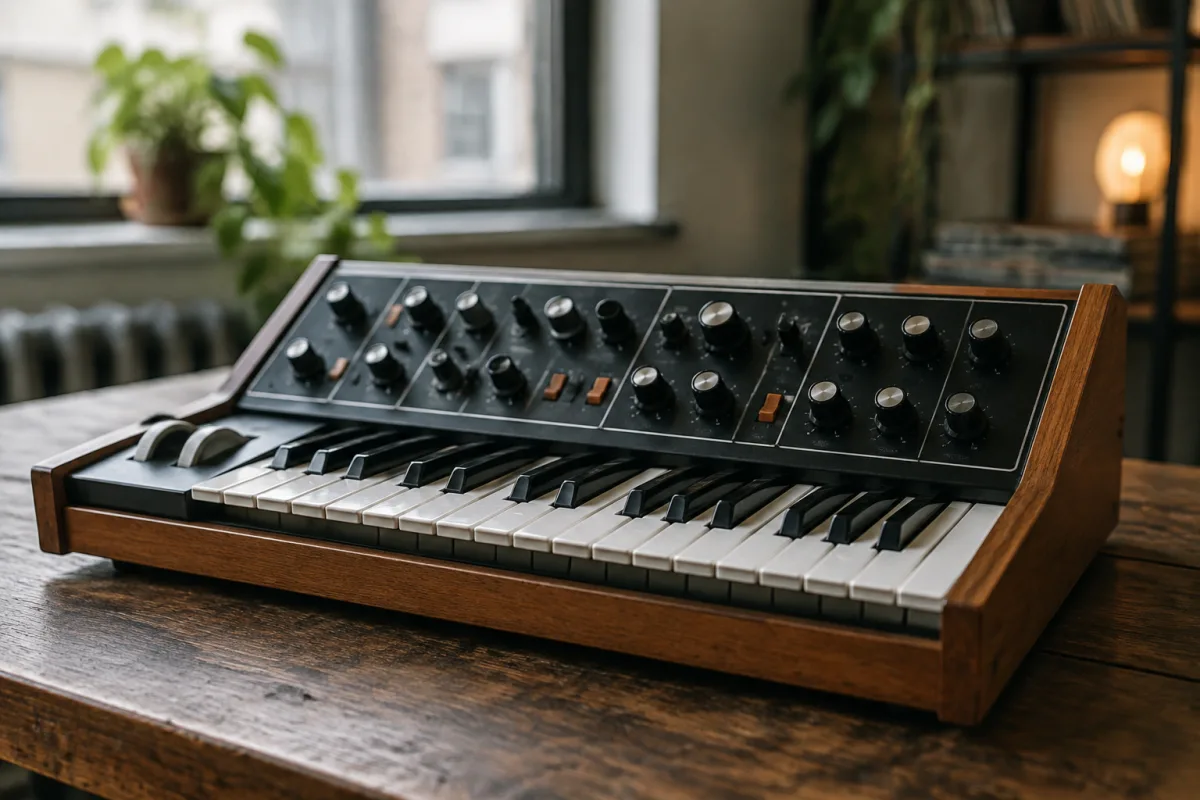
The Mini Moog synthesizer stands as one of electronic music’s most iconic instruments, shaping the sound of progressive rock, electronic music and contemporary production for over fifty years. If you’re exploring synthesisers for the first time or building a collection of classic gear, understanding this legendary instrument and its place in modern music is essential. This guide explores its history, sonic capabilities and enduring relevance.
The Revolutionary History
Robert Moog’s original Moog synthesiser, introduced in 1967, was a room-sized monster that cost tens of thousands of pounds. The Mini Moog synth arrived in 1970 as a more accessible, portable alternative that fundamentally democratised electronic music. Suddenly, individual musicians could afford synthesiser technology previously limited to universities and recording studios.
It quickly became the synthesiser of choice for countless artists throughout the 1970s and beyond. From Kraftwerk to Rick Wakeman, from Herbie Hancock to contemporary producers, the Mini Moog synth has influenced every era of popular music. Its distinctive warm, smooth tone became the template against which all analogue synthesisers are judged.
Understanding the Sound
This iconic instrument produces its characteristic warm, fat sound through careful oscillator design, resonant filter circuitry and touch-sensitive keyboard action. Unlike digital synthesisers that generate tones through mathematical calculation, it creates sound through genuine electronic oscillation, giving it an organic quality many producers prefer.
The filter section is perhaps its most beloved feature. The 24dB ladder filter is capable of creating everything from clear, bright tones to deep, resonant bass that seems to physically rumble from the speaker. This expressive tonal range made it a staple for basslines in electronic music, funk and contemporary production.
Core Features
A classic Mini Moog synth includes several essential sound-shaping components:
- Three oscillators – providing harmonic richness and complex tonal possibilities
- Voltage-controlled filter – the famous 24dB ladder filter enabling dynamic tonal sculpting
- Two envelope generators – shaping amplitude and filter movement over time
- LFO modulation – creating dynamic movement and expression in the tone
- Keyboard with aftertouch – enabling performance expression on each note
These components work together to make this synthesiser remarkably expressive and capable of generating sounds ranging from conventional to experimental.
Vintage versus Modern Models
Original Mini Moog synth instruments from the 1970s and 1980s are highly prised by collectors and active musicians. Vintage examples often display unique sonic characteristics based on component tolerances and wear, contributing to their legendary status. Some players describe each vintage unit as having individual personality.
Moog Music continues producing modern versions featuring improved reliability and consistency. These contemporary instruments capture the essence of the original whilst incorporating modern enhancements like better power supplies, additional connectivity options and refined build quality. Whether choosing vintage or modern, a Mini Moog synth represents a serious investment in professional-grade synthesis.
Applications Across Genres
This legendary synthesiser has proven remarkably versatile across musical contexts. In progressive rock, it provided the signature melodic leads that defined 1970s keyboard playing. In electronic and dance music, the Mini Moog synth produces the deep basslines and pad textures that form the foundation of countless tracks. In contemporary production, artists continue discovering new sonic possibilities.
Session musicians and producers value this instrument for its reliability and distinctive character. Whether creating vintage-sounding textures or pushing it into experimental territory, the Mini Moog synth remains endlessly capable.
Learning the Instrument
Despite its potential complexity, this synthesiser is relatively intuitive for musicians transitioning from keyboard instruments. The hands-on interface encourages experimentation; knobs directly control sound parameters without menu diving. Understanding how oscillators, filters and envelopes interact helps unlock its creative potential.
Many musicians find that the simplicity compared to modern digital synthesisers is actually an advantage. With fewer parameters to adjust, you focus on playing and shaping sound in real-time, making it ideal for performance and spontaneous creation.
Investment and Long-term Value
A Mini Moog synth represents both a practical instrument and a long-term investment. Vintage examples command premium prices reflecting both scarcity and legendary status. Even recent models hold value well, as musicians recognise the enduring importance of analogue synthesis in modern production.
Whether you approach this synthesiser as a performing musician or a collector, it warrants serious consideration. The combination of historical significance, sonic excellence and ongoing relevance makes the Mini Moog synth an exceptional addition to any serious musical setup.


Comments