


Moog Matriarch Buying guide
Moog Matriarch: A Complete Buyer's Guide
The Moog Matriarch is a powerful semi-modular synthesizer for serious electronic music producers. This buying guide evaluates what you're actually getting, common misconceptions about the Matriarch, and how to decide if it matches your genuine needs.
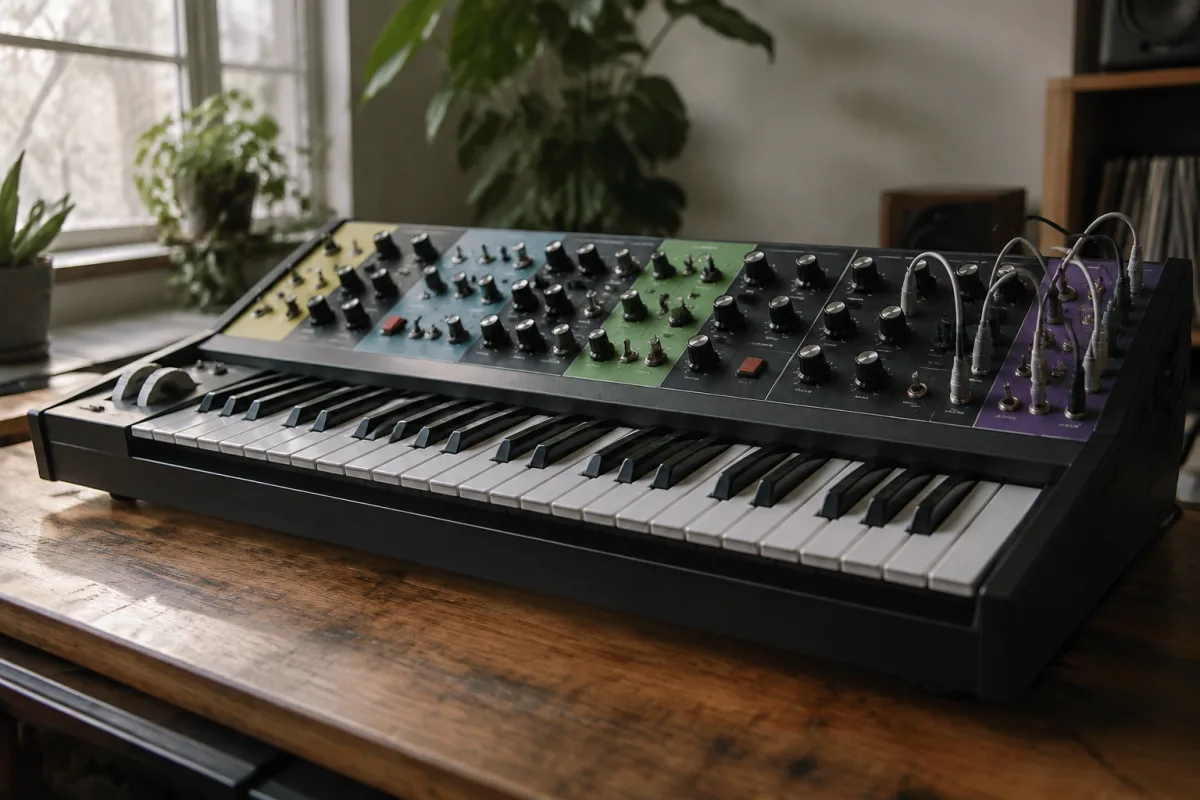
The Moog Matriarch is a semi-modular synthesizer positioned at the intersection of beginner-friendly and genuinely powerful. Shopping for one means understanding what semi-modular means, evaluating whether the Matriarch suits your actual musical needs versus aspirational synth fantasies, and determining if the £2,500+ investment is sensible for your context. This buying guide focuses on practical specs, honest capabilities assessment, common misconceptions, and what you're actually paying for.
What Is the Moog Matriarch and Who Should Buy One?
The Moog Matriarch is a semi-modular synthesizer—a fixed synth architecture with optional modular expansion through a patching system. It's designed as an all-in-one instrument: oscillators, filters, envelopes, LFOs and effects built in, with the ability to route signals in non-standard ways through patch cables. It's particularly marketed toward electronic music producers, sound designers and synth enthusiasts. Here's the honest truth: unless you're specifically pursuing electronic music production or sound design, the Matriarch is probably overkill. It's not a beginner synth for people dipping toes into synthesis—it's a commitment to a specific sonic direction.
Semi-Modular Architecture Explained
A fully modular synth requires you to connect every signal manually—powerful but intimidating for learners. A regular synthesizer has fixed internal routing—simple but inflexible. The Matriarch sits between: core synthesis is fixed (oscillator feeds filter feeds amplifier), but you can patch non-standard routing using the modular section. This flexibility is genuinely useful for sound design. However, the learning curve is steep if you've never used a modular system. Expect several months understanding how signals flow before the patching possibilities feel intuitive.
Features Worth Understanding Before Buying
The Matriarch includes three voltage-controlled oscillators (VCOs) for rich harmonic possibilities, two voltage-controlled filters (VCFs) for complex tone shaping, and patch points for rerouting signals. It has a 44-key keyboard with no aftertouch—this matters if expressive keyboard control is important to you. The sequencer is capable but limited compared to DAW sequencers; most professionals pair it with a computer. It has MIDI connectivity, allowing control from external keyboards or DAW. Clock sync allows synchronising with other instruments. These are useful specs, not necessarily essential depending on your setup.
Price Point and Value Perception
At roughly £2,500–£3,000 new, the Matriarch is expensive. You could buy a powerful home studio setup (computer, audio interface, software synths) for less. You could buy multiple simpler synthesizers. Moog's legacy brand commands price premium—paying £500+ specifically for the Moog badge. The question for a buyer: are you paying for genuine capability you'll use, or brand prestige? If you're exploring synthesis tentatively, buy a cheaper instrument first (Korg Monologue, Teenage Engineering OP-1, software like Serum). If you're committed to electronic music and the Matriarch's specific sound appeals to you, the investment makes sense.
Sound Character and Sonic Reality
The Matriarch sounds distinctly "Moog"—warm, slightly overdriven, with character that sits beautifully in mixes. It's not the most flexible synthesizer for all sounds; it's exceptional for basses, leads and textural pads. If your sonic vision requires crisp, digital clarity, the Moog character might not suit you. Listen to demos before deciding—the tone you hear in YouTube videos is genuinely what you'll get.
Integration with Your Setup
A professional buyer needs to assess integration: does your studio setup include a spare power outlet, space on your desk, and audio interface channels? Can your chair and posture work with the Matriarch's height and placement? Do you have enough floor space for adding external sequencers or effects units later? These practical questions matter far more than spec sheets. Also verify MIDI connectivity matches your setup—does your DAW/keyboard send correct MIDI? These mechanical compatibility issues frustrate more gear purchases than sound quality.
Sequencer Realities
The Matriarch's sequencer is capable but limited compared to DAW sequencers. Most professionals use it for real-time playing and live sequencing, relying on Ableton Live or other DAWs for complex arrangements. If step-by-step sequencing is essential to your workflow, factor in software sequencing as a necessity. Don't buy a Matriarch thinking the sequencer replaces computer-based production.
Used Market Considerations
Moog Matriarchs hold value at 70–80% of new price because demand for Moog remains strong. Used models are relatively safe purchases. Inspect thoroughly for cosmetic damage (cosmetic doesn't matter), play every key and patch point, verify MIDI connectivity. Used Matriarchs from reputable sellers are sensible if budget is tight.
Common Mistakes When Buying
First, don't buy because the Moog brand is prestigious. Extensive online demos exist—listen to dozens before deciding you want this sound. Second, don't assume a Matriarch will inspire creativity—quality of your ideas matters infinitely more than gear quality. Third, don't buy if bedroom space is tight; the Matriarch needs proper placement and ergonomic access. Fourth, don't overlook that most professional productions pair Matriarch with computer-based sequencing and mixing. The Matriarch is a performance and sound design tool, not a complete production station.


Comments