
Weighted Keyboard 88 Keys article
The Complete Guide to Weighted Keyboard 88 Keys
A weighted keyboard 88 keys provides authentic piano technique development with digital convenience. Discover the best full-size weighted keyboards.
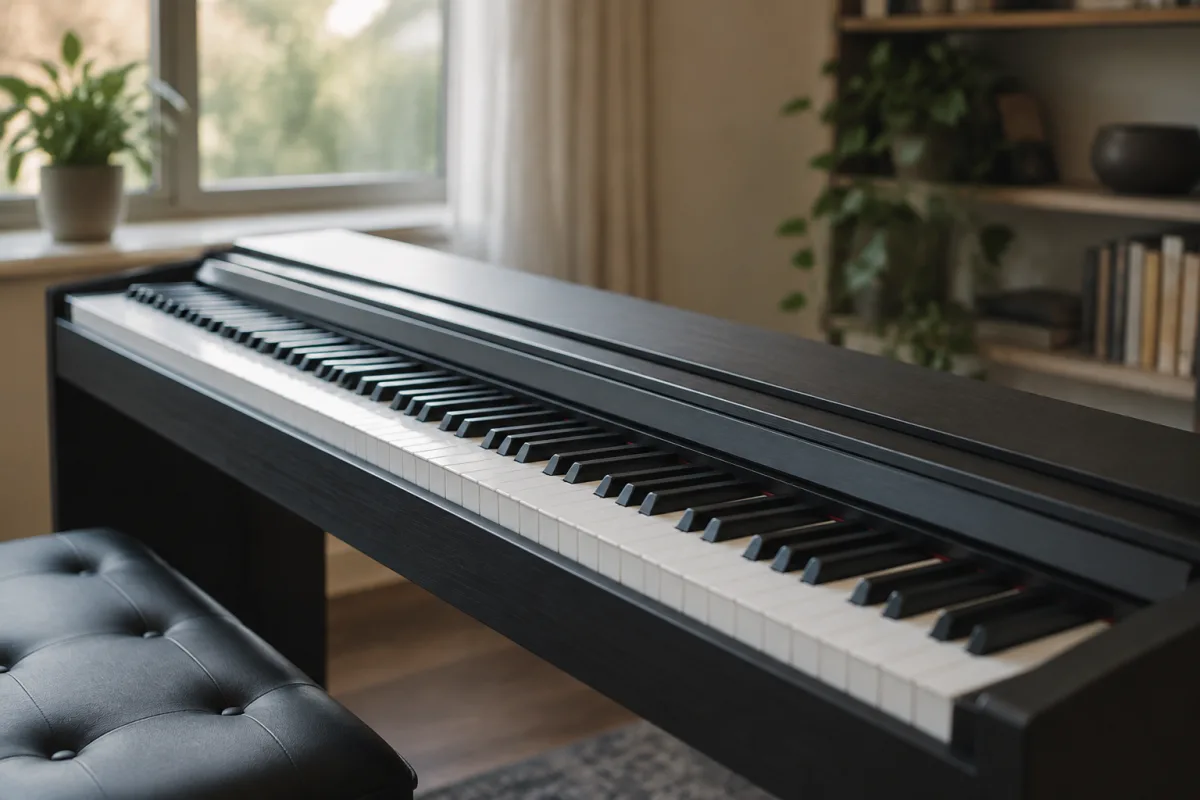
A weighted keyboard with 88 keys represents the full piano experience in a digital package. Whether you're training classical piano technique, performing in diverse venues or seeking the portable alternative to concert grands, a weighted keyboard 88 keys delivers authentic piano feel without the £10,000 price tag and storage requirements. The 88-key format matches acoustic pianos exactly, meaning muscle memory developed on one transfers perfectly to the other.
Why Full-Size 88-Key Keyboards Matter
Piano repertoire spans the full 88-key range. Limited-key keyboards force pianists to transpose pieces or sacrifice complex arrangements. A weighted keyboard 88 keys gives you the complete sonic and physical range of acoustic pianos, letting you study authentic classical literature without compromise. For serious students and professionals, full-size keyboards are non-negotiable.
The weighted keyboard 88 keys format also builds authentic technique. Ninety percent of the piano's physical complexity comes from the lower ranges where weighted action matters most. A weighted keyboard 88 keys develops this technique properly.
Key Features of 88-Key Weighted Keyboards
Quality weighted keyboard 88 key systems include:
- Full hammer action — mechanical weighted keys across all 88 notes, not light spring resistance
- Graded action — lower keys weighted heavier, upper keys lighter, matching acoustic pianos
- Deep key travel — 50–65mm stroke matching piano specifications
- Velocity sensitivity — dynamic microphones capturing how hard you strike keys
- Sustain pedal simulation — recognising pedal input and extending note decay realistically
- Multiple piano voices — grand, upright and digital piano samples for tonal variety
Popular Weighted Keyboard 88 Key Models
Yamaha P-Series weighted keyboard 88 key pianos set the standard. P-125 offers tremendous value for learners; P-225 and P-515 escalate to premium action and sounds. Roland FP-90X brings portable weighted keyboard 88 key performance trusted by touring pianists.
For budget-conscious students, Alesis and Casio offer weighted keyboard 88 key instruments with acceptable action. However, budget models sometimes feature uneven hammer resistance—the action improves gradually from bass to treble but not smoothly. Quality weighted keyboard 88 key systems grade this action seamlessly.
Premium Kurzweil and Nord weighted keyboard 88 key systems command professional prices for advanced sound design and studio features.
Stand and Setup Considerations
A weighted keyboard 88 keys weighs significantly more than 61-key versions—typically 30–60 kg. You'll need a sturdy keyboard stand or piano bench. Many pianists position weighted keyboard 88 key instruments on the included X-frame stands; home studios might mount them on furniture or dedicated piano benches. The weight and size mean careful consideration before purchase.
Weighted Keyboard 88 Keys vs. Acoustic Pianos
An acoustic piano offers unmatched sound and feel. A weighted keyboard 88 keys provides 95% of the technique development and performance capability at a fraction of the cost, space and maintenance. For students, semi-professionals and portable gigging, weighted keyboard 88 key systems make more sense economically than acoustic pianos.
Portability and Practicality
A weighted keyboard 88 keys remains portable compared to acoustic pianos but demands serious logistics. Car transport requires careful securing. Touring acts accept the weight for authentic feel; hobbyist musicians often prefer lighter alternatives. Consider whether the 88-key advantage justifies the physical burden in your situation.
Choosing Your Weighted Keyboard 88 Keys
Classical pianists and serious students start with Yamaha P-Series weighted keyboard 88 key pianos. Budget around £600–£2,000 depending on ambitions. Try models before purchasing; hammer action feel varies significantly between brands. If portability is paramount, explore 76-key weighted alternatives. If 88 keys matter for your repertoire, invest in a quality weighted keyboard 88 key system—the technique development justifies the cost.
The Bottom Line
A weighted keyboard 88 keys closes the gap between digital convenience and acoustic authenticity. Whether you're developing classical technique, gigging portable shows or seeking a practice instrument that never needs tuning, a quality weighted keyboard 88 key system delivers the full piano experience in a modern package. Invest in a model matching your technical level and use case, and you've purchased an instrument that educates and performs professionally.



Comments